CREATING CHAOS
DP James Butler took a swing on a new approach to filmmaking when shooting frantic action film Bedlam, ensuring the audience could feel every hit as hard as its main character.
Some titles sum up the character of a film so perfectly that they almost act like a synopsis. See: Bedlam. Jon Shaikh’s action movie takes audiences back to 18th-century London, and into the depths of the infamous psychiatric hospital, as Scott Adkins’ street boxer Jack Slack aims to rescuehis incarceratedsister one punch, kick, elbow or headbutt at a time.
For DP James Butler, the chance to get in on the actionin such a unique period of history was too good to turn down. “The film being a period piece was a big draw,” he admits. “I think the one other period piece I’ve done was set in the ‘90s, so moving from the 1990s to the 1750s is quite a big leap. Jon always described it as an action-adventure film – he wanted to bring in a Pirates of the Caribbean feel, where it’s playful in its period approach. Then you cross that with Danny the Dog-style physical violence.”
Tier system
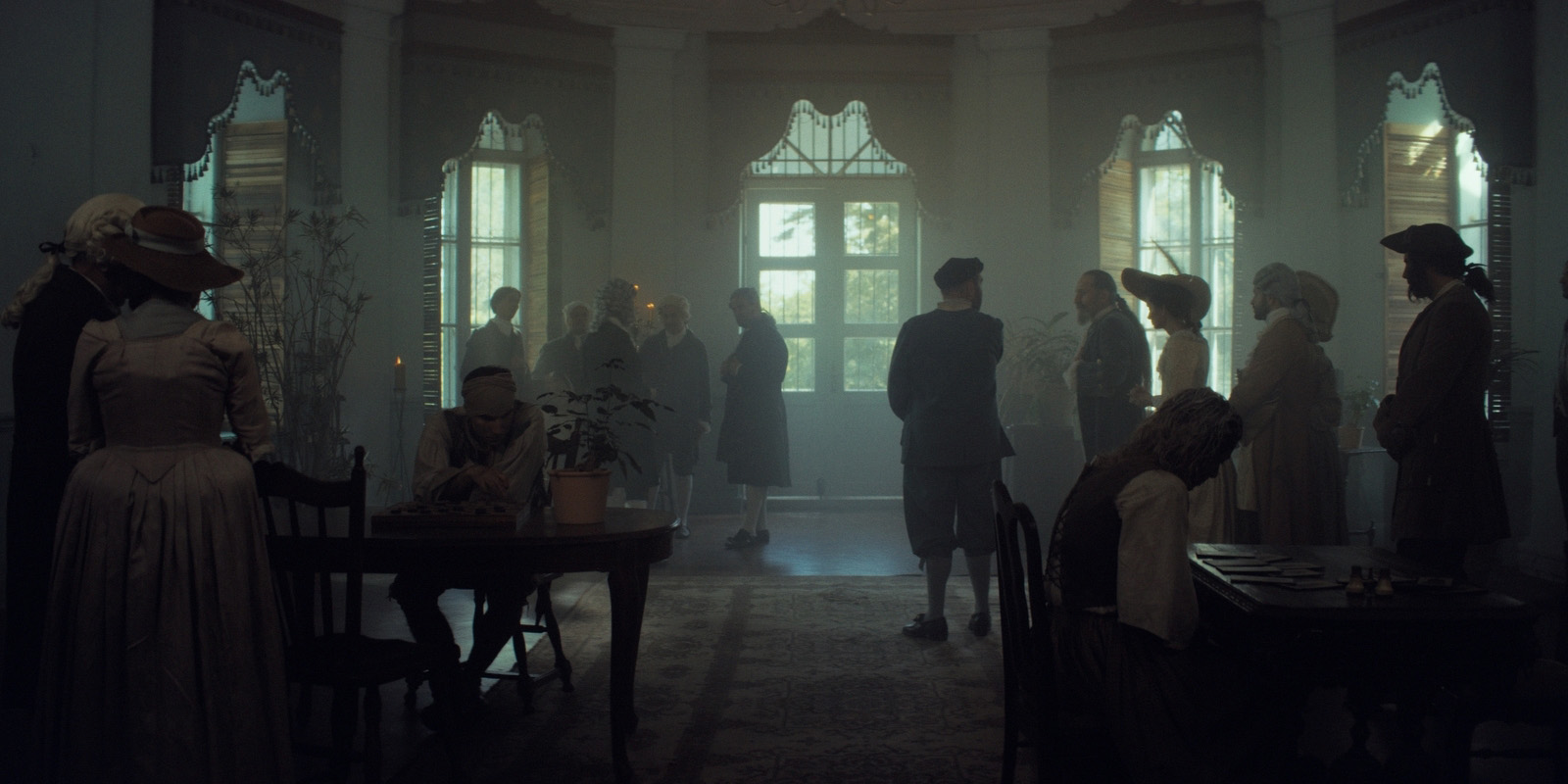
Wanting to create a setting worthy of its influences, Butler worked with his team to craft a three-tiered world inside Bedlam itself. The bright and airy first floor hosts staff and distinguished guests, the cramped second floor houses the hospital’s standard patients, and the cellar-esque third floor cages those deemed most dangerous to society. Each layer brought its own challenges, with the film’s time and place restraining the resources available to the team.
“When I started to do my research,” Butler muses, “gas lighting hadn’t come into full use by the 1750s – that was later in the 1700s. So that really limited us; our three main light sources could only really be sun, moon and fire.” Butler started working with his production designer, Aimee Meek, to find interesting sources of counter light, including props that could be used with reflective dishes. For the lighting itself, the DP decided, with gaffer Benjamin Law – a regular collaborator – to lean heavily into LED tools, including Astera Titan tubes and soft-domed Rosco panels, managing RGB engines to ensure the candlelight felt consistent as production jumped between London and Romania.
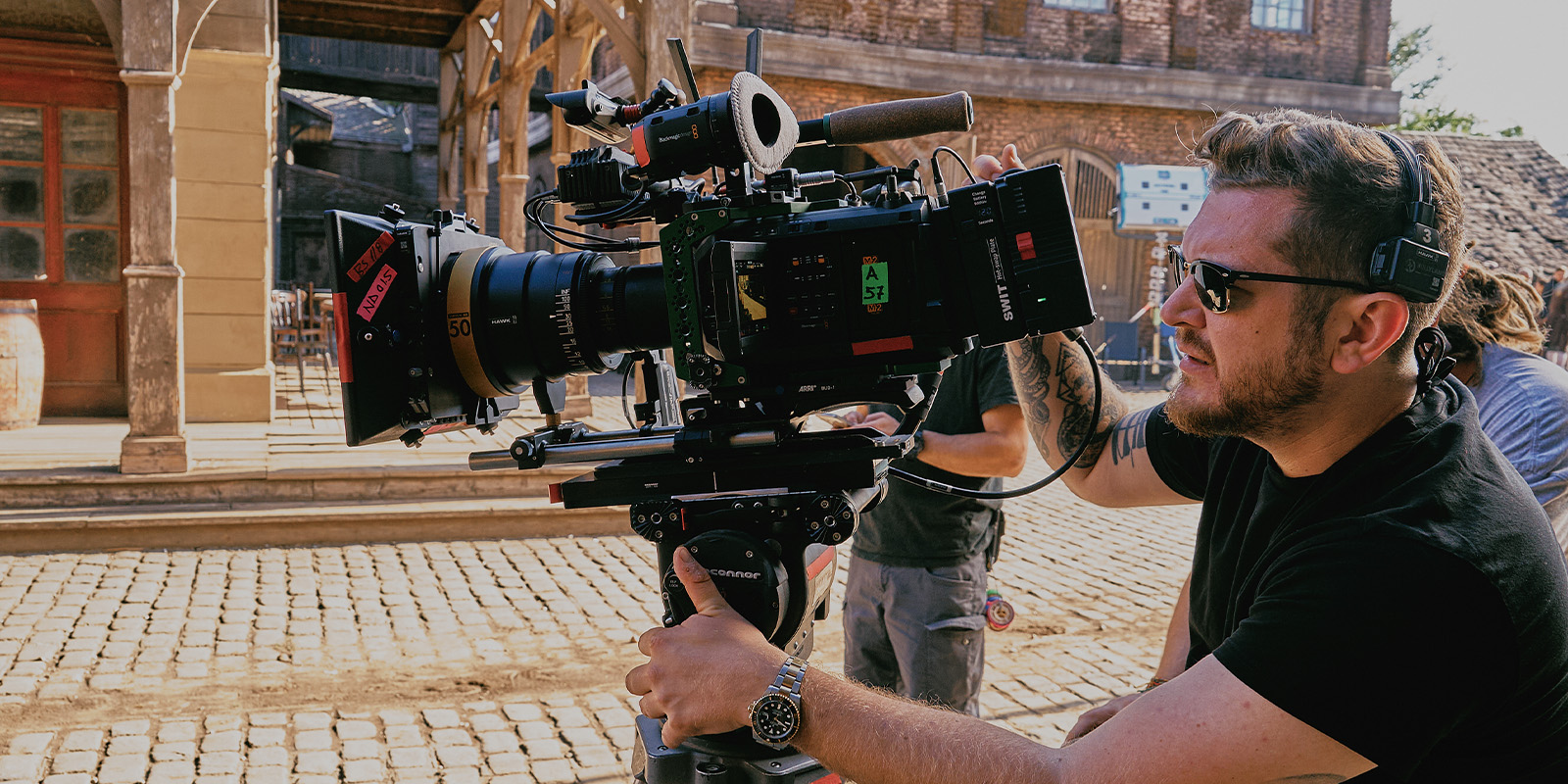
Helping with this quest for consistency was Butler’s decision to use the Blackmagic URSA Cine 17K 65, which became the “centre of the on-set production” throughout the shoot. Deciding early on that he wanted a 65mm look, but lacking the budget for likes of the ARRI Alexa 65, Butlerbegan reading about Blackmagic’s new camera, and at BSC Expo 2025 checked it out for himself. It’s safe to say he’d found the kit – and collaborators – he was looking for. “I had a chat with the team at Blackmagic and told them I had this film coming up and that I thought it could be the perfect project for this camera, and asked if they’d support me,” he explains.
“Their response was so positive and they just couldn’t do enough for us. They asked what we needed, and I asked for two camera bodies for the 65 and a Pyxis 12K to use as a stunt camera, something very small that we could throw around in the fight pit. They said no problem, and set us up with the gear.”
On cloud nine
Though the camera itself delivered what Butler was looking for visually, with the DP referencing the large-scale anamorphic approach of films like Ford vs. Ferrari and Nightmare Alley as inspirations, its strengths outside of the visual proved perhaps even more important. The camera offered total integration into the Blackmagic post-production workflow, with high-capability storage built in and high-speed networking for on-set media sync. For Butler, who had worked with Blackmagic’s Resolve Cloud setup for years, the chance to work directly within the comprehensive cloud system – getting not only instant dailies but near-instant arrangements – was exciting, and proved vital for the whole crew from script supervisor Zoë Parker to DIT Mark Kozlowski.
“I was already a massive fan and advocate of Resolve when I saw what these new Blackmagic cameras could do – camera-to-cloud, automatic proxy generation, all that stuff,” he muses. “We knew we were going to shoot with two or three of these cameras, so we thought why not take it one step further? The biggest issue I’ve had doing low-budget, independent films is that as soon as you finish production, it all stops. The footage goes off to editorial, you don’t see it again – what you’ve got is what you’ve got. And then when you come around to seeing it in the grade again, you’re like, ‘Oh, that’s not what we intended to do.’”
Butler continues: “So on this, I saw the opportunity to do something where as we shot, the footage would be generating proxies, those proxies would upload to a collaborative cloud server within the Resolve project, an assembly editor would edit that footage as we were shooting, and in the evenings, as well as watching dailies would be watching assemblies.”
With crew split between the east and west of Europe, that proved priceless. “Because we had a limited amount of time in Romania, the production had a limited amount of money, we could spot very quickly if something worked or didn’t work or if we needed a pickup, and we knew the LUTs on set were transferring through into the system. At any point, I could log on to the Resolve project and implement a change.”
Punching it
This innovative workflow might prove useful on any project, but for a film like Bedlam, which is “40% action”, it was a game-changer. With many of the movie’s lengthyfight sequences built from short, sharp cuts, keeping track of the visual flow of the action was made less complicated by getting an immediate sight of what was captured. “We had an incredible action designer called Tim Man,” Butler reveals. “He’s worked a lot with Scott and they created these amazing pre-vises for us in the gym, so we knew which angles to cover to keep the sequences flowing. But those sequences were made up of hundreds of different individual, small shots. And if you call up an editor in three months’ time, after everyone’s forgotten how they did it, or what they did, you’re going to have a headache. So having an assembly editor on hand in the moment made it a lot more manageable to select the good moments and trim up the footage.”
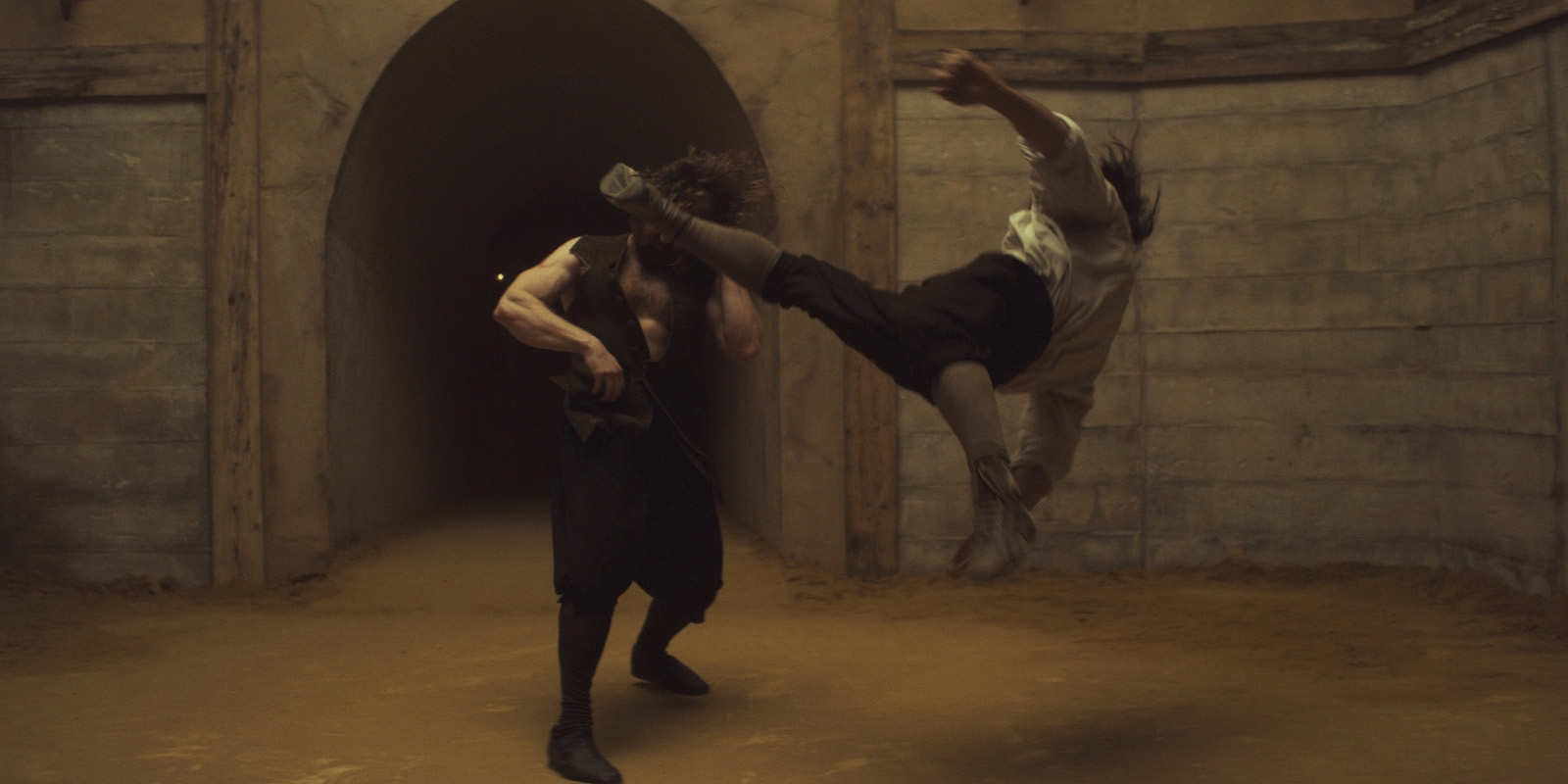
And when this film does deliver its action, it really delivers, with Butler and camera operator Horia Cojan dropping the audience right into the heat of the battle. As Jack Slack’s story develops, and his mental and physical wellbeing deteriorates, the camerawork also goes through its own form of evolution– becoming more restless as our hero becomes more volatile. “Jon and I wanted the arc of the cinematography to be that when Jack was in control, the camera’s always a little bit more fluid; as he starts to lose control and lose his mind, the camera goes a little bit more erratic,” Butler explains. “We knew we’d do a lot of fighting with the AR system, which would allow us to be very fluid and do these kind of Monkey Man-style sequences. Then we had the very small Pyxis rig with just two handles and a battery backpack system that I could put right into the middle of the fight and really get into Jack’s psyche with. It could take the hits and you can feel the violence. So it was a nice mix between the two.”
Helping Butler, Cojan and co was the team at Hawk London – “the nicest guys in the rental community” – who became “really excited” about the project and helped to craft a cage design for the Cine 17K 65, working with Ratworks Engineering to bring it to life within a week. This design “adapted everything to the ARRI standard”, Butler says, with the team opening up a “whole world of accessories” including handles and plates. Oh, and the lenses lived up to the task too.
“The main test we did with the Vintage’74s and Hawk65s,” says Butler. “We set up a couple of test days over at Hawk London. We had a ton of candles in this film and what we didn’t want was anamorphic flares of every single candle – that would look a bit ‘JJ Abrams in the 1700s’. It just doesn’t work. So when we tested, we thought the Vintage’74s were very nice but they were very extreme in the flares and the fringing. It was a beautiful look but we were worried it would prove distracting. So we went for the standard 65s.
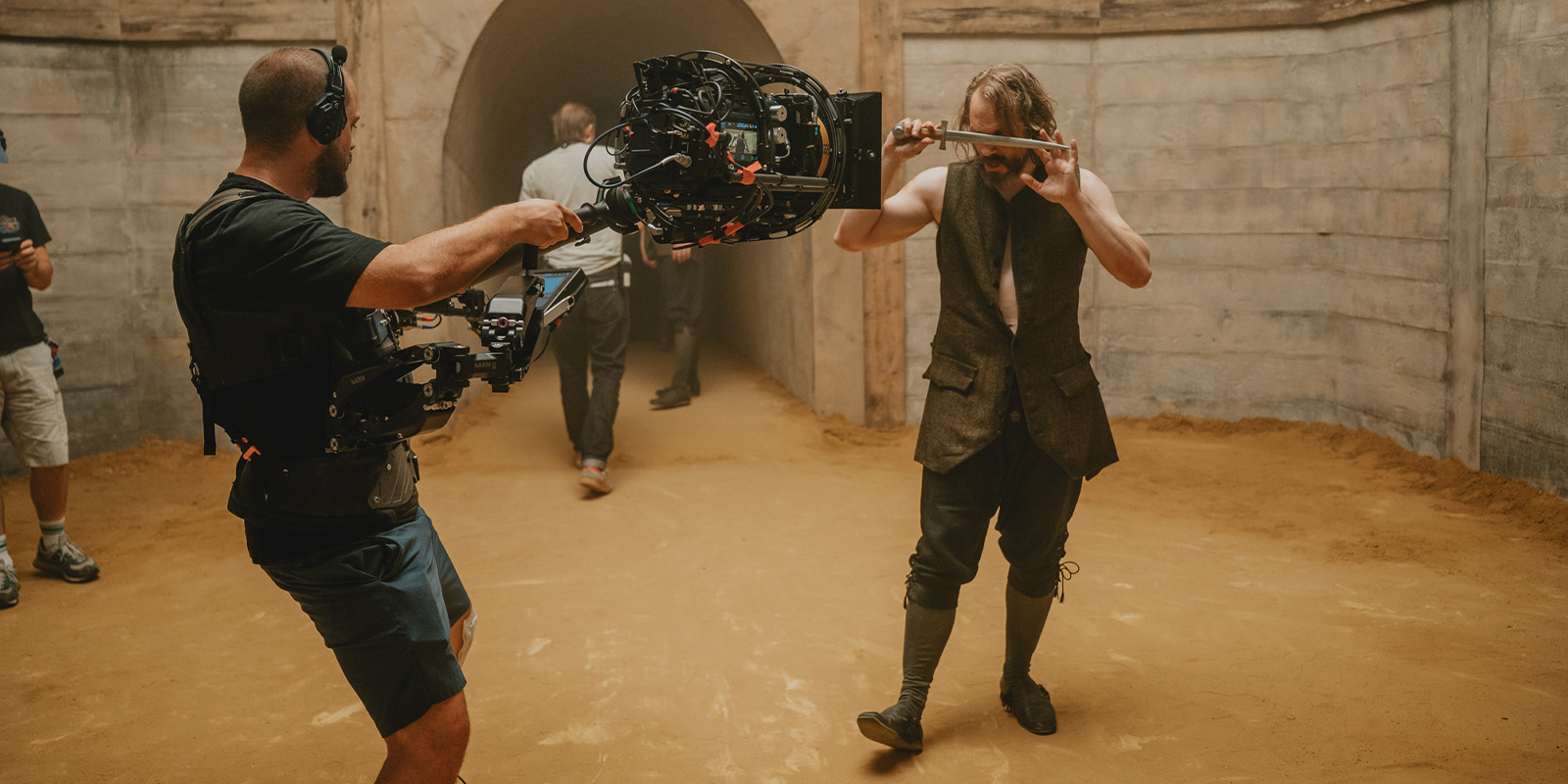
“They also had more lenses in the set for the standard 65s, so off the bat, it gave us more focal lengths, more options, and we knew we’d be shooting two cameras, so that would pay off later. We added a 1/8 Tiffen Black Satin to complement the look, just to bring a little bit of halation into the highlights, especially around the flames. As soon as we saw that, Jon stood up and said, ‘That’s it. That’s our film. That’s the recipe.’”
Talking things out
While a major ingredient in that recipe is the action, though, Bedlam isn’t just about the brawling. Writer Tom Kenyon’s story explores issues of class and mental health as it interrogates the psyche of both those running the hospital and those trapped in it, with the film deploying Hollywood heavyweights like John Hannah and Geoff Bell to do so. The name of the film provides a great flavour for what to expect, but there’s more lurking beneath the surface, with Butler bringing engaging visuals to the talking as much as the tough stuff.
“Jon was very adamant that he didn’t want this just to be a fight film, so when we were shooting the dialogue scenes, we wanted to try and keep an intensity in the camera. For the most intense moments, we wanted to build them almost like fight choreography, to keep the camera moving. So we shot the hell out of it, making sure to stay on close-ups at the right time and show the power play in the frame and show the movement of who’s in charge. It never feels boring to me.”