

 Amsterdam buzzed with IBC 2025’s tech showcases, from Fujifilm’s GFX Eterna 55 to Nikon’s ZR cinema camera. Plus, new gear from AJA, Atomos, Hollyland and more.
Amsterdam in September blooms like a field of tulips and during this time, a certain annual trade show took centre stage from 12–15 September, transforming the RAI into a carnival of moving images. The canals glimmered, bicycles hummed along the streets and tourists snapped photos in clogs—charming, but hardly ideal for the miles of walking required to navigate the massive halls. More on that later.
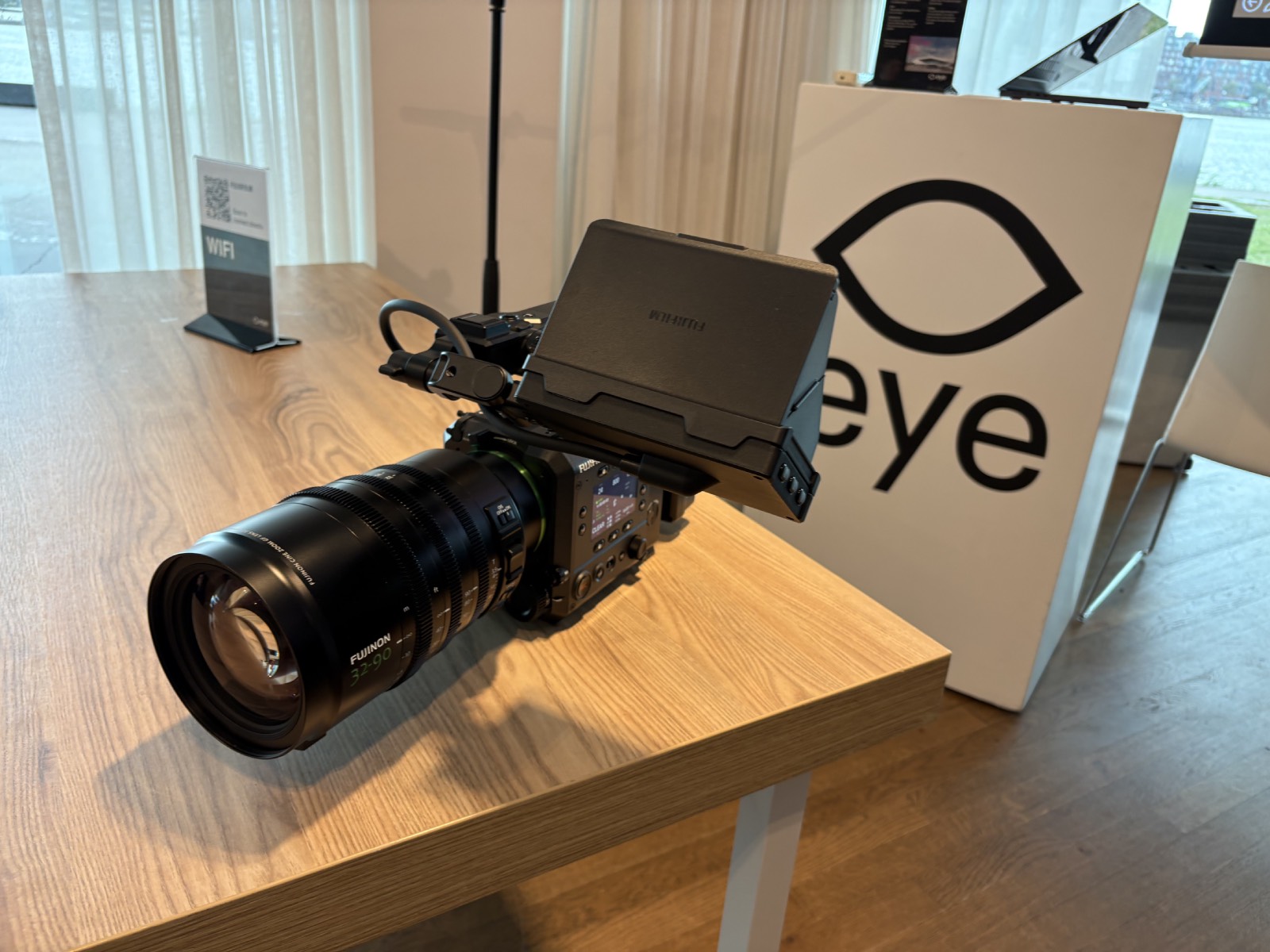
On the eve of IBC 2025, Fujifilm hosted a special evening at the EYE Film Institute to unveil the long-awaited shipping version of the GFX Eterna 55.
The camera boasts a 102MP large-format sensor with over 14 stops of dynamic range, perfect for professional filmmaking. It offers 8K recording, a full-frame 4:3 Open Gate format, advanced hybrid autofocus and 20 film simulations tailored for the creative cinematographer.
Accompanying the camera is the Fujinon GF32-90mm T3.5 PZ OIS WR Lens, designed specifically for the GFX Eterna 55. This native G-Mount lens is fully compatible with Open Gate recording and is priced at $5,999.95, with first shipments expected in October 2025.
The evening began with a welcome address by Mark Yamamoto, director and senior executive vice president of Fujifilm, followed by the premiere of two launch films shot on the camera. The silent film Eternal was captured and graded by James Tonkin, in close collaboration with director, editor and writer Tim Auld. The narrative short OKAY was lensed by Oren Soffer and directed by Andrew Kightlinger. Both films provided a compelling demonstration of the camera’s versatility, showcasing its ability to deliver professional cinematic looks across a wide range of settings.
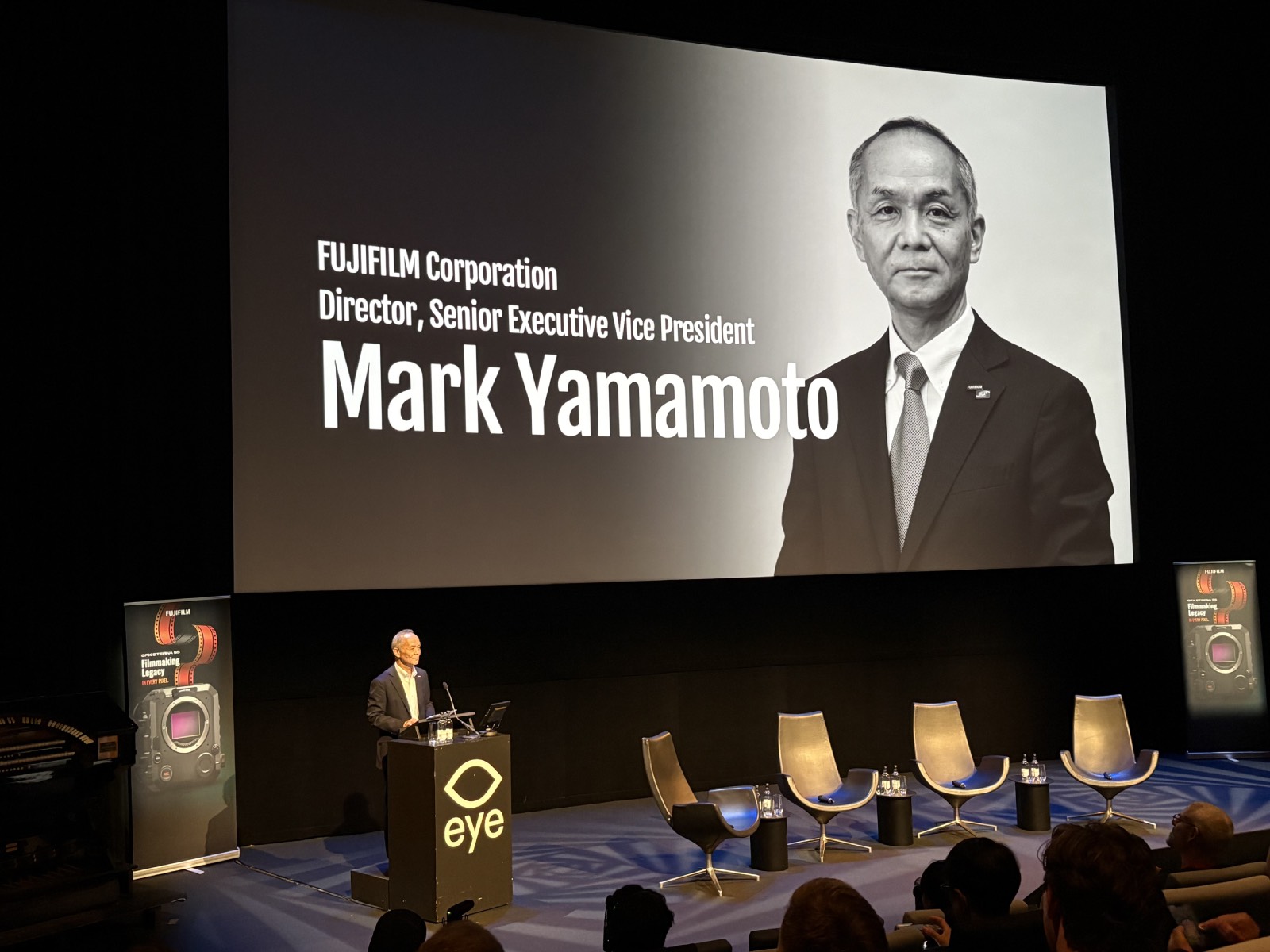
After the screenings, the filmmakers participated in panel discussions moderated by Adam Suschitzky BSC.
WHAT ELSE WAS NEW?
The main event then moved to the RAI, kicking off on Friday morning with four seasons in a single hour. A brilliant double rainbow at breakfast gave way to bruised clouds and a biblical downpour, before the skies suddenly cleared to bright sunshine. A dramatic start that did little to dampen the energy carrying through the days ahead.
AJA Video Systems showcased its new conversion and IP video solutions, most notably the UDC-4K, which offers 12G-SDI/HDMI conversion, 4K/UltraHD/2K/HD scaling and frame synchronisation.
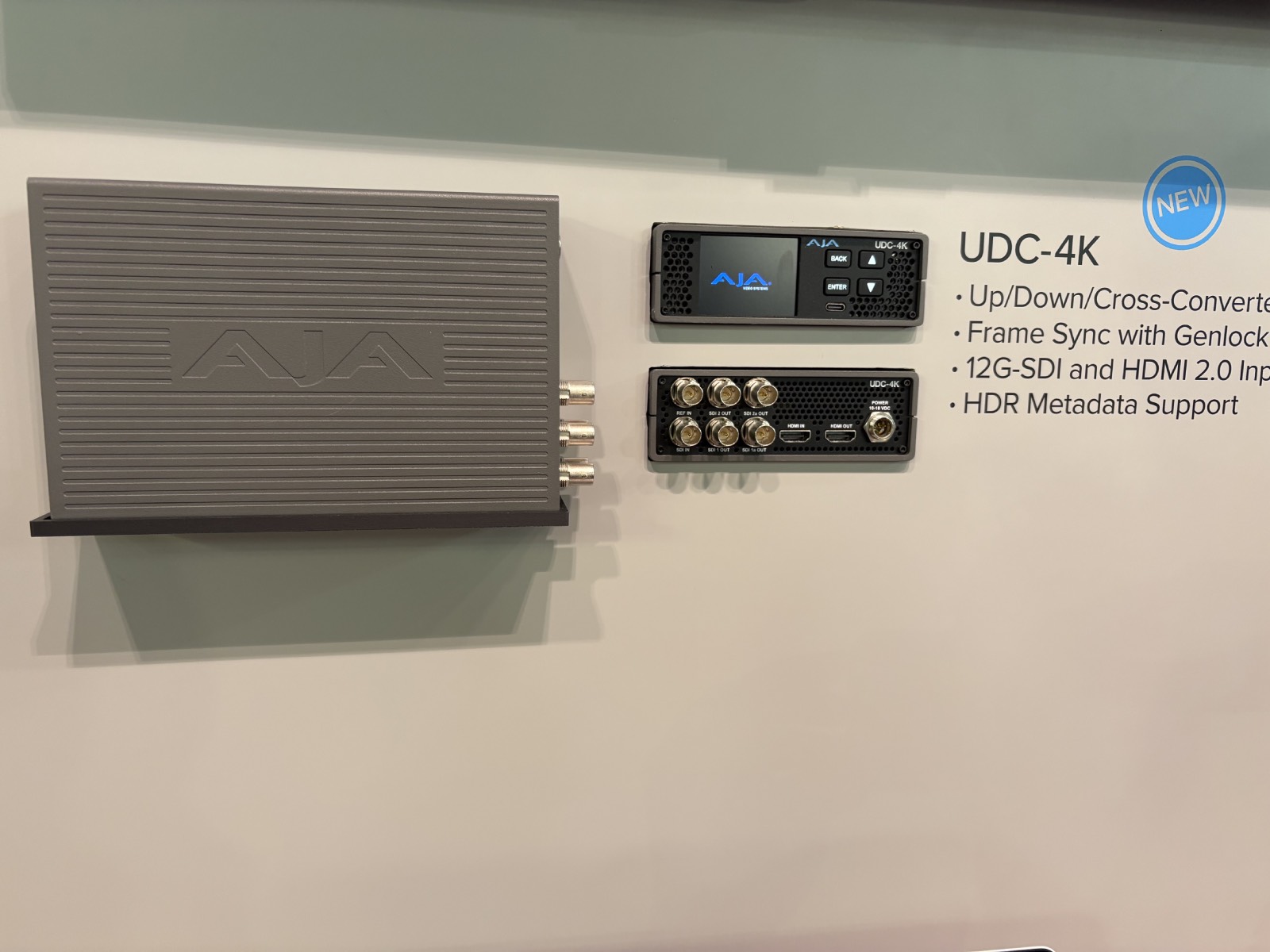
“We’ve had people asking at every show for compact 4K up/down/cross converters and now we finally have it with the new UDC 4K,” said Tim Walker, the company’s senior product manager. “It supports both SDI and HDMI in and out, handles UHD and 4K DCI workflows and takes technology that used to cost $7,000–$10,000 in a rack unit and puts it into a small form factor for around $1,595.”
Atomos was also at the event, displaying its new Ninja TX monitor recorder, the first Ninja the company has produced in six years. “It’s different because it uses CFexpress storage instead of the SSDs that Ninjas have always recorded to in the past,” said Steve Wise, the company’s marketing director. “Many companies are phasing out SSDs because many broadcasters now use CFexpress in both cameras and cinematic setups.”
Hollyland showcased its Cosmo C2, a wireless video transmission system designed for multi-camera live streaming, event production and field work. It allows two transmitters (2TX) to send video to a single receiver (1RX) unit.
“This is more professional than other similar Hollyland products,” said Rebecca Tang, overseas marketing manager. “It’s ideal for large music festivals and other live events because it has a range of 1,000 metres and very low latency of just 33 milliseconds.” Price: €1,200.
Vinten unveiled the Versine 240, a compact, professional fluid head designed for mobile camera operations in live and field production. Supporting payloads up to 25kg, it’s ideal for heavy monocular setups and long-lens use. Developed with operator input, it features Perfect Balance technology and TF30 Drag for smooth, stable control across all tilt angles and speeds. The magnesium alloy build is lightweight yet durable, with intuitive controls positioned for ENG use. Available standalone or in system kits, the Versine 240 brings high-end performance to agile broadcast crews without compromising precision, durability, or portability.
In a significant move following its 2024 acquisition of RED Digital Cinema, Nikon has unveiled its first-ever cinema camera for filmmakers: the Nikon ZR. This launch intensifies the competition with established players like Sony, Canon and ARRI, who have long dominated the digital cinema camera market. It also underscores Nikon’s commitment to making a serious impact in the film and video production space.
“We aren’t holding anything back – our first Nikon camera developed with RED has all the creative controls that filmmakers need, with features that have never been seen in this level of handheld cinema camera,” said Fumiko Kawabata, senior vice president of marketing and planning, Nikon Inc. “The Nikon ZR is the camera that will challenge the established video market and will demonstrate Nikon’s commitment to advancing the tools available to video production professionals.”
Meanwhile, the Pixboom Spark is designed to make high-speed cinematography more accessible. This compact camera offers impressive frame rates, reaching up to 1,000 fps in 4K or 1,800 fps in 2K. Initially available on Kickstarter for $7,999 (which includes the $1,999 Pixboom Pro Card), the price will increase to $12,999 once the launch offer concludes.
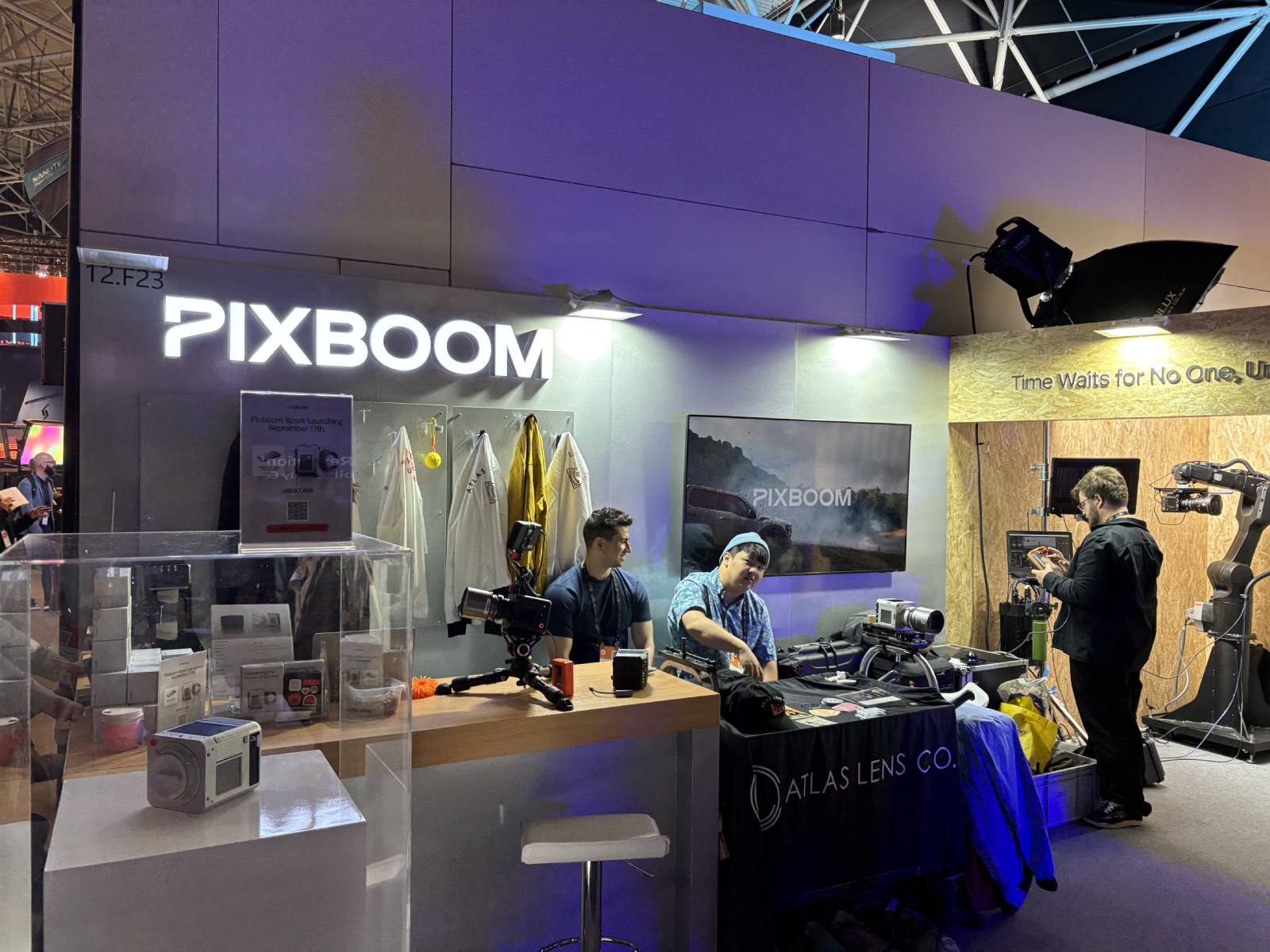
Featuring an Open Gate Super35mm global shutter CMOS sensor with 13 stops of dynamic range and dual native ISO, the Spark excels in low-light slow-motion shooting, thanks to its BSI sensor.
Additional features include integrated V-mount power, a 3.5-inch touchscreen, 12G-SDI/HDMI outputs, and a lightweight 1.1kg body. The camera also boasts a pre-record buffer, capturing 2-3 seconds of footage before the trigger is pressed—ideal for wildlife, sports, or documentary filming.
“It uses a BSI [back-side illuminated] sensor, which can provide four times brighter footage than a traditional FSI [front-side illuminated] sensor,” Honghao Huang, Pixboom’s CTO, said. “It also supports continuous recording with SSDs at maximum frame rates and resolution, so you can record up to seven minutes on a 2.5TB SSD.”
Creamsource showcased the new Vortex24 Soft, a 1950W native soft light and the largest in the Vortex range. Designed to deliver smooth, bright and even light at scale, it’s powered by the trusted Vortex platform, offering the efficiency of a dedicated soft source with reliability and familiarity.
THE CLOUD
Of course, cloud and security vendors were well represented. Nina Walsh, Global Leader for Industry Business Development, Media and Entertainment at Amazon Web Services, was on hand to discuss the firm’s European Sovereign Cloud — infrastructure located entirely within Europe and designed to support digital sovereignty. “If you need to ensure that your content doesn’t leave a specific country or the European continent, you can leverage this cloud solution to maintain both security and data residency, you’ll always know exactly where your data is all the time,” she explained. “That said, one of the major advantages of AWS is the global depth and breadth of our infrastructure. It gives you the flexibility to operate wherever you need — whether that’s the US, Europe, or APJ. For example, if you’re filming in the Middle East, you might use the nearest infrastructure during production, but then shift to using European resources for post. It’s all about giving customers the freedom to choose what works best for their workflows.”
IN THE LIGHT
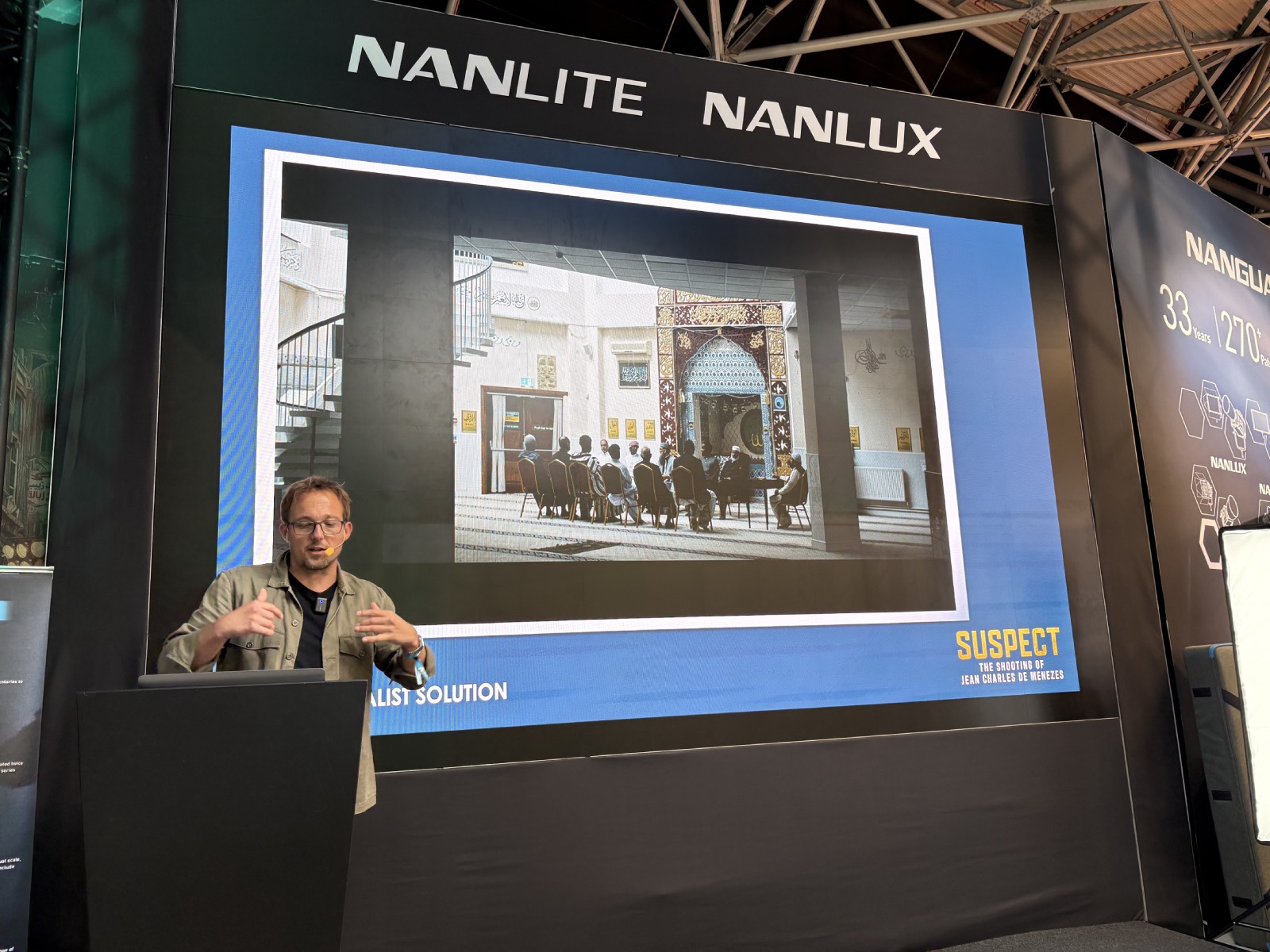
At the Nanlux stand, Balazs Bolygo BSC HCA hosted a masterclass titled LED Lighting for Narrative Efficiency: A Case Study from Suspect (Disney+). He shared insights from his work on the miniseries Suspect: The Shooting of Jean Charles de Menezes, exploring the challenges and intricacies of lighting this harrowing story, which recently marked its 20th anniversary.
AND THE WINNERS ARE…
Last, but by no means least, the winners of the IBC2025 Innovation Awards were revealed on Saturday 13th September during a ceremony at the RAI in Amsterdam, recognising outstanding achievements in innovation, creativity, and social impact across the media and entertainment industry.
The evening opened with legendary editor Thelma Schoonmaker receiving the International Honour for Excellence, celebrating her iconic five-decade collaboration with Martin Scorsese.
Deep Ocean: Kingdom of the Coelacanth won the Content Creation award for capturing the first-ever 8K footage of the ancient species. Sky’s MediaMesh secured the Content Distribution prize, while SVT-AV1, developed by Intel, Meta and the Alliance for Open Media, won in the Content Everywhere category.
The Mobile Justice app, developed with the ACLU, earned the Social Impact award, and SK Telecom received the Environment & Sustainability prize for its energy-saving UHD upscaling technology.
Other honourees included Globo, the EBU/HEIG-VD technical paper team, and the Accelerator project Evolution of the Control Room.