
A TUNISIAN TALE
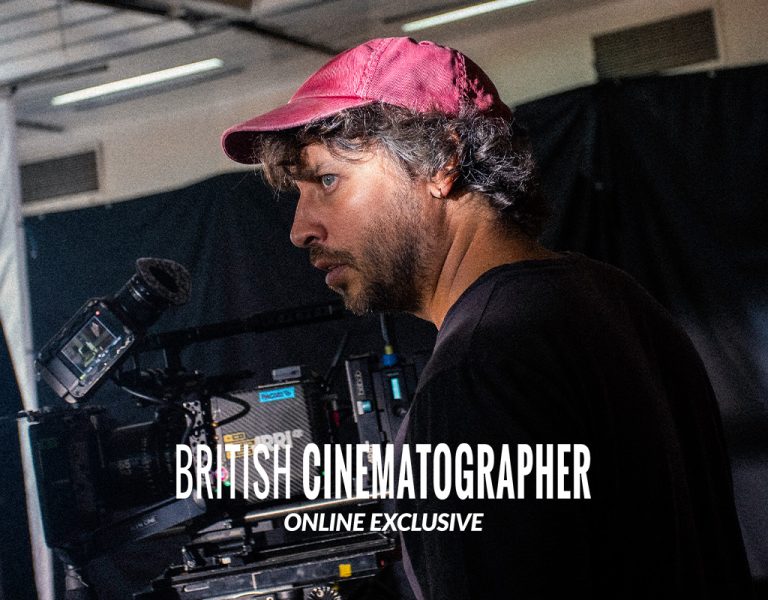
Writer-director Erige Sehiri reunites with cinematographer Frida Marzouk AFC on Promised Sky, capturing intimate performances in Tunis with a naturalistic, handheld style and Panavision lenses.
Telling the story of three women whose lives intersect in modern-day Tunis, Promised Sky marks the second feature by writer-director Erige Sehiri. To shoot it, the filmmaker reached out to Frida Marzouk AFC, the cinematographer who previously shot Sehiri’s harvest-set 2021 drama Under the Fig Trees. The Tunis-raised Marzouk, who began her career as an electrician on huge productions including the John Wick franchise and Darren Aronofsky’s Black Swan, was keen to reunite.
Collaborating with Sehiri had been liberating, in particular the way that the director allowed Marzouk to take the initiative. “I go and film things the way I feel,” Marzouk says, over Zoom from Dubai. “I can initiate pans when I want, go from one person to the other. That freedom is definitely something that draws me to working with her. And I feel like we have a common sensitivity to people and situations. What we perceive in people, faces, gestures.”
Then there’s the fact that Marzouk is included very early in the process. As Sehiri explains, “It’s really close work between me and Frida and the actors…we become friends.” Rehearsals began in November 2023 for a story that explores the dynamic between an Ivorian pastor (Aïssa Maïga), a student (Laëtitia Ky), and an exiled mother (Déborah Naney). By this point Marzouk had already been involved for a year, getting to know the actors, many of whom were non-professionals.
It helped that Marzouk had worked as a lighting technician on Abdellatif Kechiche’s Cannes-winning 2013 film Blue is the Warmest Colour, which similarly utilised an improvisational style. “I have this background of docu-fiction movies, and Erige comes from a documentary background. So we were able to merge together. And yes, I had tips. Like, listen, maybe you should surprise the actor. Because these are things that I heard on other sets where things are very much more improvised.”
Close encounters of a modern kind
Working with inexperienced actors is easier these days, adds Marzouk, thanks to tech advances in our daily lives. “People are very aware of cameras now and being filmed…it’s really rare that somebody looks into the camera.” Nevertheless, bonding with the cast – even socialising with them off set – was an essential way to make them feel comfortable on camera. “They need to accept you in their space,” says the cinematographer.
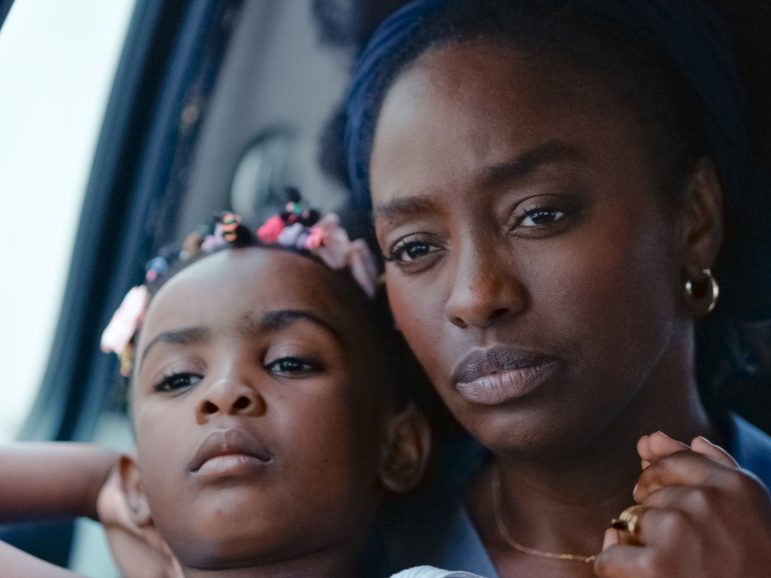
Noting that she likes to “get super close to the actors” when she’s filming, Marzouk adds that her choice of lens “always involves close focus”. For Promised Sky, she elected to use Panaspeeds, her first time using this particular set of Panavision lenses. “I thought they were so striking when I did the test,” she says. “I think it really worked out for the skin and the flares and how it captures the lights and the faces.”
Shooting Promised Sky on the ARRI Alexa Mini LF, Marzouk calls the digital camera her “go-to” when it comes to shooting handheld movies. It was a freewheeling style that was necessary, given Marzouk’s techniques. “We can’t really do things in a different way, because my way of filming is to get close, to go from one person to the other. And you can’t really do that on sticks. Or you’d have to plan every single shot, which is not something that we do.”
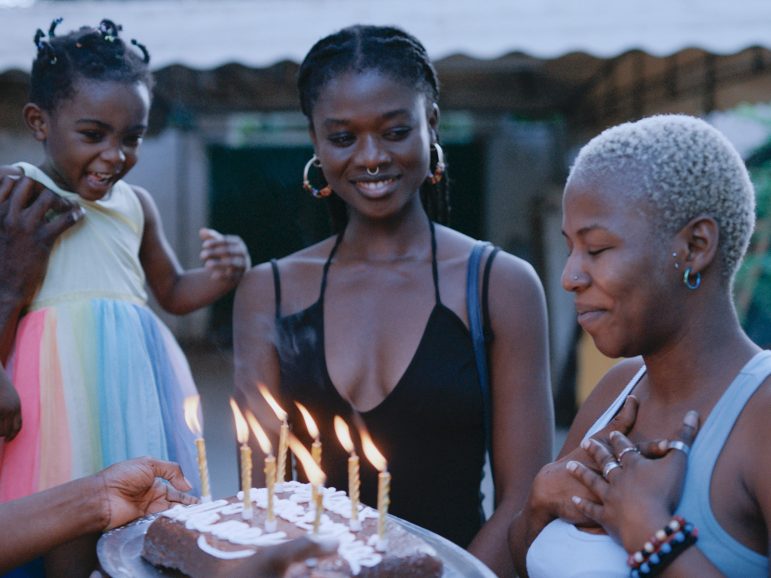
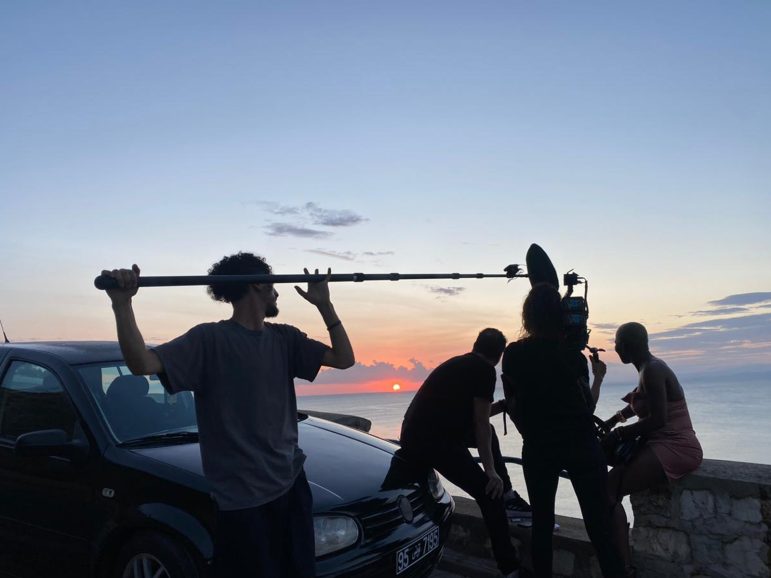
Once Sehiri talked through a scene with the actors, Marzouk was left to find the frames, moving from one actor to another as the drama unfolds – a method that “can change with every take.” As dictated by the intimate story, this was a “minimalist” shoot, she adds, with no fancy filmmaking tools at her disposal. “We don’t even have those crazy tools in Tunisia, and to bring them would be a budget issue. We had to make the most out of whatever small package we had.”
Skins and skies
With a lot of interiors, in particular a shadowy church space where the pastor’s immigrant congregation gather, Marzouk did deploy additional lighting. “I had lights – HMIs – outside. I had only small units because we didn’t have much of a budget. So it was a couple of 1.8s outside the window in the church, for example, and mostly Lite Mats on top. And with diffusion…so that people don’t disappear into the darkness of the room.”
Naturalism was key to Marzouk’s lighting aesthetic. “I did want to just enhance,” she says. “It was really a little notch above everything, to observe how natural this place is and make it better.” Originally meant to be shot in winter, filming exteriors on the streets of Tunis also proved challenging. “It was middle of summer, blazing sun, harsh sun,” she says. “[I had] to try to handle that the proper way, so that people don’t get harsh shadows…that’s something I really try to avoid. I want them to always look good, even if that’s the reality of the country in the summer.”
During post-production, Marzouk had help from “super-talented” French colourist Vincent Amor. “He enhanced everything we did. We were able to have 10 days of working on skin, on the colour.” Intriguingly, the plan was always to create “a cold film”, says Marzouk. “That’s one thing that we told each other, we want a film that’s in the blue tones, in the costumes, in the atmosphere,” she says. “Arab movies or films in north Africa are mostly warm colours. And we wanted something that’s not necessarily that warm. Yes, there is sky, there is sun, but we wanted to have more of the sky…the promised sky.”