INDIE SHORT TO GLOBAL SUCCESS
Writer and director Flora Lopategui reveals how she worked with Window Zebra Productions to turn her first-time, low-budget indie short Olive into a multi-award-winning film using dynamic lighting and overcoming unique, unforeseen circumstances.
Olive started as a sketch idea from the confines of my bedroom. It was an idea from my fellow co-creator and actor Lucy Nicholson to write and direct a film for her showreel about a series of comedic sketches about a narcissistic singer entering the London dating pool. A film? As a writer, I had never set foot on set, but I was never really one to shy away from a challenge. Inspired by Absolutely Fabulous and Victoria Woods sketches, we spent months developing the concept and character – writing the script became more of a therapy session on failed past relationships.
With help from Window Zebra Productions (another great suggestion from Lucy) and a crash course in producing, I turned my attention to the visual aspect of the film. I knew that Lucy, the team and I had created a bigger-than-life character that needed bold colours, inventive lighting and creative camera angles, but with little budget (£5,000), we were worried about how we were going to pull it off.
Lighting, colours and mirrors… lots of mirrors
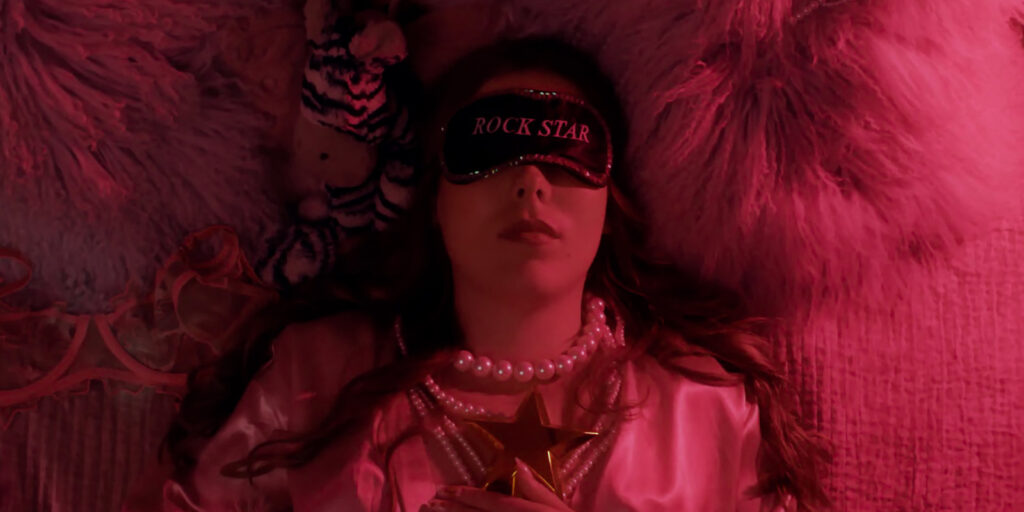
When it came to lighting and colours, we knew we wanted to walk a fine line between realism and delusion. Olive herself looms larger than life yet exists in an otherwise ordinary world – think Cher walking onto the set of The Office. To achieve this, I worked with Window Zebra’s amazing lighting and camera team to design this pink and green effect that follows Olive throughout the film, as if her aura was bleeding onto and colouring in the world around her. In certain scenes, characters walk into rooms backlit by pink hallways or green sidelamps. It made for a very funky atmosphere that really projected Olive’s inner world and added to the delusion/reality paradox. This was also a strategic decision to match the very over-the-top wardrobe that Olive wore throughout the film.
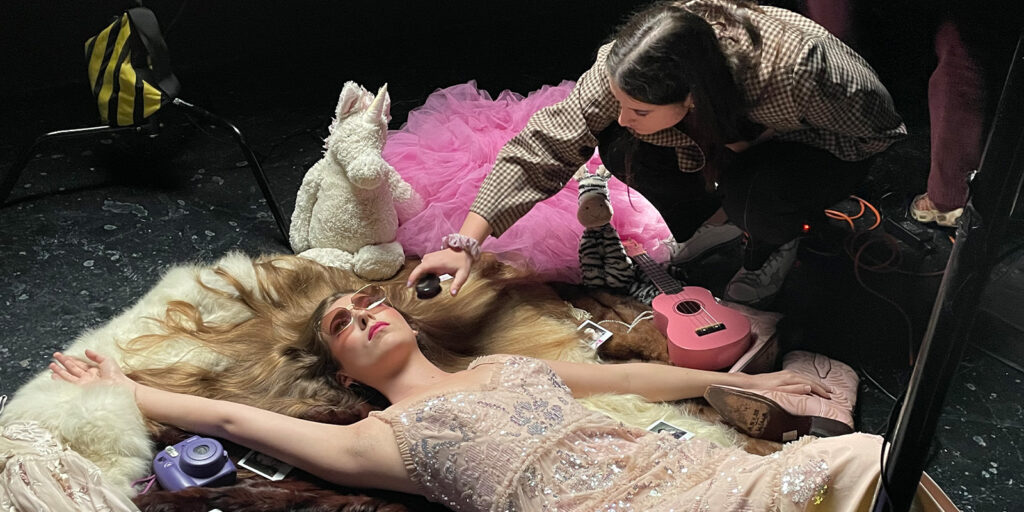
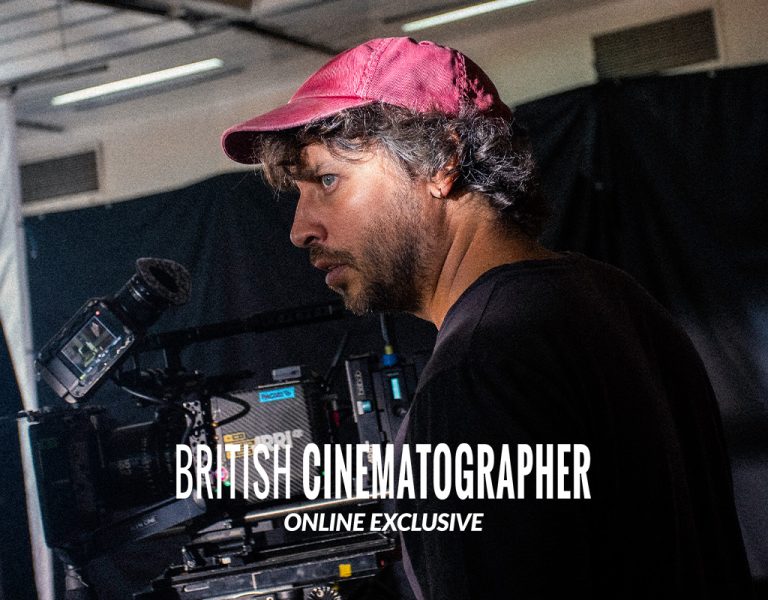
An issue that we had to overcome while filming was mirrors, and lots of them. The house that was lent to us for filming had floor-to-ceiling mirrors covering the entire backwall. Now, we weren’t about to be picky, and so my director of photography James Haslam and the crew had to adapt and become creative with the camera angles.
After the recce, James suggested that rather than leaning away from the mirrors and trying to work around them, that we rather lean into them, with Olive looking directly into them to create this split effect which also catered to the narrative of this self-absorbed character. It did make for some funny camera rigs and was a great gag that added to the comedy – we even added the Olive theme tune in every time she looked at herself in the mirror.
Cameras and thefts
Like any set, this one had its own set of unique setbacks. We had originally filmed the entirety of the first block of the short film on the Red Scarlet Mysterium X 5k Cinema Line Camera with the Samyang VDSLR MK2 5-Lens EF Kit (8790). Now, for a zero-budget film and first-time director, our equipment (courtesy of Window Zebra) was a dream to work with. The lenses, more on the affordable side, provided us with a cinematic, sharp image and the red scarlet doesn’t really need an introduction. So, you can imagine how we felt when the day before the second shooting block, while in transit to do some ADR, the whole of our shooting equipment, camera and all was stolen from our van. After some panicked calls and a lot of meetings, we faced the decision: do we shoot the next day (a whole music video for the film) at Holborn Studios on borrowed equipment (no money for a rental) and on a different camera, or do we postpone?
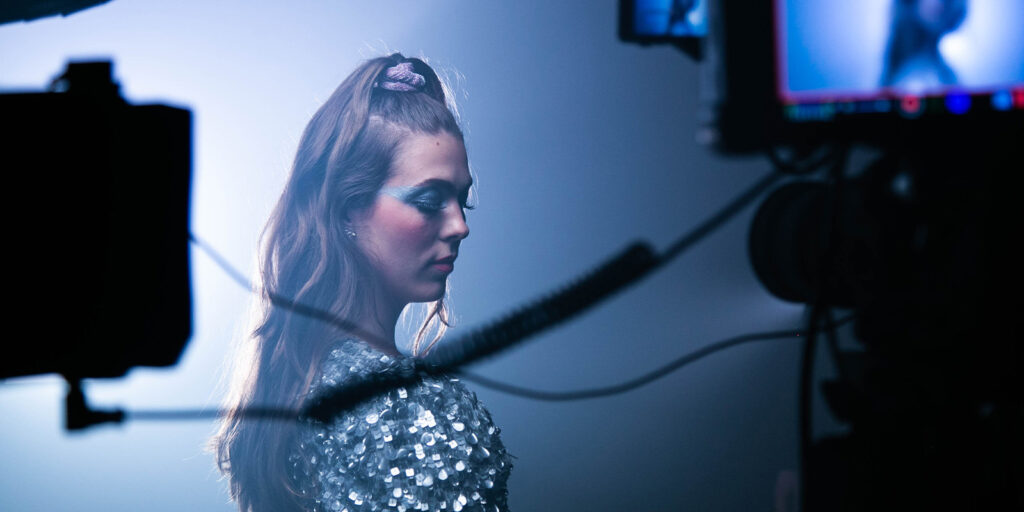
Well, everyone knows that even on the biggest sets there’s no money for reshoots, so we carried on… on a Sony FS5. How Haslam and his team managed to create a music video that we still use at the end of every credit roll for any Olive project, and is still one of my favourite sequences of the entire project to date, is a testament to their talent. This is what I love about indie filmmaking, there is no big conglomerate to bail you out, no back-up. You work with what you have on the day, or you have no project – you are really flying by the seat of your pants.
The music video itself takes cues from iconic moments in popular media, most notably the floating heads scene from Queen’s “Bohemian Rhapsody”, reinterpreted with Olive’s head. We also used smoke machines and strategic lighting to create a silhouette effect. Overall, it was a hit, and we even projected it onto the back wall of our most recent Olive one-woman show in London at the White Bear Theatre.
The edit, film festivals and the future
Olive does in fact have two edits. It has the 20-minute short film edit as well as the five-minute festival edit. The second was not planned. We premiered the 20-minute version and started looking at the festival circuit. It was after a conversation with James and fellow colleague Dominic Howlett that the five-minute version came about – and it’s the best decision we ever made.
As a newcomer to the festival circuit, I wasn’t aware that five to 10 minutes was the sweet spot. If you can condense a short story into five minutes and get a message across, then in my eyes you have succeeded. A learning curve with this film was that a short story doesn’t necessarily need a beginning, middle and end. As many seasoned filmmakers will tell you, short films are an artform within themselves, and part of that artform is presenting a moment in time, an essence or feeling that captures the audience and leaves them wanting more. This is why the edit is so important, and so are conversations with your fellow colleagues.
I am proud to say our little short, Olive, did do well on the international film festival circuit, with 30 wins and 38 selections globally, screening at festivals such as LISFF, winning Best Micro Short at the Birmingham Film Festival, and becoming a semi-finalist for the Flickers’ Rhode Island International Film Festival.
Since then, Lucy and I have been developing it as a TV series with Window Zebra Productions and have premiered it as a one-woman show to multiple sell-out audiences at the White Bear Theatre. It goes to show that you don’t always need a big budget, named actors and lavish sets to get a film off the ground.