OFF THE RAILS
As Hijack continues to captivate audiences, the action switches from the skies to Berlin’s underground in series two, with Ed Moore BSC and director Jim Field Smith adopting a darker, more subjective visual language mirroring the characters’ emotion and increasing tension with distorted lenses, gigantic moving sets and immersive virtual production.
While the first series of Hijack delivered high-flying thrills in the confines of a plane, series two took the tension below ground on a hijacked Berlin train. Season one’s hero negotiator Sam Nelson (Idris Elba) returns as a more unstable and psychologically damaged character as he struggles with a family bereavement, demanding a different visual treatment for the eight-episode thriller.
Cinematographer Ed Moore BSC returned to collaborate with director Jim Field Smith and continue increasing the visual intensity. Moving the action to the underground saw the camera move in closer, lenses become more distorted, lighting more unpredictable and flickering as the train swayed, in turn impacted camera movement. Through slick coordination the crew used lighting as a storytelling device, blended virtual production techniques with physical rigs and constructed multiple authentic and operational train sets inside the studio, refining the look in the grade and with talented VFX artists.
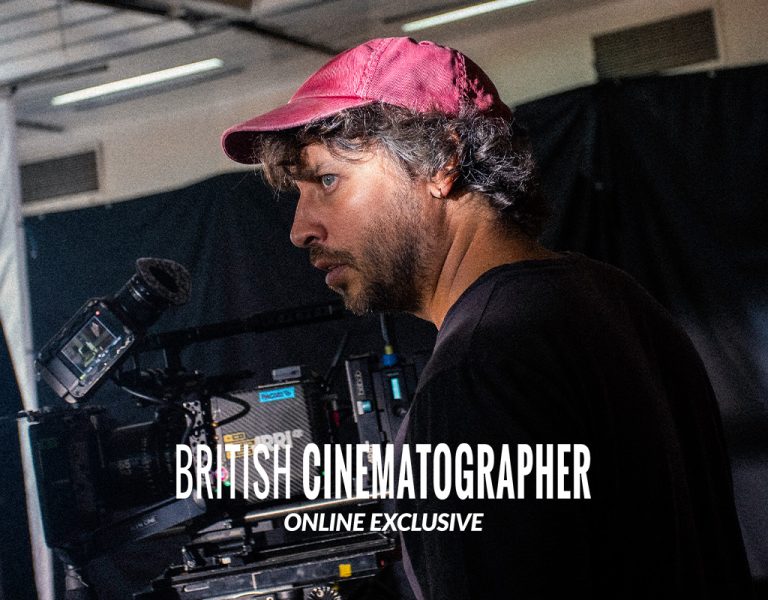
“It became a discussion about how can we not only meet the same standards of thriller cinematography we managed in series one, but elevate it,” says Moore, who lensed the first three and final two episodes, with Steven Cameron Ferguson shooting episodes four to six, directed by Shaun James Grant.
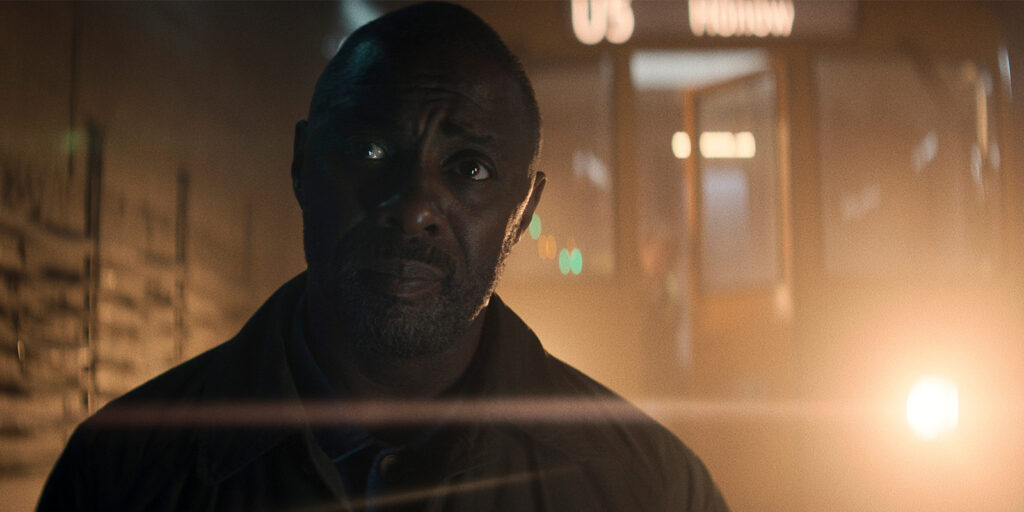
“As a result of series one’s plot, Sam’s in a darker place and we don’t fully understand, for the first few episodes, his intentions, so we wanted the cinematography to reflect that. It’s about seeing the events through the eyes of all of the characters and how it feels to them. In terms of lighting and lens choice, grade and camera movement, this series has a more subjective feel.”
A new world of confinement
Moore discovered the latest chapter in Nelson’s story would take place on Berlin’s U-Bahn network during a meeting with Field Smith in the apt setting of the London Transport Museum, inside a tube carriage exhibit.
The techniques they would use to build tension on the plane at 30,000 feet – all shot in the studio – would differ to an underground setting, reflecting the change in environment and characters’ states of mind. A rule Field Smith and Moore carried forward from series one was once the plane or train door shuts, the camera needed to feel trapped inside like the passengers, observing the action and increasing threat from within.
“We never wanted to cheat on the plane and pull out a window; the cameras were always inside once that door closed, so we wanted to keep that going. There’s less inherent danger in the train setting, so it was more about how to inject the sense of speed and energy into the set,” says Moore. “It became almost like designing a theme park ride; combining virtual production techniques, special effects, interactive lighting and how we rigged and moved the camera.”
While the shift of setting presented some new challenges, it also brought opportunities as the layout of the immersive train sets created by production designer Dominic Robertsand his team based on scans of real U-Bahn carriages offered a new visual world to explore, allowing the characters to move more freely than in the plane environment.
“Jim and I were really keen for the train to always feel like it was hurtling along and not feel as smooth as the real U-Bahn,” says Moore. “Jim wanted the environment to be something he could shoot in all directions with multiple cameras, and it always look amazing. The way he tells stories visually is very dynamic and the blocking on the train is much more fluid than it is on a plane where everyone’s facing in the same direction, so we knew we had to make it a 360-degree environment to shoot in all directions.”
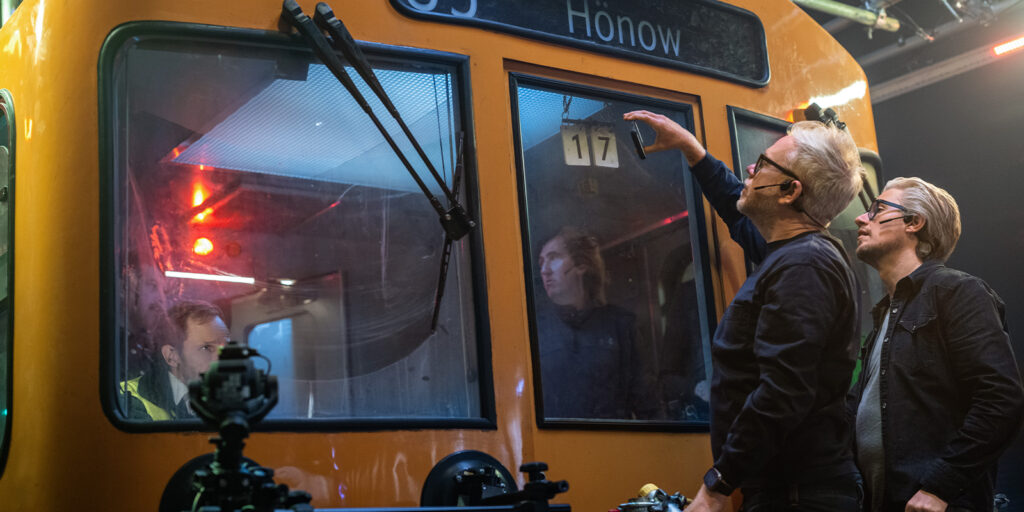
Multiple versions of the trains were built including a fully walkable 70-metre train with two complete carriages and a working driver’s cab; a “jiggle and sway” train mounted on a sophisticated airbag and pivot system; a station set through which the train could physically move; and smaller modular sections for specialty shots such as the front of the train which was referred to as the “nubbin”.
Moore began by exploring how LED volumes down the side of the train could recreate the sense of tunnel lighting as the train passed through stations. While he knew some things could be achieved with 3D content created by VP supervisor Spencer Chase, plates of the real tunnels would also be required. Around the front of the train sets, Moore and virtual production partners VSS installed a high-resolution LED cove made of ROE BP22mm pixel pitch panels. Driver’s cab shots were captured in-camera using real tunnel plates displayed on the volume, creating an authentic environment in which the actors performed as they could see the route ahead, signals passing in real time and the train appearing to increase and decrease in speed.
Outside the sides of the train lower resolution ROE CB5 5mm pixel pitch tiles were used, “similar to those used on concert stages”. As this risked visible pixelation on camera the team devised a solution by installing a thin shower curtain-like diffusion layer just off the LED surface which when combined with distressed train windows created a believable illusion.
“And then the art team had different ways to distress the windows of the train which have graphics on and were dirtied down to give them as much character as possible so you don’t notice any artifice,” says Moore.
A collaborative triumph
During the 10-week pre-production Moore travelled to Berlin to capture real tunnel plates, working with CineArray founder Dani Rose to mount an eight-camera Alexa array onto a train moving through the U-Bahn. The tunnel walls were only feet away from the cameras, some of which were rotated into portrait orientation to capture the correct angles.
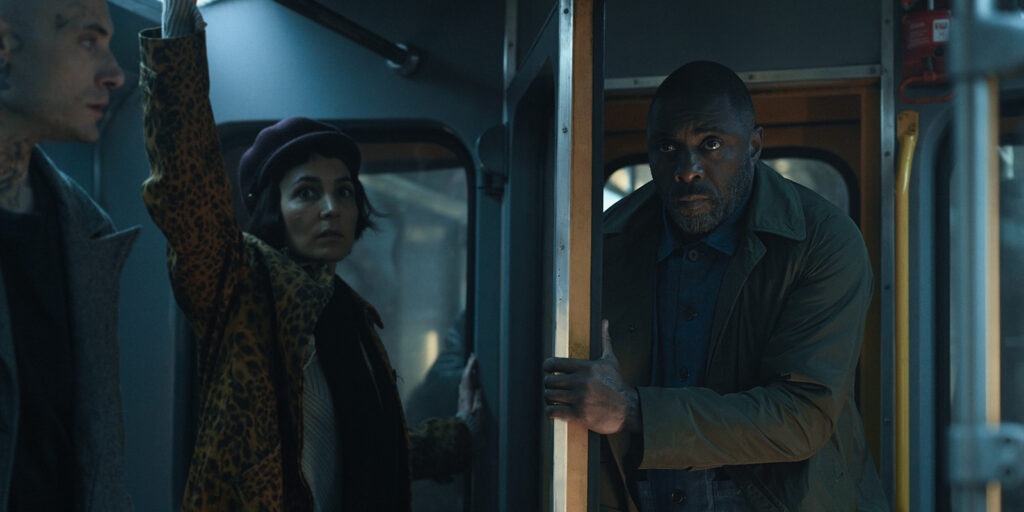
Whereas the aerial plates were shot in bright daylight for series one, the train tunnels were almost pitch black so Moore sourced ultra-fast ARRI Signature Prime lenses to more easily shoot in low light conditions. Security lighting in the tunnels also offered additional illumination.
To create convincing interactive light from outside the train set that would shine into the carriage, Moore rigged MBSE AquabatLED batons along the length of the train interior and the tunnel plates were pixel-mapped so passing light sources would trigger light sweeps inside the carriage. “It was very pleasing to see that sense of movement immediately which you wouldn’t get with a volume alone,” he adds.
Due to the sheer scale of the set construction, close integration between the camera, lighting and art departments was crucial. Much of the lighting was practical and Moore requested egg crate materials be added to fixtures to control spill and offer directionality.
“Miles of LED tape was incorporated into that set, driven by nearly 1,000 control boxes supplied by MBSE who also supplied all lighting equipment,” says Moore. “There were sections of the train where it’s almost like there are faulty connections every now and then, all contributing to the sense of unease.”
HOD practical electrician Dominic Aronin worked with Moore and gaffer Chris Stones to avoid a “fairground” look being created by visible LED chips which can be especially problematic when HDR monitoring. Small battery-powered Rosco DMG Dash eye lights were also hidden in the set to create catchlights.
“The mission control centre to manage all this was incredible. Jim had HDR monitors and SDR monitors because he wanted to see the show as HDR which is our deliverable. I would be with DIT Mark Glennister looking at the super duper monitors and then our gaffer Chris and lighting programmer Callum Crisell were next to him because so much of what we did – all my exposure adjustments and colours – was with lighting,” says Moore. “We also had Chris Django Johnston, the virtual production server operator, managing that side of things. All of these systems were talking to each other as NASA-like monitors showed me what was happening with the volume. It was all about driving different sources and once we got good at it, our team was completely puppeteering the train.”
Jiggle and sway
The special effects department also helped make the train come to life, with the entire length of one of the train sets sitting on an airbag system with a gigantic pivot in the middle. Field Smith wanted to recreate the sense passengers get when looking down the length of a train at the back carriages swinging when they travel around corners.
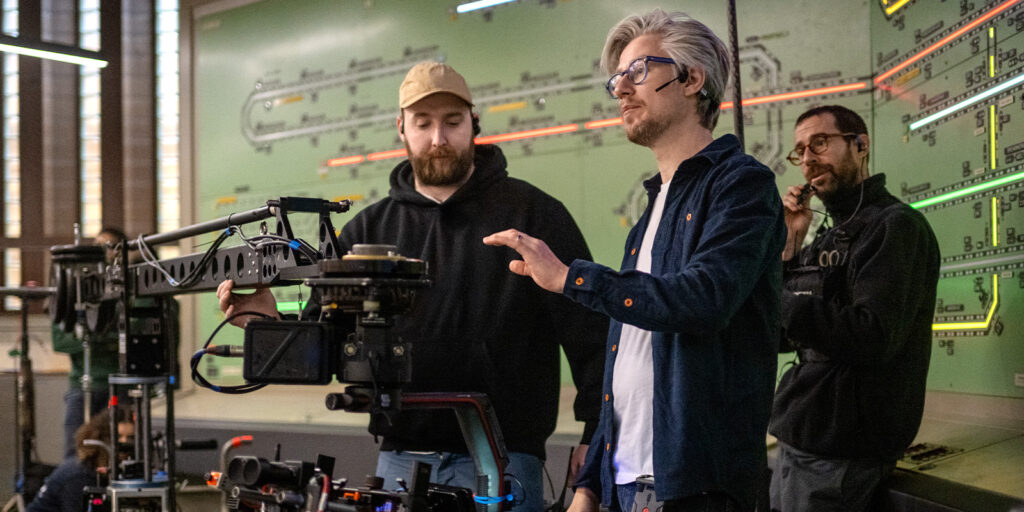
“We called it activating ‘jiggle and sway’ so everyone on the train was jiggled around together. The first test was very satisfying where the special effects team tested it with giant barrels of water simulating the weight of the set and cast,” says Moore.
When the real set and cast were in place, the movement naturally introduced instability, making it harder for A camera operator Jonathan Tyler ACO – who shot all of series one – and B camera operatorsincludingJamie Hicks, Tony Kay ACO and Laura Dinnett to hold shots still.
Moore welcomed this as it translated into tension on screen: “That’s what we wanted because it creates energy in every shot. Feeling the camera operator having to stretch around one of the posts, or trying to find Idris in the background between other people; that’s difficult to artificially insert later.”
A multi-channel universe
While around two-thirds of the series takes place inside the train, the Berlin railway control room – where radio conversations between Sam and the authorities unfold – was another pivotal setting. Also designed by production designer Roberts and, like all the train sets, constructed and shot at The Wharf Studios in Barking, it featured a colossal analogue map inspired by ‘70s railway control systems and required 6,000 control channels to illuminate blinking train indicators across the network. The warmer colour palette and wider framing of the control room contrasted with the train’s more claustrophobic and industrial cool tones.
As the story is set in winter, snow was integrated into the narrative in Berlin and the wilderness and isolation of Scotland. In one of the meeting room sets a large Rosco SoftDrop, featuring imagery captured in Berlin and with snow added digitally, was installed behind the windows in the studio.
“Needing to incorporate snow throughout was a challenge, but also very beautiful, photographically,” says Moore. “It also meant that even in that set in Barking we had snow machines constantly drifting snow down outside the control room windows.”
For the sequences set in Scotland – where Sam’s ex-wife and mother of his child is seeking refuge – The Aerial Film Company’s DP Phil Arntz and helicopter pilot Will Banks shot aerial footage of expansive loch vistas which were later composited into scenes shot in Winterfold Forest in Surrey, doubling as Scotland.
Drone specialists The Helicopter Girls executed complex aerial scenes in the UK, including a police helicopter searchlight sequence. As Moore required a narrow, high-intensity beam for this The Helicopter Girls team and chief pilot Pete Ayriss engineered a powerful torch mounted on a drone. “The Helicopter Girls also captured a POV of the train approaching a character in the train set using an FPV drone with a RED Epic attached as it was the only solution that would move fast enough,” says Moore.
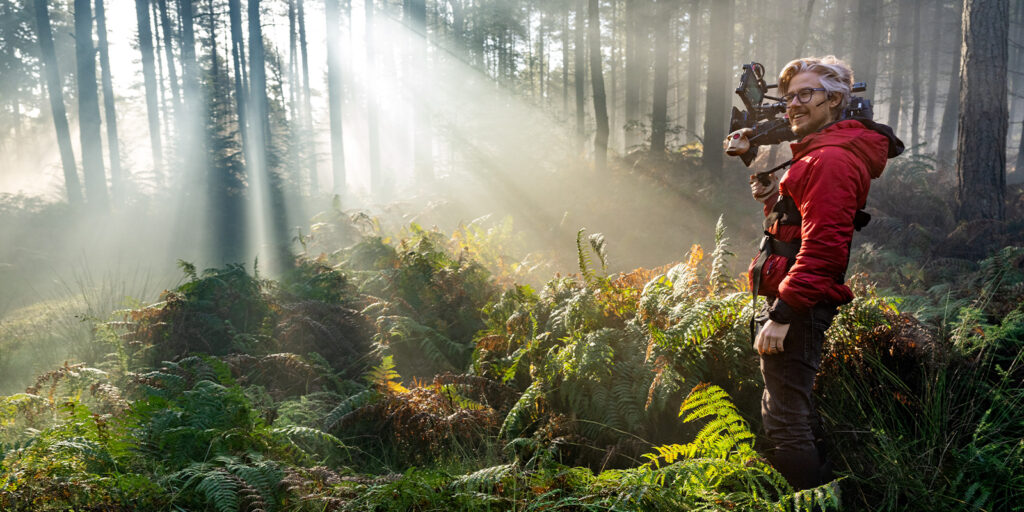
In Berlin, additional aerial footage was captured by Skynamic using DJI Inspire 3 drones which in post were remapped to match the anamorphic Cooke look used on the rest of the series.
Creating a shared illusion
One of the most elaborate sequences occurs in episode eight, when the train emerges from the underground into a Berlin depot where the police are waiting. Time at the real train depot location in Berlin where some of the scene was captured was limited meaning Moore, the crew and cast had only two and a half nights to complete it. This was made possible thanks to the precise scheduling of 1st AD Pete Griffiths and shooting much of the dialogue-heavy material in the studio in Barking first.
Field Smith also proposed what Moore considers a “genius” solution: police searchlights on the train as it pulls into the depot which determined the lighting design on location and in the studio. “Jim thought the police would have set up search lights to throw onto the train as it pulls into the station. That made sense in story terms, would look cool in the train yard, and be something we could try to replicate in the studio to tie it all together,” says Moore. “And it was a source of light that can flare into the lens and hide a lot of what is actually happening outside the windows in Barking. While an LED volume works great for in the tunnel, it maybe isn’t the highest resolution for out of a tunnel seeing a whole world.”
VP supervisor Chase made an Unreal Engine version to display on the volume showing what the train would see as it emerged out of the tunnel. Array plates had already been shot inside the tunnels, leaving and returning to the depot, to use as reference material. In the Barking studio, Moore and gaffer Stones rigged Ayrton Domino moving lights overhead and lighting crew members hid with handheld mirrors between the LED wall and the train to reflect the beams and simulate searchlights. When later matched with the real Berlin depot footage which featured parallel beam PaniBeam 1200Wfixtures, it created a seamless illusion.
It reminded Moore of the live theatre world in which he began his career: “I sometimes really miss the sense of putting on a show and members of the team hiding to create this one shared illusion for an audience. Shooting that sequence was incredibly fun and when we went to Berlin and the real train yard, and found suitable real searchlights that the Berlin electrical team hid, it cut together so beautifully. You would never know all the sequences we shot in Barking were in the studio.”
Stylistic choices
Having shot series one on the ARRI Alexa Mini LF, Moore transitioned to the ARRI Alexa 35 for series two, impressed by its sensor, dynamic range and colour fidelity. Lens tests led him and Field Smith to the Cooke Xtal Xpress anamorphics, with each one offering a unique visual flavour and allowing them to achieve the more stylised look they required.
“We had a whole bunch of focal lengths and because two or three cameras were shooting at once, we often had several in use. We had three 50mm and three 75mm lenses and each one had different characteristics,” says Moore. “We got used to some being particularly distorted on the edges or some having better contrast.
“One catch with anamorphic is often the ability to focus close is poor. We knew we’d end up with wider lenses in close with Idris a lot of the time as it’s very much in the vocabulary of how Jim saw the show.”
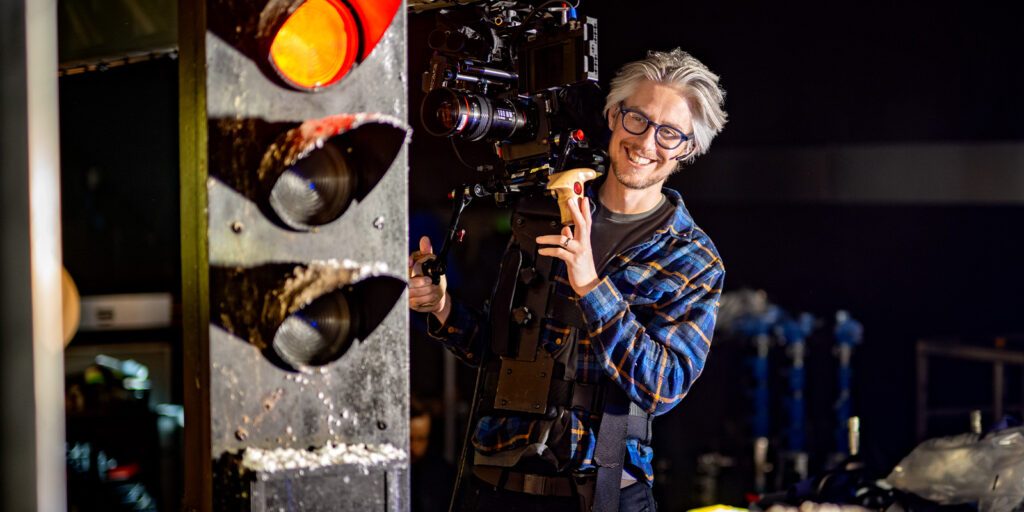
ARRI Rental, which supplied all the lenses, therefore sourced a specially modified close-focus 50mm Xtal Xpress which was the hero lens for Idris Elba’s character and ended up being used for around 75 per cent of the series, offering edge distortion and fall-off. “The lens was pushed to its limits and rebuilt twice by the ARRI Rental team during the 140-day shoot,” adds Moore.
Additional angles including close-ups of wheels were captured using DJI Ronin 4Ds rigged underneath real U-Bahn trains, with an anamorphic Blazar Remus lens that was latter remapped by VFX into the same world as the Xtal Xpresses.
When tackling a production of such complexity precise coordination is essential and was aided by Riedel’s Bolero wireless intercom system which is used predominantly on events such as Formula One. The system allowed crew members in all departments to communicate seamlessly using programmable belt packs and headsets. “When working with rapid shooting schedules and sometimes 30 setups per day, as Hijack season two demanded, systems such as Bolero reduce stress and increase precision,” says Moore.
Gold-standard grade
During the grade – which was led by senior colourist Andrew Daniel at The Look who has worked on Field Smith and Moore’s previous few projects – film grain was added and a custom LUT, built from early test footage, was created and guided on-set monitoring and live grading carried out by DIT Mark Glenister to match all of the lenses together.
When creating the LUT Daniel usually offers something close to references discussed with Field Smith and Moore who then tweak it. “Ultimately, we wanted something that would work overall rather than switching between numerous LUTs as it was such a large production,” says Daniel. “Jim has an incredible, omnipotent overview of the project at every stage and would often push the look further.”
Moore agrees: “As is a common theme with Jim, we never do the safe version. He’s always like, ‘This is great, but why aren’t we going further?’ So it ended up even moodier, cooler and greener than the show LUT was, enabling us to have this colour contrast. With locations like the control centre which has some warmer tones in it, we did a lot of split colour and even in the train itself there’s mixed colour temperatures in all of the sources in shot.”
While Moore admits he is “a pretty nerdy DP”, he trusts colourist Daniel implicitly to tell a visual story. “He graded series one beautifully, so we knew we would come back to him. As always, he works rapidly and precisely and understands mine and Jim’s approach,” adds Moore, who found as the series also features over 2,000 VFX shots, having one voice all the way through the grade was essential.
“The whole team at The Look are fantastic; it’s like slipping under a warm blanket each time we return. They supported us hugely.”
The evolution of the grade from series one to two was mostly dictated by environment. “Before starting series two I revisited the first series and was surprised at how bright it was. With this series being set underground the evolution was obviously always going to be darker overall,” says Andrew.
“We knew it was going to be bold and wanted to carry that action DNA across from the first outing. As it was such a kinetic series that was always in motion the deadlines were felt in post. Junior colourist Sam Viner assisted me and his ability to grade, his technical knowledge and ability to listen were invaluable. He’s a great talent and I’m keen to see his career grow.”
The look of the train interiors are among the sequences of which Daniel is most proud. “They are incredibly tight spaces,” he says. “Ed did such a great job at creating a really moody vibe but we always wanted to push that further and darker. We wanted a heightened version of the U-Bahn that felt almost like a love letter to Tony Scott.”
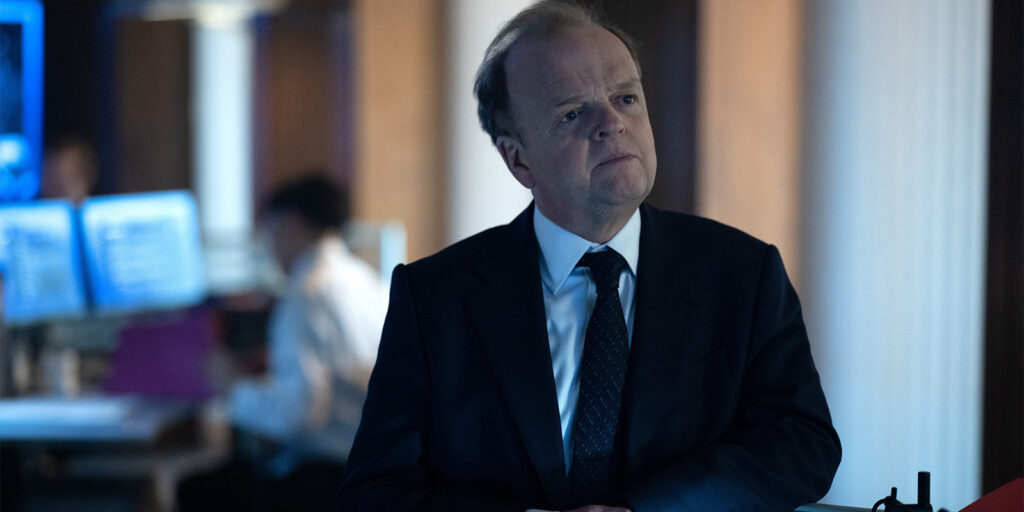
When grading a production shot in a confined space, one challenge is keeping the audience’s focus where you want it. “I didn’t want tonnes of shapes being tracked all over the place, so I used softer and broader shapes to shade and direct the eye almost shot to shot,” explains Daniel. “It was an unusual process in some sequences as every shot almost had to become its own piece. It was very in-depth and tremendous fun.”
When completing the extensive number of VFX shots, continuity was key, with VFX supervisor Reece Ewing embracing an in-camera-first philosophy. Real trains were photographed wherever possible before being digitally altered if needed, with practical lighting and stylised lenses offering texture upon which the digital artists could build.
“It was always important to Jim, Reece and I to start with something photographically, especially because we had so much inherent style in the camera, lenses and framing. So having that as a reference was important, even when Reece was taking trains that were perfectly fine and setting them on fire or damaging them in various ways,” says Moore.
Elevating the action
Series two showcases advances in technical innovation and craft as well as an emotional evolution of the characters. From ginormous moving sets to pixel-mapped tunnel lights and police searchlight illusions, the crew combined inventive techniques, theatrical storytelling and digital artistry to gripping effect.
For Moore, one of the most satisfying parts of this process was the number of people who watched the series and believed it was shot largely on a real Berlin train rather than in a Barking studio. “It’s testament to the seamless work we achieved when in fact the train was built, lit, shaken and programmed by hundreds of talented team members and miracle workers.”