
A LENS ON LIFE
From spontaneous dance routines through to the end of the world, The Life of Chuck’s unique narrative commanded an equally distinctive filmmaking approach to translate Stephen King’s short story celebration of what it means to be alive for cinema audiences.
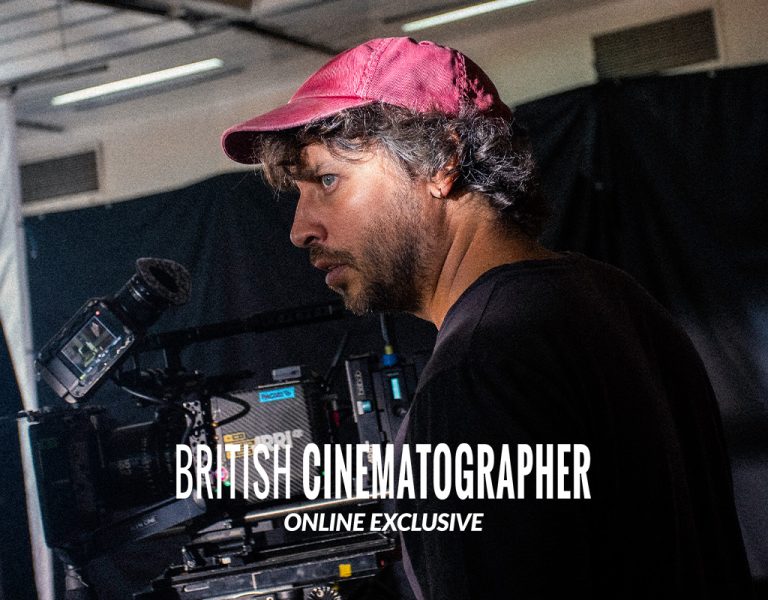
The rich and rewarding partnership between cinematographer Eben Bolter ASC BSC and writer-director Mike Flanagan began with a tweet. Although Bolter had been a fan of Flanagan’s work for years, admiring his distinctive style in series such as The Haunting of Hill House and films such as Stephen King adaptations Doctor Sleep and Gerald’s Game, their paths had never crossed until an opportune interaction on social media.
“When The Last of Us episode three came out [which Bolter lensed], Mike tweeted something incredibly flattering, calling it one of the greatest episodes of television,” the cinematographer recalls. “So I replied publicly to thank him, and not long after, he followed me. I sent him a private message, saying I’d been a long-time admirer of his work.”
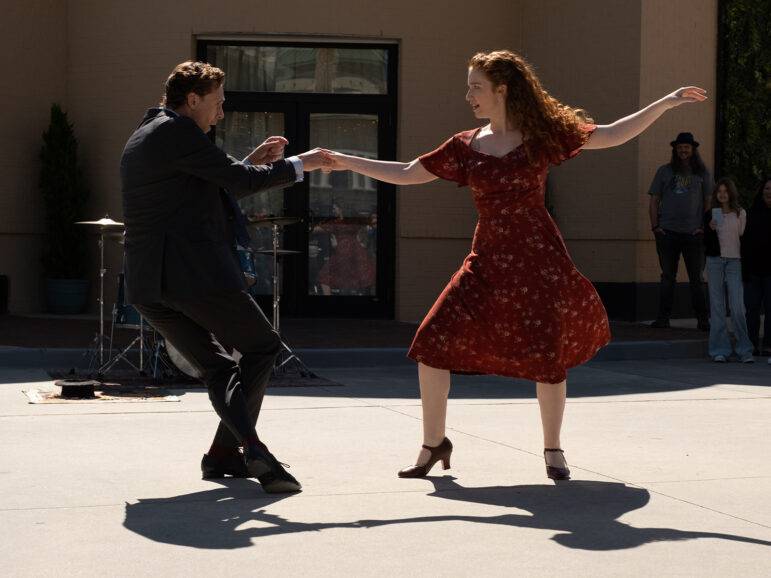
Six months later, Flanagan’s team reached out with a script for The Life of Chuck, based on the Stephen King short story of the same name. The film is primarily a non-chronological look at both the heartwarming and heartbreaking moments in the life of accountant Chuck Krantz (Tom Hiddleston). Told in three acts, the first apocalyptic act is set in a future where civilisation is collapsing, from internet failure through to an electric power outage. The second act revolves around a euphoric sequence where Chuck passes a busking drummer in the street and breaks into a dance routine and is later joined by Janice Halliday (Annalise Basso). The final act focuses transports us back to the life of 12-year-old Chuck and his experiences with his grandparents.
“Reading the script reminded me of the first time I read The Last of Us— one of those rare moments when you read something in one sitting and it takes you on an emotional journey as you witness an incredible story unfold,” says Bolter.
One of the great surprises for Flanagan when first reading King’s story was how life-affirming and hopeful the overall tone was. “In many ways, it leapt off the page as a true celebration of joy and of art,” says Flanagan, who felt the pressure when adapting the work of his favourite author and literary hero.
“When I first began reading it I was reacting to this story about the end of the world and feeling a lot of the emotions that certainly, since the pandemic, have really come to the foreground for so many of us. A feeling like the wheels have come off and the chaos is increasing. And feeling like one thing after another just seems to catastrophise. All of that was there, but without any despair and without any cynicism, and that was the starting point for a story that ultimately revealed itself to be an incredibly joyful celebration of what it means to be alive.”
Turning point
Despite Bolter’s desire to be part of the project, a period of uncertainty followed. The independently financed film faced numerous challenges and there were moments when it looked like the project may not happen at all. But then, in 2023 the SAG-AFTRA strike offered an unexpected lifeline as due to the film being truly independent and produced on a shoestring budget, it qualified for a SAG interim agreement, allowing independent film and television productions to continue working during the strike.
“It was one of those rare miracles of timing,” Bolter explains. “Suddenly, all these amazing actors’ big Marvel or DC projects were paused and they became available. But still, every day we were balancing time, budget, cast availability, and schedules. It felt like pulling off a heist—trying to get the film made before the opportunity vanished.”
Despite the shoot’s success, Bolter remained realistic about the film’s uncertain future in a difficult marketplace. “Films are incredibly hard to make these days—let alone get people to go to see them,” he admits.
A turning point came when The Life of Chuck was selected for Toronto International Film Festival (TIFF), where it won the prestigious People’s Choice Award. “It was such an unexpected win that Mike had even already left Toronto by then. Neon and StudioCanal then picked it up for distribution and that was when it all started to feel real.”
Having been impacted by the script, Bolter then turned his attention to King’s original short story for further insight and inspiration. It soon became clear he and Flanagan shared similar creative references and thematic instincts.
“I’m not the kind of DP who comes in and dictates how a film should look. I ask a lot of questions. My goal is to understand the director’s vision, and then find ways to amplify and support it,” says Bolter. “Mike had lived with the story for about a year before we even began talking.”
Flanagan envisioned the film unfolding in three distinct visual acts, each with its own tone, but unified into one cohesive narrative. From the outset, the two creatives knew they wanted the story to feel like it was collapsing inward—both narratively and visually.
“We started with this big, cinematic dreamscape,” Bolter explains. “So we chose a 2.39:1 anamorphic widescreen aspect ratio—giving it that old-school American blockbuster feel.”
As the story progressed and became more intimate and personal, the film shifted visually. They transitioned to a 2:1 aspect ratio for a pivotal dance sequence, and then finally to 1.85:1 for the closing act, which centres on young Chuck’s perspective.
Communicating through colour
The shift in aspect ratios mirrored the film’s emotional arc, but Bolter and Flanagan also wanted to create further separation between the acts through colour. Collaborating closely with Company 3 senior colourist Jill Bogdanowicz, they developed distinct looks for each section while maintaining an overall continuity. They started with a 35mm Kodak emulation LUT as a foundation and built specific treatments from there.
“In the beginning, we leaned into a heightened, teal-and-orange blockbuster look,” says Bolter. “And then for the dance sequence, we referenced the vibrant Technicolor musicals of the 1950s—Singin’ in the Rain, West Side Story. It had that nostalgic, dreamy aesthetic. And for the final act, we shifted into something more grounded and timeless.”
The third act’s visual inspiration came from 1990s and early 2000s American cinema—medium budget films with an emotional realism like Stand By Me. Bolter drew heavily from the work of Sir Roger Deakins CBE ASC BSC, especially The Shawshank Redemption and his collaborations with the Coen Brothers.
“Deakins’ cinematography during that era was incredibly elegant. It was never flashy,” says Bolter. “He has this ability to light a scene beautifully without pulling attention away from the story. That was a big influence on how we approached the ending.”
To further emphasise the shift, the team moved from anamorphic to spherical lenses, shooting wider and closer to reflect the perspective of the 12-year-old protagonist. “We wanted to be at his eye level—feeling the world from his point of view.”
Flanagan, known for his meticulous approach to filmmaking, starts from page one and works chronologically, often with the entire story mapped out on a whiteboard. “He also edits his own films, so his understanding of what he wants is incredibly specific,” Bolter says. “My job was to keep pace and offer little flourishes where I could.”
As Flanagan’s longtime DP Michael Fimognari has moved into directing, The Life of Chuck marked one of the rare times he collaborated with a new cinematographer. “It’s a bit like dating at first,” Bolter laughs. “You’re learning each other’s rhythms, figuring out how to work together.”
Flanagan also presented Bolter with a unique challenge on set: in each scene, the cinematographer was to find one visual element—called the “mystery woohoo shot”—that Flanagan hadn’t already envisioned. “It was a playful way of keeping things open which Mike hadn’t explored before,” says Bolter. “Sometimes it was planned, sometimes it happened spontaneously.”
Magical musical moments
Filming took place in Fairhope, Alabama—a town chosen for its timeless and nondescript quality which offered the kind of universal Americana setting required. One of the most significant locations was a promenade for the dance sequence—a six-minute scene that was one of the few scenes not storyboarded.
Rehearsals for the pivotal part of the production took place in London, while Bolter and Flanagan prepped in Alabama. “Every day we’d check in over Zoom, watch the cast rehearse, give feedback and make small adjustments,” says Bolter. Drawing from classic cinematic dance scenes—from the silent era through to La La Land—they quickly learned that simplicity is the key to making dance work onscreen.
“You have to see the dancers head to toe. All the footwork, the gestures—that’s where the magic is. If you cut in too close, it stops being about the dance and becomes something else,” he adds.
Storytelling was still at the centre—Chuck’s glance at the drummer, his connection with a girl in the crowd—but the core of the sequence was the wide, uninterrupted shots of two people dancing. Like the essence of the film, it was about finding beauty in fleeting, human moments.
Focus then shifted to an intricate challenge: managing the interplay of light, time of day, and shooting continuity. For Bolter, this required detailed planning and strategic thinking, particularly because the dance sequence needed to appear seamless despite being filmed over multiple days.
“We were trying to track the sun, to backlight everything, so it felt like it all existed in the same moment,” Bolter explains. “The sequence takes place over six minutes in the story, but we had to shoot it over four days, ensuring it looked and felt continuous.”
To achieve this, Bolter mapped out the sun’s path across the shooting location, calculating precisely where light would fall at different times of day. His goal was to preserve a consistent backlit quality throughout the entire sequence. Bolter notes how even subtle variations in lighting—such as switching from backlight to front light—can create a disjointed experience for the audience, resulting in the sensation of a different time of day and detracting from the sequence’s emotional flow. The filmmakers tried to chase the sun and be backlit whenever possible while still giving the actors freedom.
Another centrepiece of the story occurs near the end of the film’s first act at a cul-de-sac location described as “in the middle of nowhere” which serves as the setting for a dramatic power outage.
Bolter had to approach this sequence with technical precision and a creative eye: “I knew I had to design a two shot looking into the cul-de-sac, capturing the houses and street lights as everything starts to shut down,” he says. “That meant lighting it to feel moonlit, while also reflecting a layer of artificial electricity. We then had to be able to control the entire setup block by block, so we could shut off the lights practically—street by street, house by house.”
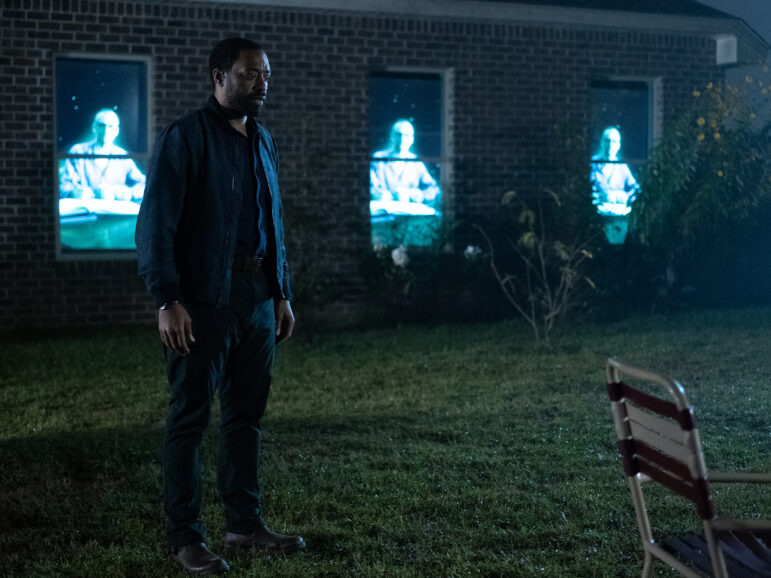
Adding to the scene’s complexity was a surreal element of the narrative where a ghostly image of Chuck appears simultaneously in every house window, a vision described in the book as an “ectoplasm-like” manifestation. The filmmakers were determined to accomplish this moment practically, without leaning on visual effects.
Rear projection into the windows did not deliver the contrast needed so instead they purchased 75-inch OLED televisions, rotating them vertically, and embedding them into the windows of each home. The screens displayed a pre-recorded image of Chuck, allowing the team to control each one in real-time. “It’s such a surreal moment that doing it practically actually helps with audience buy-in,” says Bolter. “As it’s real, the slight strangeness of it works in our favour.”
Lighting the nighttime sequence was demanding due to the inherently unnatural quality of moonlight. “Moonlight looks fake,” Bolter says. “You’re mimicking something we don’t really see. You don’t walk into a cul-de-sac that’s lit like that in the real world.” His earlier work on a night sequence set in a cul-de-sac in The Last of Us episode five was helpful for the large-scale moonlit scenes. But the scene in The Life of Chuck brought with it an additional obstacle: simulating tungsten-lit streetlights and interior house lights on top of the moonlight effect.
To heighten the visual impact and serve the narrative, the lights had to be shut off in a choreographed sequence. The lighting team – headed up by gaffer Sean Finnigan – broke down the cul-de-sac into four zones, triggering power-down cues with the touch of a button. Bolter credits Finnigan and his team for engineering seamless lighting transitions despite budget limitations.
“This was the sequence we spent the most money on,” he notes. “It was a hybrid of old and new technology—HMI, tungsten, ARRI SkyPanel S360s and S60s, Astera Titan tubes [with all lighting equipment supplied by MBS Equipment]. LED fixtures gave us the flexibility to time everything perfectly.”
Trusted tools
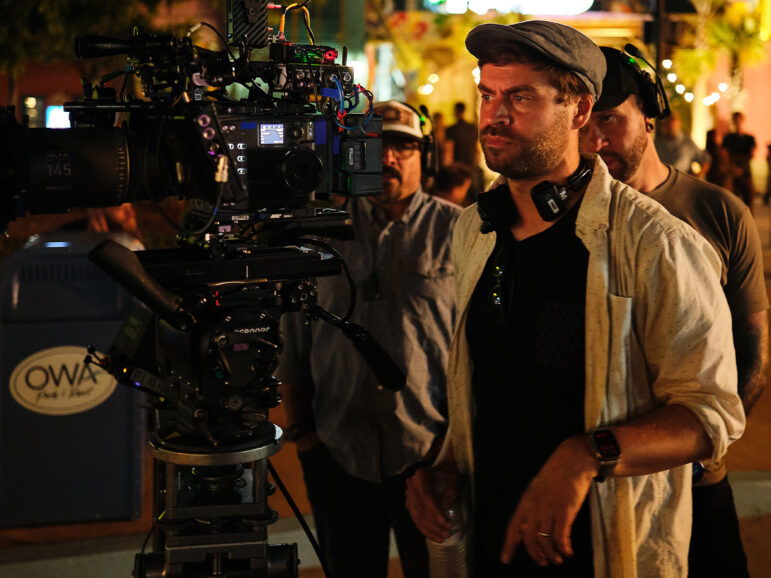
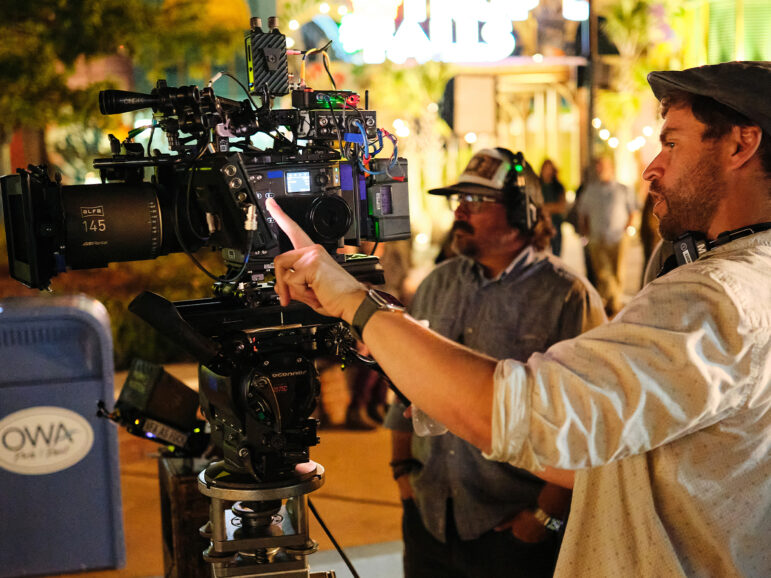
When it came to selecting the right camera system, Bolter turned once again to the ARRI, having used their systems reliably for over a decade. “The Alexa 35 just gives you the best combination of dynamic range, colour science, and dependability. I also like working with a Super 35 sensor.”
For the first act, he opted for the ARRI ALFA anamorphic lenses, renowned for their dreamy bokeh and softness. These same lenses were used for the dance sequence, this time cropped to a 2:1 aspect ratio to invoke a nostalgic, almost cinematic quality.
Later in the film, Bolter transitioned to spherical lenses. Although many lens sets were tested, Bolter kept returning to the ARRI Signature Primes. “I assumed they’d be too sharp, too clinical,” he admits. “But I’d been using ARRI’s Impression filters, which sit behind the rear element and subtly soften the image.” The result was a razor-sharp centre clarity that gently softened toward the edges, perfectly complementing the emotional and dreamlike tone of the act focused on a young Chuck.
The Impression filters became another creative tool, with Bolter adjusting their intensity depending on each scene’s emotional needs. “We went strongest on the filters for the prom dance scene, because that’s the most magical part of the film,” he says. “When we needed things to feel colder or more grounded, we just removed them.”
Operating the camera is something Bolter describes as deeply personal—like handwriting. “It’s how you find your voice as a cinematographer,” he says. “Operating teaches you how to read actors, how to move intuitively with a scene.” But when he started working in the US, where union rules typically prevent DPs from operating, British cinematographer Bolter found himself adapting to a new approach.
“I began collaborating with operators who were incredibly technically skilled,” he says. “And that freed me up to focus more on lighting, composition, and the broader picture. If you’ve put in the ground work and you know exactly what you want, a great operator helps you achieve that vision.”
For this production, Bolter worked with James Reid SOC, a camera operator who had collaborated with Flanagan on previous projects. Their synergy was rooted in shared creative priorities: Flanagan had specific camera moves in mind, while Bolter focused on specific framing and visual storytelling. “It was never about movement for movement’s sake,” Bolter emphasises. “Every choice was story-driven.”
One of the most expressive sequences—the dance—called for flexibility and emotional intimacy. The scene was captured using a blend of techniques: Steadicam for immersive, performance-driven moments, dolly tracks for controlled movement, and “an old-fashioned” crane for the sweeping final shots.
“During the last couple hours of the final dance shoot, we used a crane to pull back, drop down, and sweep across the floor. That became the hero shot,” says Bolter. “One of the final takes was just perfect—emotionally and technically, everything aligned. The performers nailed it. When we watched it back everyone in the tent had tears in their eyes.
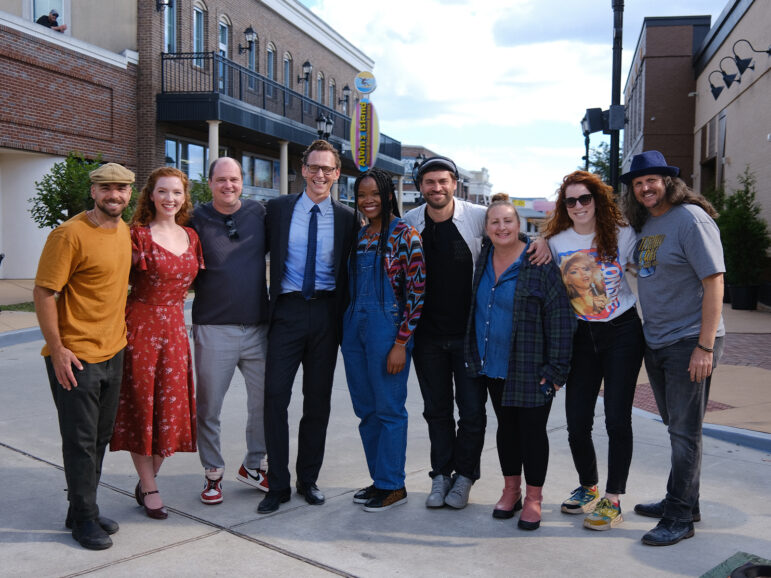
“Tom [Hiddleston] had burned a hole through the soles of his shoes,” Bolter remembers. “Annalise [Basso] had danced so much over four days that her toes were bleeding from blisters. But we got something truly magical. It’s one of my favourite things I’ve ever shot.”
Bolter also praises the crew for their skill and dedication when capturing this sequence and throughout the shoot, including 1st AC Troy Wagner, whose precise focus pulling was “legendary.” Despite the complexity of the dance scene and its unpredictable blocking, Wagner “didn’t miss a single take,” Bolter says. “We never had to go again for focus.”
Technical collaboration
During the crucial LUT-building process Bolter worked closely with Bogdanowicz, carrying out camera tests in London and Alabama before they refined each act’s visual palette, ensuring consistency across the entire film. “We wanted each act to have its own identity, but still feel connected,” Bolter explains. “We didn’t want the trailer to look like it came from three different movies.”
Effective pre-production was also essential in achieving this as the detailed shot lists and storyboards the team created closely mirrored the final results on screen. “As a wrap gift, Mike gave me a leather-bound copy of the script, shot lists and storyboards,” says Bolter. “It’s incredible to flip through. It’s just the movie. We did the movie in prep and then just had to deliver it during production.
“There was not a single reshoot or pickup—we just had to hustle like crazy. But it was a film the whole crew really believed in. It felt special while we were making it, and as a result we got the best out of everybody. It was a genuine, positive filmmaking experience for all.”