
GOING FOR GOLD
Director David Kobzantsev explains how he worked with DP John Frost to craft a short film grounded in the reality of Farmland USA.
Which creative choices in cinematography were most important in shaping the project’s visual style?
One of the most important creative choices was deciding early on that the cinematography should feel grounded in the reality of the locations rather than overly stylised. The stylisation would come through as an immersion into Farmland USA and its inherent characteristics that make up a storybook-centric look.
The ecosystem of agricultural terrain is organically cinematic; it’s just a matter of choosing the kind of camera that will embrace the dreamy nature of that world, which led us to use the ARRI Alexa Mini.
From an inspiration standpoint, there were extensive conversations about the “look” of the film as a whole. John Frost, our cinematographer who led principal photography for all of the Iowa-based exteriors, including the race scene, and I loved the true-to-life pastoral world of Jeff Nichols’ Shotgun Stories – it was gritty, dusty, but still captured postcard Americana. Another huge inspiration for me for the cinematography of the film was Tony Scott’s Days of Thunder. How Tony captured all of his Daytona Beach race sequences shaped how I wanted our race scene to look and feel.
In contrast, the interior scenes — particularly the county western bar and pool hall — were designed to feel like a release from the dust-choked storybook world and into the provocative nightlife of small town teenagers — think Dirty Dancing and Footloose. Everything shot interior allowed for creating a clear visual shift that reflected where the characters go to express themselves.
Were there any particular shots or sequences that you’re especially proud of capturing?
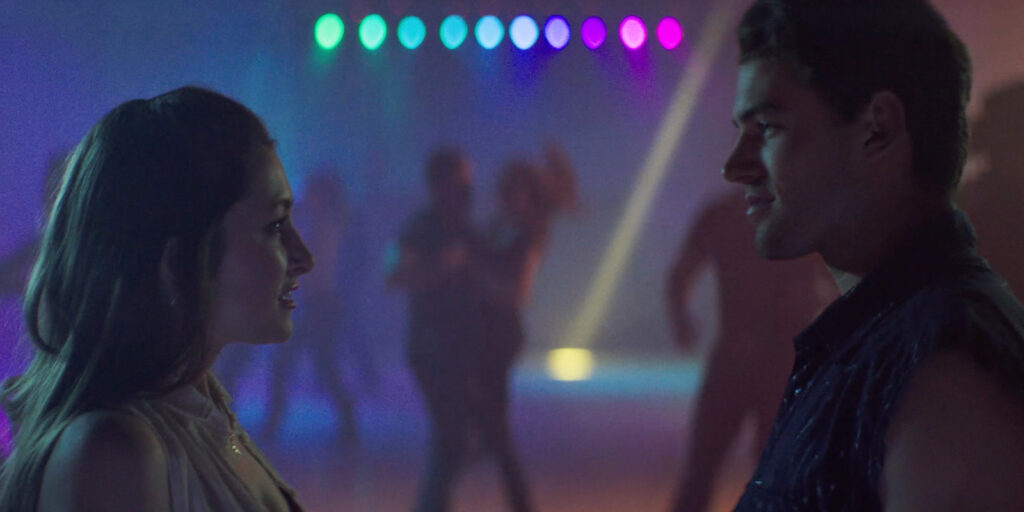
The country western bar and dance floor sequence stands out. It was ambitious in terms of blocking and camera movement, with a large number of dancer extras sharing the frame while the camera stayed closely connected to the two leads. Rather than relying on fragmented coverage, the cinematography of the scene was approached with the mindset of a continuous movement; a oner, allowing the vortex-like force of the dance floor to become very powerful.
I’m also proud of the race sequence, particularly because so much of it was captured practically. Shooting from unconventional modes of a follow car, and chasing after our picture vehicles at high speeds, gave the visceral unpredictability of a rural road drag race that I was ultimately envisioning and was essential to pull off or “sell” this part of the story to an audience: that being that a retrofitted farm tractor could actually compete head-to-head with a Mustang.
How did location influence the way you framed or lit scenes?
The locations significantly influenced framing and lighting decisions. In the farmland exteriors, there was very little interest in reshaping the environment. Framing was often dictated by the horizon, available light, and natural geography, which helped reinforce the vastness and isolation of the setting.
The interior locations required a more deliberate approach. The bar was naturally dark and crowded, so the framing focused on creating depth within a confined space, while the lighting was guided by existing sources in the environment. The goal was always to make the spaces feel believable rather than constructed. We used as much ambient lighting as possible inside the dance venue, including the incredible concert lighting available to us on the dance floor; the array of colours and how they filled the background, whilst being vibrant, never distracting, but absolutely made the footage gorgeous.
Were there moments where simplicity or restraint in camera work made the story stronger?
Yes, particularly in the quieter character moments. Scenes between Callie and her father sitting on the edge of the truck bed, watching the sunset. The camera work followed suit to how we approached almost the entire film, shooting handheld. It creates intimacy, but flows beautifully with the rest of the film.
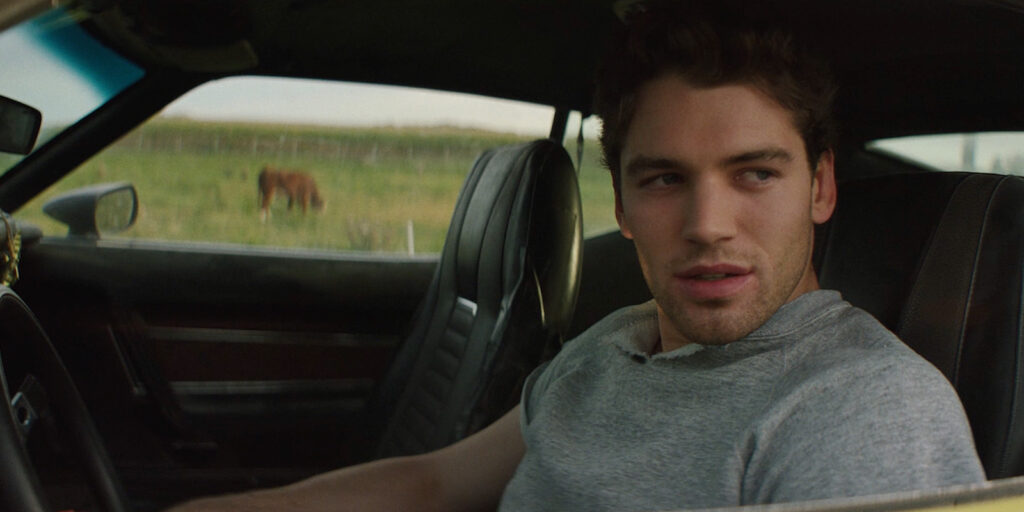
The scene immediately following the truck bed scene was the character of Zack being introduced, having a raging fit inside of his car- also shot handheld, also creating intimacy, but we didn’t change anything significantly between the two from a restraint perspective. It’s the paradigm shift of the energy of the performances—both permeating equally from the characters in their respective scenes, with the same nuances and attention to detail. Regardless of whether it was teenager-angst-fuelled anger or yearning for first love, the camera work stayed simple and followed the actors’ performances kinetically.
Which cameras, lenses or other equipment did you choose for the production and what influenced those decisions?
The camera choices were primarily driven by the environments and the types of movement required. The ARRI Alexa Mini was used extensively for exterior work and race sequences due to its reliability, dynamic range, and ability to withstand vibration and physical rigging.
Also, the Mini was the ideal choice to make even the dusty roads, grand blue skies, and ostensibly limitless cornfields feel slightly dreamy, which really amplified the rural romance of it all.
The Mini retains filmic character, particularly in its noise structure, which gave the footage that classic ‘80s/’90s blockbuster texture envisioned for the project.
For interior scenes, particularly in low-light conditions, the RED Gemini was chosen for its sensitivity and colour response. Also, for its glossy output–as we mentioned earlier, there is an intentional departure from the farmland to the opulence of the nightlife world that we enter halfway into the film.
LOMO anamorphic lenses were used throughout the project to give the film a cohesive period-leaning character. A lot of research was put into understanding and identifying how actors looked on-screen with anamorphic lenses and how closely it resembled the cinematic look of many ‘80s blockbuster films.
What lighting setup and fixtures did you use and how did they help achieve the project’s visual tone and mood?
The lighting approach was intentionally straightforward. Exterior scenes relied largely on available light, with minimal shaping, to maintain a naturalistic feel. This allowed the farmland to exist as its own presence in the film rather than being overly designed.
In interior scenes, lighting was motivated by practical sources within the space, particularly in the bar and pool hall. Colour and contrast were introduced carefully, especially on the dance floor, where lighting became part of the emotional language of the scene without overwhelming the performances.
Were there inventive techniques or approaches that helped highlight the city, landscape or environment?
The race sequence really pushed us into more inventive territory. We used FPV drones flying at up to 90 mph to put the audience right in the action. For that, we used RED Komodo and GoPro Hero 12 cameras, alongside an Inspire 2 for broader aerials and establishing shots of farmland.
We also shot the race with multiple cameras at once, including GoPros mounted inside the Mustang and low to the ground behind the tyres, to capture dirt spray, movement, and energy that would’ve been impossible to fake.