
THE CHRONOLOGY OF WATERS
Telling a powerful tale based on Lidia Yuknavitch’s memoir of the same name, The Chronology of Water’s visuals offer a boldness worthy of its singular story – here, Corey C. Waters explains how he put those visuals together, despite joining the team one week into production.
Even under ideal circumstances, some cinematographers might feel pressure signing on to shoot a director’s passion project eight years in the making, but doing so one week into production takes things to a whole other level. Yet that’s exactly the kind of pressure that Corey C. Waters, director of photography on Kristen Stewart’s The Chronology of Water, took on – joining the project after the shoot had already begun.
“It was pretty crazy,” Waters reflects. “I got the call from my friend, Maggie McLean, who was the producer. Maggie is somebody who I’ve worked with on a bunch of commercials. We connect really well and we have a nice friendship outside of just filming together. So I felt a lot of comfort knowing that Maggie was involved, it was a nice seal of approval. I also knew the production designer, Jen Dunlap, from a short film we’d made about a year before, and she and I had such a great, strong working relationship too.”
Seeing the vision
Even with familiar faces on board, though, the task at hand was understandably a challenging one. “It was obviously scary hopping in on stuff that had already been shot. I was thinking about how I would incorporate that into what I would do moving forward, especially as the previous DP and I had very different ideas.
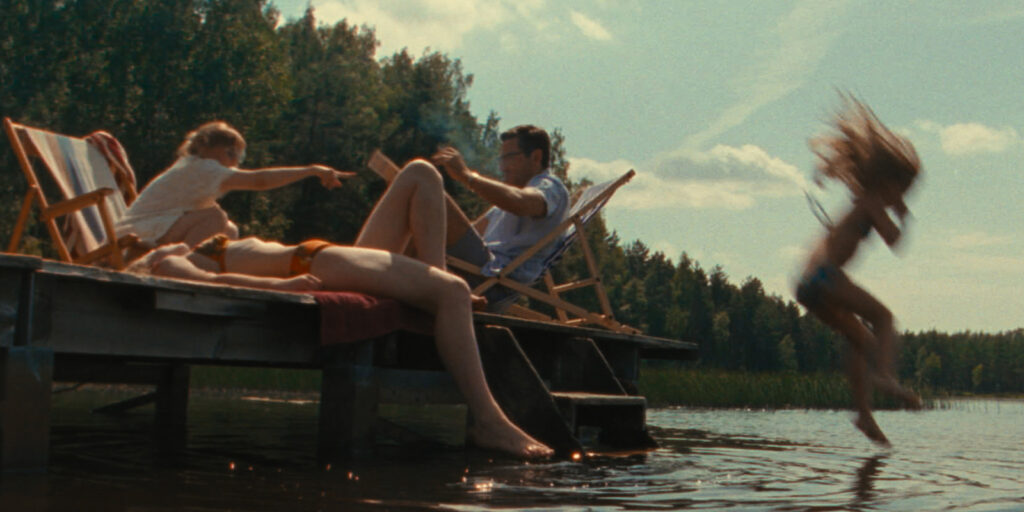
“I also had to contend with a lack of tech scouting, a lack of preparation, a lack of playing around on set. All those things were terrifying. But I think the combination of knowing people and Kristen’s really strong vision made me feel comfortable enough to hop into it, and I would basically spend every second that I had free looking at photos of the next location, trying to come up with lighting plans and coverage. I think we got there in the end.”
That might be an understatement. The finished product of The Chronology of Water, based on the memoir by American writer and teacher Lidia Yuknavitch, is a raw, unflinching exploration of surviving abuse and a compelling interrogation of the power of writing. Following Lidia across several decades of her life, with many bumps in the road along the way, the visuals are consistently affecting, often disturbing, but are in constant service of the story – evolving alongside the main character as time goes on.
“A lot of that evolution came from lens length,” Waters reveals. “We start off the film, when Lidia is young and feels trapped, quite close to her. Then, as she grows and the world opens up a bit, we give her more space.”
For this, Waters used a combination of ARRI Ultra 16 primes, Zeiss 11-120mms and Canon 8-64mms, with the Zeiss lenses used for more restrained coverage while the Canons brought warmer colours. As the DP explains, though, there was no set plan in place – choosing the right set-up was almost solely led by performance.
“It wasn’t necessarily a case of saying, ‘Okay, now she’s at this point in her life, we’re going to go to the 16mm or the 12mm,’ or whatever. It was really about assessing the psychology of every scene and going with what felt right at the time. That’s maybe the most exciting thing, for me, about cinematography, is what the lens length can say about the scene.”
Emotional donations
Bringing Lidia’s psychology to the screen is English star Imogen Poots, whose performance has seen her scoop awards at festivals in the United States. Exploring a range of heavy themes throughout its runtime, the film asks its lead to go to difficult places to deliver its messages, with the actor’s skill helping to heighten their impact.
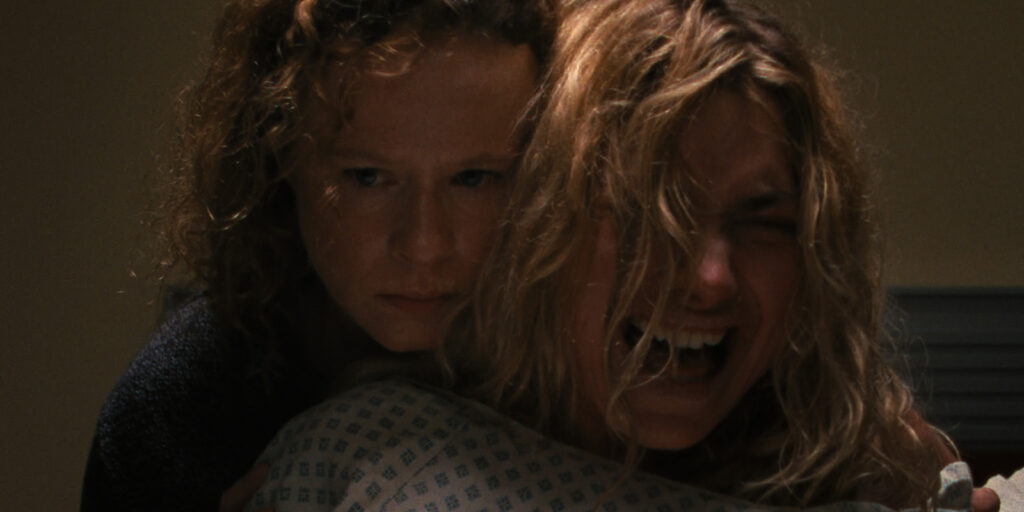
“Imogen’s instincts are next level, I can’t sing her praises highly enough,” says Waters. “She has an out-of-this-world level of creativity, and how she thinks about her character, even blocking, is incredible. It was sort of a masterclass to be around her perspective. There was a big element of spontaneity where we’d get to a space and we’d set the camera up and just explore for a little bit, feeling things out. It was always about how we could get the most emotion into the story.”
As well as working alongside Poots to serve the narrative, a major part of Waters’ role was to make sure she felt as comfortable as possible on set, giving the actor time and space to be vulnerable – closely collaborating with her at every stage.
Waters explains, “There are so many scenes where you need to be really delicate and really sensitive around actors. There’s an emotional donation that’s happening from performers to get to those places, and I try to make it very clear when I’m with them that I’m an emotional support. I’m here and I’m with you.
“Yet I also like to be really quiet in those moments. There might be times when we’ll run a take and I get an idea of how to improve it, maybe shooting under a different set-up or in a different area on set, but I’ll always make sure to discuss these ideas of changing the plan with the actors, because it’s always based on what they’re doing.”
From western United States to Eastern Europe
While Lidia’s story takes place across the US – including Oregon and Texas – Waters and his crew shot in Latvia and Malta, which proved a “wonderful experience” during which Waters made plenty of friends, but also posed challenges such as language barriers with local talent and a difficulty securing equipment from rental houses. The biggest obstacle to overcome, however, was transforming Eastern Europe into the US, especially on a tight budget.
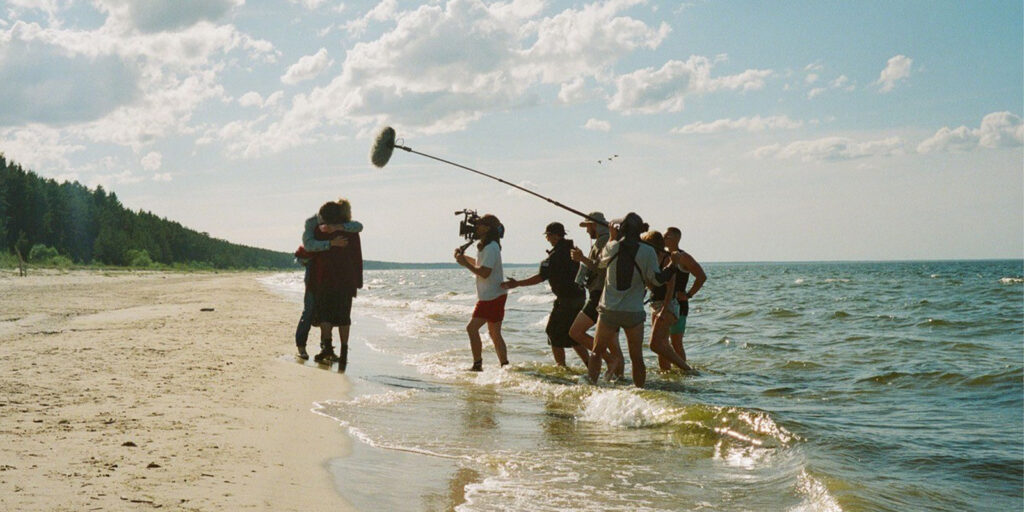
“I spent a lot of time trying to find the right angles that work, looking back and forth between photos of Oregon, photos of Texas, and finding zones that felt right and fit the ‘80s and the ‘90s aesthetic – that was really important.
“But I think we got there. We had some really great locations, and a great manager who helped find these locations, Daiga Licite. And in truth, I don’t think we could have done it properly in Oregon now anyway. It’s become so built up in so many of the places where the film takes place, so Latvia proved a blessing, and our production designer, Jen Dunlap, created so many settings that felt lived in and felt right for the era.”
Visual imperfections
Adding to the sense of time and place is the decision to shoot on 16mm Kodak film (a mix of 7219 500T and 7207 250D), something director Stewart was committed to from the off. The move proves fruitful, making audiences feel as though they’ve stumbled upon some found footage in the back of a wardrobe, offering a window into Lidia’s life – a window showcasing both the good times and bad. Shot primarily on the ARRI 416, the use of 16mm helped to provide visual “imperfections” that mirror the often imperfect life being shown on screen.
“Looking at film, there’s a blurring of the edges that happens. It makes me think of the films I grew up watching. 16mm has these imperfections. It felt right to lean into those, the mistakes and the hairs and the dirt and all these things that actually happened to our film. We were embracing it as opposed to cleaning it up and washing it out. We were excited about those mistakes and accidents, just as Lidia makes mistakes and has accidents.”
Light as memory
Waters also avoided being too clean and polished within the lighting design, working with gaffer Eduards Stefanovics to create a less clinical approach to evoke a sense of memory and melancholy. This was driven by the DP’s own relationship with light, giving the example of how “looking through a dirty windshield, with a high sun peering through the trees” instantly takes him back to football practice as a child. To achieve this, he used a range of tools, including a mix of ARRI HMI lamps, SkyPanels and bi-colour Nanlux LEDs, with the latter in particular making their mark.
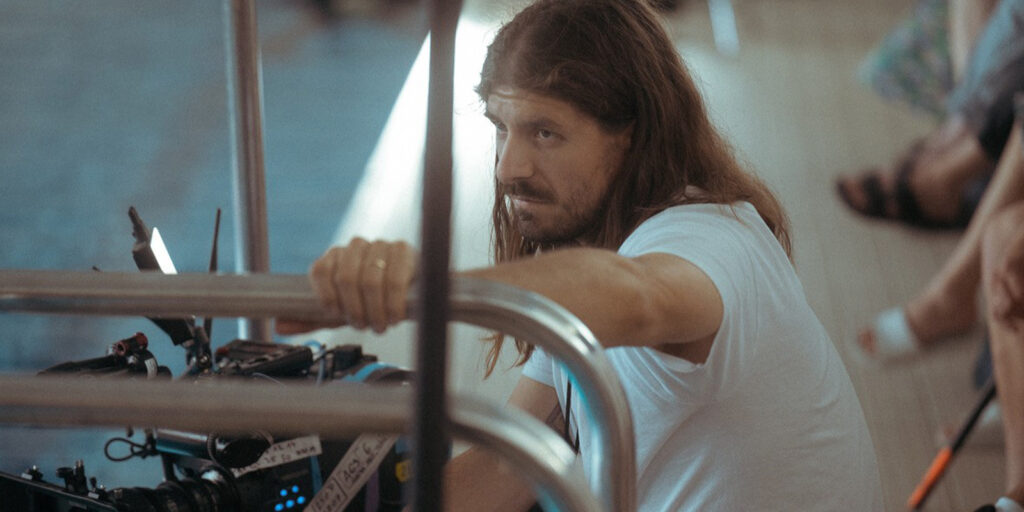
“The Nanlux lights have really nice colour, especially when they are tungsten balanced. Sometimes with the LED stuff, I feel like you lose a little bit of that colour. I tend to prefer using tungsten if I can. But we ended up utilising these Nanlux lamps, and it didn’t feel like they washed the image out or lost density.”
Every step of the way, of course, Waters worked closely with Stewart to bring her almost decade-long dream to life. Speaking at Camerimage in November, Stewart heaped praise on her “brother” Waters for instantly understanding the visual demands of the film and respecting the sensitivity of its story. For the cinematographer, a dedication to experimentation is what helped them to connect so quickly – and what made his experience in Eastern Europe so memorable.
“Kristen and I share the same readiness to flip the page,” he explains. “We have a commitment to experimentation and wanting to do things differently, and that really helps you connect in a filmmaking sense. Kristen doesn’t think about filmmaking in the normal, traditional ways. She’s always trying to flip something on its head, and if it feels expected and obvious, it’s got to go. We have to mix it up. So that made the whole process really exciting for me.”