SOAP OPERA DIGEST
Chris Ramage GBCT runs through the comprehensive camera and lighting package he relied on when making soaps history with Corriedale.
When I was initially approached by director Duncan Foster to DP both of ITV’s flagship soaps Emmerdale and Coronation Street for a unique one-off co-production, I was delighted to be in the frame – especially when I was told it would involve unique and dramatic storytelling with explosive stunt elements predominantly shot at night.
Achieving a filmic look was heavily driven by the lighting and camera package, particularly the use of the ARRI Alexa 35. Its dynamic range allowed us to work naturally with practical sources like headlights and brake lights while still retaining texture and atmosphere in the darkness. Technically, the biggest challenges were coordinating the large-scale stunt work and finding believable ways to light an entire road sequence motivated almost entirely by vehicle lighting. Every decision – from lensing to colour palette – was designed to make Corriedale feel like an event drama rather than simply a crossover episode.
This project would involve one hour of the co-production and two half hours of each show on the same evening setting up the story for the hour… I would be responsible for setting the look of the project and the technical package, both camera and lighting.
The story leading up to the series of car crashes revolved around a Corrie wedding and the guests embarking on a minibus journey, and an Emmerdale hostage scenario developing into cars ultimately crashing into an overturned bus on an isolated country road. This crash site would form the meeting place for both sets of characters to band together to save lives, but underlying tensions and animosities would soon resurface.
From the start of the episode, there is a sense of threat and simmering anger and it’s all very dynamic, with vehicles moving at pace through the countryside away from Weatherfield and Emmerdale to a point of confluence, so we wanted to set a look and mood that would be unique for this project and offer a different feeling to the traditional look of both shows.
Everything starts with the story
For me, everything starts with the story, and the photography should work alongside the storytelling and never overwhelm or distract from it, so I was eager to begin breaking down the story points.
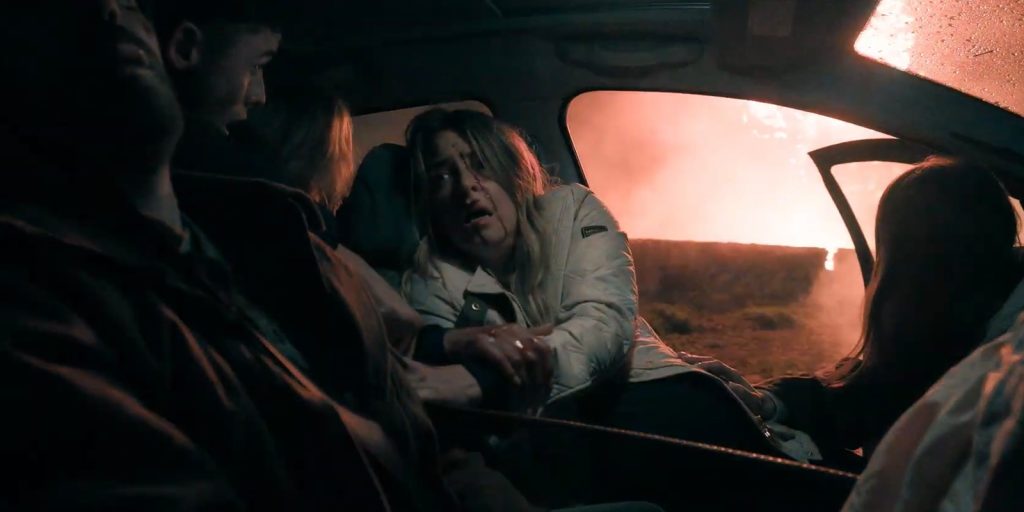
After looking at the scripts, which involved a series of explosive car crashes during the night resulting in significant fire elements coupled with dynamic chase sequences through woodland, Duncan and I wanted to move towards a high-end look and push the ambition, creativity and feel of both shows to offer our audience a very special one-off cinematic experience. This would involve the use of a cine camera package which would be the start point for the tone of the whole project.
Looking at the history of the shows, they are traditionally shot with system cameras (Sony 2500 0r 3500) with Canon ENG lenses such as J21s with a 60% studio to 40% location split. As with any production, it’s cheaper and more efficient to shoot in a studio environment, but both shows know that The Street or The Village are the USP of the productions and they maximise the storytelling at these locations whilst making the budget work.
In the studio, the cameras are mounted on peds, enabling the camera operators to frame, focus and track the camera independently; it’s a wide skill set that the camera operators do a great job of executing. There are two operators with two ped mounted cameras with a camera assistant to manage the cables and patching of the studio infrastructure. If we use a comparable page count formatting system to a drama, the average page count in the studio is approximately 20 and 10-12 on location.
The studio lighting designs are historically designed for a multi-camera environment with a fixed studio grid with a combination of hard and soft lighting. There is also a package of floor lights available to use, mainly Aladdin soft lights ranging in size from 4x4ft to 30x30cm to offer extra lighting options and to push light into the artists’ eyes, as top lighting can sometimes feel unsourced and deliver the much-feared panda eye look. Having said that, both shows have evolved their top rig lighting significantly, and the arrival of LEDs has enabled large soft sources to be rigged in the grid, offering cosmetically pleasing wrap-around natural soft lighting.
I have personally designed the lighting for many of these sets, and I think the Woolpack at Emmerdale looks fantastic on camera, full of depth and tonal variation helped by the fantastic production design which runs through both shows. The whole camera and lighting setup enables for shooting at pace whilst maintaining high standards.
The same cameras with a fibre back are used on location, largely mirroring a standard drama setup with Chapman dolly, sliders, and a remotely operated camera crane available to deliver movement and scale within the time frame. All pictures are fed back to a scanner van, where the DP and director view and monitor the action.
On location, the two camera operators have two assistants and two grips on a standard day.
Likewise, the sparks crew increases to four from two in the studio.
Lighting flavours
The lighting package is a mix of Arri hard lights up to M40 in output with a number of LEDs available in different flavours ranging from SkyPanels to Vortexes and Velvet lights as well as a small selection of tungsten lighting. For night shoots or special scenes or locations, additional lighting can be hired in.
Throughout the year, both soaps commission a series of special episodes where a larger pot of money is allocated to fund stunts, guest locations and sometimes an upgrade in camera equipment. Corriedale was the 10th such special project that I had personally worked on in over 20 years. I also have significant experience working across high-end drama, commercials and films, and over the years I have tried to bring this experience with cine cameras, optics and cine lighting into the world of soap to offer up a more stylish, current and cinematic experience for the viewer.
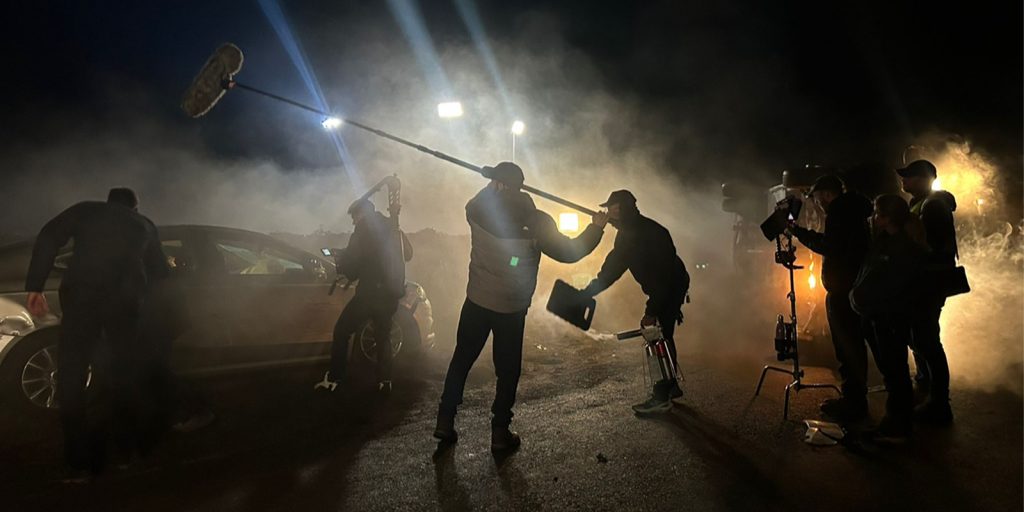
The crews on both shows have good levels of experience working with Alexa Amira, Mini, FX6 and recently Ronin 4D, and although the use of such technology is limited as the shows do have their in-house system cameras, increasingly there is a hunger from directors and producers to embrace cine camera technology and the creative possibilities they offer.
The camera teams on the productions have a very positive attitude with any new technology and enjoy expanding their experience and expertise when there is the opportunity. In the past the crewing for special episodes varies, and that’s across the board at all the soaps. Sometimes for two cameras the operators will continue to self-focus on cine zooms or one camera might have a dedicated focus puller and one self-focus ,or occasionally the crewing setup will be very similar to a standard drama camera team – in this case, focus pullers are generally brought into the existing teams or an assistant steps up to focus.
I was brought into the Corriedale team before the scripts were released, but Duncan was across early drafts, so he gave me a good general synopsis of where we were going with the story and probable locations. I had worked with Duncan on several special Emmerdale projects previously, taking us twice to the underwater stage at Pinewood Studios, which was a fantastic experience.
We quickly established that the car pileup would take place on a private road near Leeds and that it would involve three weeks of full night shoots. However, there would be scenes leading up to the smash that would be shot in a volume wall in Manchester, which were all car interiors. I had worked in volumes previously and think shooting car sequences within them is when they are at their best.
Shooting pretty much the whole project in the middle of nowhere at night with no sources of light apart from the moon (we would make our own version!) and car headlights was a challenge, and it involved the need to put in some meticulous planning to work out the best creative and practical direction of travel.
It looked like there was the budget to shoot the whole project with a large sensor camera package, so I initially looked at the Sony Venice, ARRI Alexa LF and ARRI Alexa 35 and I passed on these options to Duncan.
The dual ISO of the Venice was an obvious choice for the nights and I prefer the skin tones compared to a standard Alexa Mini. I had tried to use this camera on a previous Emmerdale event episode last year but ran out of time to test and ended up sticking with an Alexa Mini, which is still a great camera to work with.
At this time, I had less on set experience with the Alexa 35 than the Venice or Alexa LF, but when I had used it my first impressions were that on balance it was the finest digital camera available. The 17 stops of dynamic range deliver unparalleled control of highlights, which was appealing considering all the fire setups after the initial crash. With its extra sensitivity mode, which works in a similar way to Sony’s dual ISO, it had the clear edge. The 35’s ES mode offers the ability to push the ISO with minimal noise up to 2560 and beyond. As well as the invaluable ES mode for low light work, the 35 delivers beautifully soft skin tones and the highlights have an impressive true filmic roll off.
I thought the 35 was a better fit for the crews on both shows as its menus are more intuitive than the Venice and both 35 and Venice cameras were new to both shows. I would only have wanted to go with the LF if the Venice or the 35 were not available as it lacks a dual ISO which I now really expect to have in any camera especially when working at night.
Finally, the Venice and the LF are full-frame cameras, and I personally think Super 35 is a better fit for the shows going forward – and I thought Corriedale would be a good proof of concept for this. Full-frame is fantastic, but I think there must be a good reason for going in that direction, and for shows that spend so much time shooting in a studio and historically with fairly tight framing, I just see it as unnecessary. Finally, with FF the choice of lens options that avoid vignetting are considerably more limited and often more costly.
With two 35s on the project we looked at lens options and settled on Cooke S4i, Zeiss Supremes and ARRI Master Primes to test. Duncan and I wanted to go with primes rather than zooms, which are the standard for both shows to push the quality of the images as far as we could. We both settled on Master Primes as our preference was for high-contrast images coupled with maximum resolution and colour clarity. I also felt these lenses would cope better with the fire highlights and the look of the bokeh is stunning, which would be a critical consideration factoring in all the car lights. We never looked at any anamorphic lenses – I prefer the look of spherical as I feel you can be more in the characters’ world with them, and I like the look of circular rather than oval bokeh.
With the test images, our very talented colourist Stephen Edwards set up three LUTS for Duncan and myself to choose from – we settled on a contrasty LUT that pushed the reds and oranges of practical car lights and fire elements while maintaining pleasing skin tones.
Getting on location
We had quite a while in advance to look at the location where we would shoot the car crash and could come up with some very solid plans that would enable us to create the look we wanted and keep the shoot running at pace. The chosen crash location was a private road near Leeds which is boarded by a hedge and a dry stone wall, but beyond that it’s just fields and a small wood far in the distance, so there are not really any geographic points of interest to pick out with light except a single tree. The location did work in many other different logistical areas for production, so we would find ways to inject depth and interest into the set – and filming is ultimately all about overcoming challenges.
Initially, I pencilled in two lighting towers, so as we shot either way down the length of the road, I could always backlight the action. One tower would be the moon and the other a softer wash of ambient moonlight while also providing a gentler backlight. The towers would also provide light on an elemental level to get an exposure. I did also look at a suspended moon box on a crane over the crash site providing a soft wash of moonlight from above, but as time went on it became clear the budget for camera and lighting wasn’t quite working and some compromises would have to be made.
The huge benefit of having control of both equipment lists was that I could trade one off against the other. For me, it’s more important to prioritise the camera and optics as they are the foundations for the look we are creating for any project. I can happily talk about lights until the cows come homeand they are my passion, but lighting packages can be tweaked, innovative workarounds applied, and ultimately lights can be moved if you don’t have enough in one area.
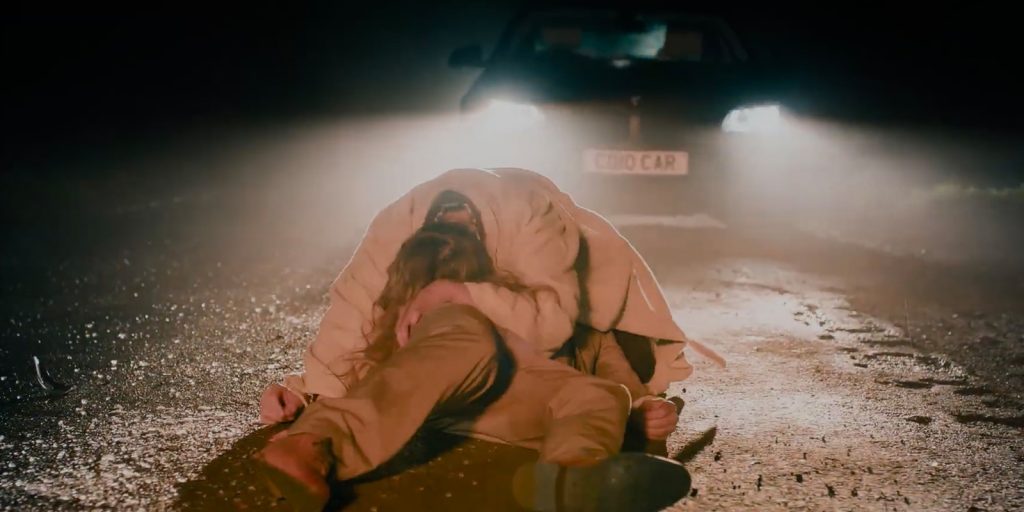
I settled on using just one lighting tower with two ARRI 18k HMIs perched in the basket. I saw these lights giving shape to some treelines in the distance and moonlit backlight for the road itself, but once we had cars in vision I was very conscious the car lights would become the dominant source of light and I absolutely wanted to avoid moonlight hitting the main set as I thought this would look increasingly unrealistic with so many car lights in situ.
I asked Bikers Action Vehicles to prep the car lights with external batteries so we could keep the lights on and cut the engines for safety. The headlights, tail lights and internal ceiling lights would be our main light sources until we had any fire. We mapped the colour temperature of the car lights and then used Astera Helios Tubes, Creamsource Vortex, Aputure MC Pros, Nanlux 1200 B and ARRI SkyPanel Xs to build on the practicals to achieve the levels we wanted on the artists and vehicles.
The abundance of LED panels and tubes available on the market offers DPs almost limitless flexibility of options and the opportunity to conceal lights in the smallest of places. This was important for me as we utilised a Ronin 2 to achieve long wide tracking shots to see the full extent and scale of the crash site, but consequently this made hiding lights difficult. Here the huge benefit of having all shapes and sizes of LEDs came into play, enabling us to conceal them behind cars or trees and still light the sequences.
Mood lighting
I was really pleased with the quality of the lighting we achieved, which worked to build the tension and mood of the narrative but still looked natural. By following on the car lights with our own lighting, we created good levels of luminance but also increased mood and depth of colour.
As the story moved on and we see the minibus explode and the resulting fires, we introduced a line of Vortex 8s, balanced to the colour of the fire, to add even further intensity. I’m always conscious that having an abundance of lights on set slows down the filming process, so during prep our lighting gaffer Richard Brindle and I looked at ways we could either conceal the larger floor lights or move them quickly. On the hedge side of the road where the generators were parked, Richard fed with mains and we could quickly lower them behind the hedge to conceal them. On the other side of the road to avoid long cable runs and cables in shot, we relied on Instagrid batteries to power the lights, which could also be laid down behind the wall if we had that area in shot. It was a very flexible and efficient system that worked seamlessly. Richard and his team did a brilliant job of prepping the lights and managing them throughout the three weeks of nights.
With the increased light levels and the ability of the 35 to control highlights, I thought the explosion and the resulting infernos looked incredible… for me, a truly epic moment on screen. The Ronin 2 added extra pace and dynamism as it follows through the crash site and later on the forest. I thought our camera framing from the team was captivating throughout, much of this due to the excellent Steve Jackson on A camera.
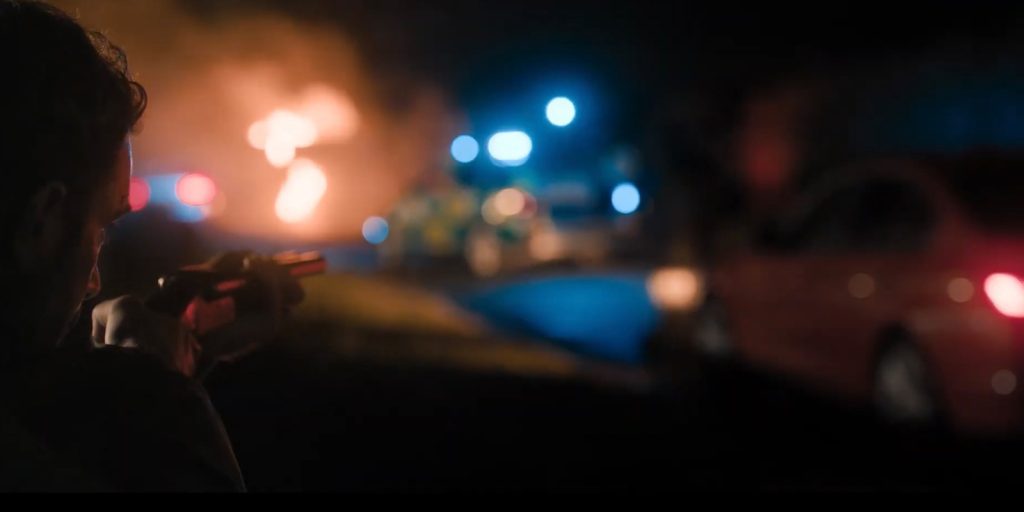
The three weeks of nights progressed incredibly smoothly, which is testament to the planning and preparation we collectively put in – from the schedule to the point of capture on camera. The final night was tough as we started at 10.45pm and wrapped at 9.45am to catch a sunrise sequence after we had shot out the last of the night scenes. By 9am that morning, I had drunk so much Red Bull I felt as if all my teeth were going to drop out – but to capture the final shot of the sun rising over the crash site it was worth it!
The minibus interior sequences after it had crashed were shot in a studio space in Leeds. I leaned heavily on practical ceiling lights that we had introduced to the bus in prep to light the interior, which we could control via an app. Above the bus, we suspended soft lights replicating either moonlight or car lights as the story’s journey progressed. As the fire took hold, I again changed the temperature of the lights outside the bus shining through the windows to replicate the fire inside. With actors and camera moving inside the bus, the decision in prep to install Aputure lights as the bus’s practical lighting proved to be the right choice as space and time were very limited… for me, it reminded me again how critical it is to have considered and firm lighting decisions made in prep to maximise every second of time. I think the fire sequences we see in the bus look incredibly intense, atmospheric and emotive, adding an extra element to the crash sequences.
The shoot then transferred across the Pennines to Media City in Manchester, where we would shoot all the car and minibus interior sequences leading up to the crash. At this point our whole shooting crew changed with just Duncan, our brilliant A camera focus puller Binnsy and me remainingacross the whole project. The intention from early discussions was that both Emmerdale and Corrie crews would have a similar level of involvement to make it a very inclusive project, which I thought was a good idea if we were to maintain the same look throughout, which I feel we did.
I had shot a number of elements in volume walls previously, and although in general I have mixed opinions of the benefits of working in a volume, I think for car sequences it’s a bit of a no-brainer as they work perfectly, eliminating the need for tracking vehicles, road closures, night shooting and variable weather conditions.
Unfortunately, the budget didn’t stretch to a volume, so we instead used back projection screens, which I also had some previous experience of working with. We had shot plates previously with an Alexa Mini array, giving us 360-degree moving images for both day and night scenes. We were limited to keeping the shots tight as we had relatively small screens that limited our field of view, and we had to physically move the cars or the minibus multiple times to make sure the screens filled the back of shot – which played our plate shots through a Green Hippo media server.
Unlike a volume wall, the back projection screen offered little or no ambient light, so we had to manufacture all the lighting ourselves – and the lighting we did put in required substantial physical flag work to keep any light off the screens and to stop unwanted highlights on the car.
Our outside world on the travel to the crash was set on isolated country roads at dusk or full night, so the environment was a long way away from an urban landscape where we could have introduced multiple lighting elements such as streetlights, neon reflections from shops and passing car headlights, of course. There was a danger of the sequences looking totally devoid of any outside interest, so I did introduce some extra car headlights moving behind or passing our hero cars, which I think added some dynamism and sense of the cars travelling at speed.
As the plates played, we followed the lighting levels and their fluctuations with the set lighting, which was achieved through an ETC software package which mapped all the plates or ‘world’ we were playing outside the vehicles, even introducing virtual flags to give the impression of passing through woods or hills, which contributed hugely to the believability of the shots. Micky Collingwood, our lighting gaffer, and his team on the stage were fantastic and chipped in with lots of good ideas.
Into the woods
As we moved back onto location and the forest scenes, I was really looking forward to the experience. Only last year I had shot in the same woods for “Limo on the Lake”, another special Emmerdale ep for which I was pleased to pick up an RTS Craft Award.
That was shot with a standard Alexa Mini and a couple of Canon CN zooms; now we had the 35 and ARRI Master Primes which delivered a much better experience, enabling us to work more efficiently due the faster lenses and ES mode of the camera. I used an ARRI 18k on a tower to give us the moonlight and again relied totally on LEDs to extend the moonlight onto faces where the tree canopy blocked the light on the machine.
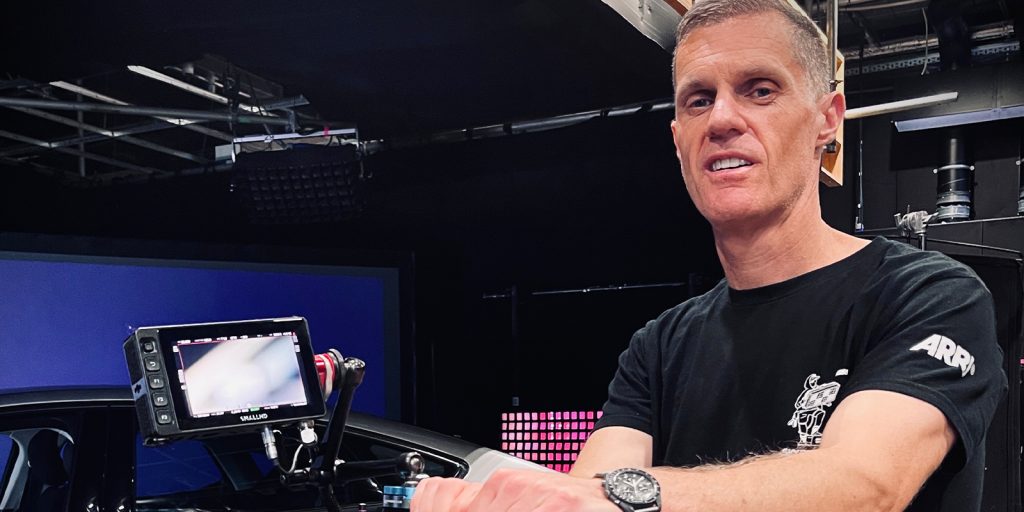
It’s always slow going in woodland, especially at night due to the roots and branches underfoot, plus we had plenty of rain and we were getting close to the end of the shoot and everyone was pretty tired – but I knew these scenes would be the closing images of the episode so I pushed hard to keep all the lighting sourced from our moon, and when I did add extra lighting I avoided any double shadows on trees with flag work. For many of the running shots I altered the camera shutter to 90 degrees to increase the intensity and sense of panic during the chase sequence. We were so pleased with the scenes we achieved, which looked very naturally sourced and subtle but full of atmosphere and menace.
Our only real studio scenes were in the hospital set in Leeds. My existing lighting design for this was based very much around utilising practical lights that we could feature in shot. We put Nanlite Pavo tubes in the vertical bed heads, dimmable bulbs in the wall lights and 60cm bi-colour tiles in the roof space… everything LED. I did occasionally add some LED floor lighting on stands to create better shape, but ultimately I wanted to free up this space for the camera to see the set without restriction, so additional lighting was minimal. For me, seeing this space shot on the Alexa as opposed to the usual system camera package was profound, with all the practical lights really singing and adding so much depth.
The post-production process was incredibly smooth; neither show had shot with a LUT before and for Duncan and me it was a real benefit because we knew where we were from a look perspective from the start to the finish of the project.
As a team we introduced so many new elements to both soaps; Alexa35, Master Primes, Black Satin Diffusion in the 35, the LUT, Ronin 2 gimbal, and finally we moved on the traditional aspect ratio of 16.9 to 2.1, which I think drew the eye more into the drama. I have never used so much LED lighting – over 10 different manufactures of lights were used with only the odd ARRI 18k still required. I’m especially pleased to be shooting in a much more sustainable way.
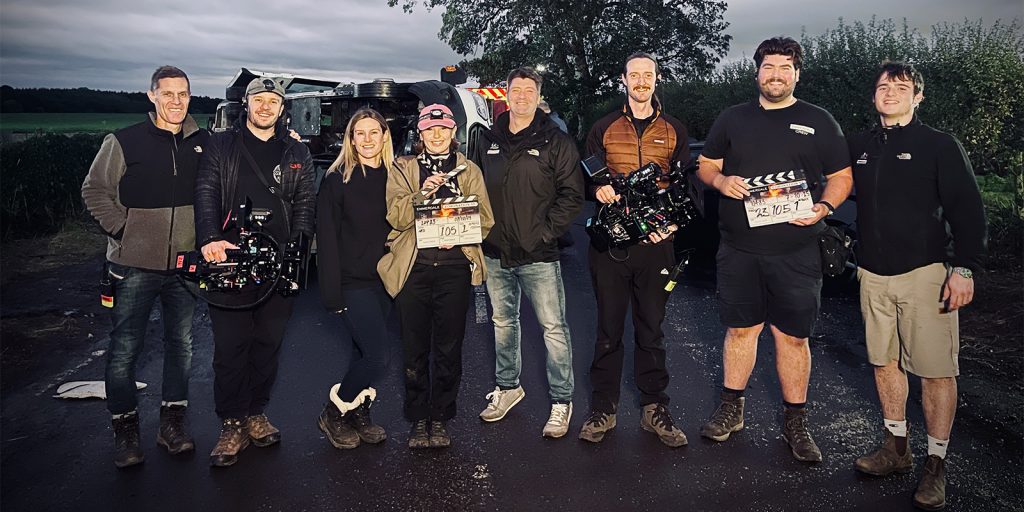
I thought the whole project was filmed in a calm and methodical manner, which enabled us to push our creative and technical standards. Much of this was down to director Duncan Foster’s tireless preparation and ambition for the project. Duncan delivered an incredible piece of work.
This production was a real team effort from the technicians, incredible camera team, lighting gaffers/sparks, grips and sound department, plus a fantastic post-production team. Creating absorbing and ambitious TV successfully is all about the team, and I was very proud to be able to shoot every frame of Corriedale – and even more pleased 5 million viewers tuned in just on the night to watch, with an unimaginable 140 million hits across all media platforms.