
Industry insiders share their journeys to securing film funding—insider tips, lessons learnt, and the real stories behind making projects happen against all odds.
When we watch something on screen — whether in the immersive darkness of a cinema or on the sofa with a laptop — we love being swept away by the story, the performances and the visual spectacle. Every so often, a particularly tricky sequence might spark a moment of reflection: I wonder how they shot that. But for most viewers, the process behind the camera remains invisible. Unless you happen to know someone who worked on the project, you’re unlikely to grasp the grind that lies beneath the surface. One of the most overlooked — and often most excruciating — aspects is finding the money to make the thing in the first place.
Same old story
Time for some context. A recent report from Creative UK, Lights, Camera, Capital, makes for more sobering reading as it highlights persistent funding barriers facing the UK’s screen-based businesses. While 74% of companies in film, TV, games, immersive media and CreaTech access external finance—above the UK SME average—83% still struggle to secure the full funding they need and 77% feel under-resourced.
Commissioned by Creative Enterprise and backed by the BFI, the report points to a lack of trust and understanding from investors, particularly impacting underrepresented founders.
“This report reinforces what we see every day working with screen-based storytelling businesses across the UK: incredible creativity and ambition, held back by a finance system that doesn’t always understand or support their needs,” says Haley Edwards, head of creative enterprise at Creative UK.
It’s easy to assume that great scripts and ideas naturally attract great funding, but the industry doesn’t necessarily work that way. Take Squid Game — a global phenomenon that gripped audiences and shattered streaming records. As the story goes, the series was written by Hwang Dong-hyuk back in 2009. Yet despite its sharp concept and timely social commentary, it languished for over a decade. Studios found it too strange, too violent, too risky. In other words, it was almost certainly not going to get made. It wasn’t until Netflix, aiming to expand and diversify its international slate, began investing heavily in Korean programming that the project was finally picked up. A decade of rejection was overturned by a strategic shift — and suddenly the series found a platform that not only backed it but catapulted it into the cultural mainstream.
Fake it till you make it
Director Flora Lopategui (Olive) points to the Korean juggernaut as a prime example of “a gap in the market” that can propel both a production and its creators to success.
“For instance, if your film tackles an issue like knife violence, it’s worthwhile to connect with local MPs, government bodies, or charities focused on the topic,” she explains. “They’re often much more willing to donate and support your project. That’s exactly how I executive produced a short film The Boy in the Shed.”
At the time, Lopategui was also developing her very first concept for a short film, Olive. The film went on to win numerous awards—a result she describes as “a shock to the system,” especially since it was her first experience stepping foot on a film set.
Still, her success required a tremendous amount of determination and ingenuity to secure funding.
“I honestly had no clue what I was doing,” Lopategui admits. “I wrote the script and found producers who, like me, were just starting out. They loved the idea but had very limited funds. They said, ‘We’ll film it as long as you cover some costs, like lunch.’ So, my co-creator and I created a video campaign explaining why this film needed to be made now, what we hoped to achieve and where we wanted it to go. It was just us, in my bedroom, laptop on, talking to the camera—trying not to look like we were reading from a paper taped to the wall. This was during Covid and I wanted to make people laugh through such a difficult time, so I explained why this short film was so important.”
She started “reaching out through friends of friends—avoiding family at first because that’s always a bit awkward”. Instead of contacting people individually, Lopategui sent out a newsletter email with the campaign attached to the film and used a crowdfunding page.
“I linked to the page and tried to make it look like the short film already had significant funding,” she adds. “I made it look really polished and put a lot of character into the campaign. We even did a fake photoshoot with my co-creator and main actor Lucy Nicholson to make it appear as if someone had already invested and was backing it. The goal was to make it look as expensive and professional as possible. I think we managed to crowdfund around £7,000 in about 48 hours.”
Moreover, Lopategui says there are two types of funding when starting out: friends and family who support the project for personal reasons and loan investors who provide short-term funding.
“One tip I wish I’d known back then was to research executive producers on IMDb and reach out to them properly,” she continues. “Even today, I get cold emails with no personal touch—just a blank ‘Hi, my name is this…’ It’s much better if you start by showing you’ve seen their work and explain why you think your style fits. That approach makes people more willing to help. I can’t promise this approach will always work — obviously, some projects, like Squid Game, took over a decade to get made. But I really believe it all hinges on the person who’s selling the show. You’ve got to get your foot in the door and to do that, you need to be relentless. Not corrupt, of course, but persistent. You can’t take no for an answer and you’ve got to be bold — even a bit cheeky.
Once you’re in the room, it becomes a very delicate thing. You need to draw all the attention to yourself — make them remember you.”

Fellow director Coz Greenop (House Red) says, “Right now, it’s harder than ever to make it in independent film,” a truth he knows all too well.
“The industry’s in a strange place and I’ve had at least eight close friends move back from Los Angeles and London because they can’t afford rent,” he says. “They’re juggling multiple jobs just to survive. Unless you’re on a big tentpole production, there’s simply nothing out there. We’re hustling to create our own chances and it’s tough.”
Apocalypse then
Greenop’s latest project, The Last Room in Hanoi, is a surreal drama about a grieving writer whose imagined reunion with his late wife takes a dark turn as she transforms into a mythical Hanoi mermaid.
“In 2024, I went to Vietnam and I absolutely fell in love with the country—its people, the landscape, everything about the place,” he says. “And as a creative, I thought, ‘What’s the bare minimum I could make a film for?’ Because I knew if I could get a smaller budget, I could maintain full creative control. I set a goal of £50,000. I figured if I could raise that, I could make the film with a tiny crew, no big names and keep everything simple. And it worked. I got £25,000 from a few investors who’d chipped in over the years and then, out of nowhere, this other investor, someone who’d done big projects, was interested. I did my research, of course. I spoke to people who’d worked with him before and everything checked out. I signed the contract and thought, “Okay, we’re good to go. I’ve got £55,000, let’s make this film.”
However, as the story unfolded in front of the camera, Greenop found himself caught in a haunting déjà vu—facing that same lingering uncertainty all over again.
“I started casting, booked the Vietnamese Film Commission and spent the first £25,000 paying for things. Then the nightmare began. The investor kept saying, “The money’s coming from Indonesia, it’ll be here soon,” but it never showed up. He kept pushing the dates back and I kept shooting, hoping the money would land. But after four months, the money was still nowhere to be found. So, I started begging, borrowing and stealing from family members just to keep things moving.”
Greenop says that, in hindsight, he “shouldn’t have started without that money in hand”—yet he didn’t have much choice. “Every day on set, I felt this looming financial weight,” he says. “Three weeks in, the Vietnamese Film Commission sent an invoice demanding immediate payment. I had to call investors at 6 AM and ended up putting £3,000 on my credit card.” The promised money never arrived. “I was directing, producing, editing—wearing every hat. It was hell.” Still, he finished it. “It’s the hardest, most stressful thing I’ve ever done. When I think about it, I get PTSD from ’Nam, man!”
What makes it even more painful for Greenop is that, in his words, “this beautiful, haunting story is my most visually accomplished film”—yet he’s racing to finish it before the American Film Market in November.
“I’m scrambling to complete the music, post-production, and everything else in time,” he says. “It’s like a ticking clock.”
In synthesis
Dominic Howlett, DP and co-founder of London-based Window Zebra Media, says he helped secure funding for Theodor Herzl: The Man Behind Israel, originally conceived as a narrative biopic about the founder of modern political Zionism and now reimagined as a documentary featuring David Baddiel and Stephen Fry. The project, he explains, came together through a combination of creative ideas and collaborative funding—an approach he believes is particularly effective for recent film school graduates.
Initially, a company called Generation Films had been developing the biopic but struggled to gain traction due to Herzl’s relative obscurity. When someone suggested switching to a documentary format, the idea gained momentum. Director James Dann of New Take Films then invited Howlett’s team to join the project, which already had most of its funding in place, while Window Zebra Media helped secure the rest.
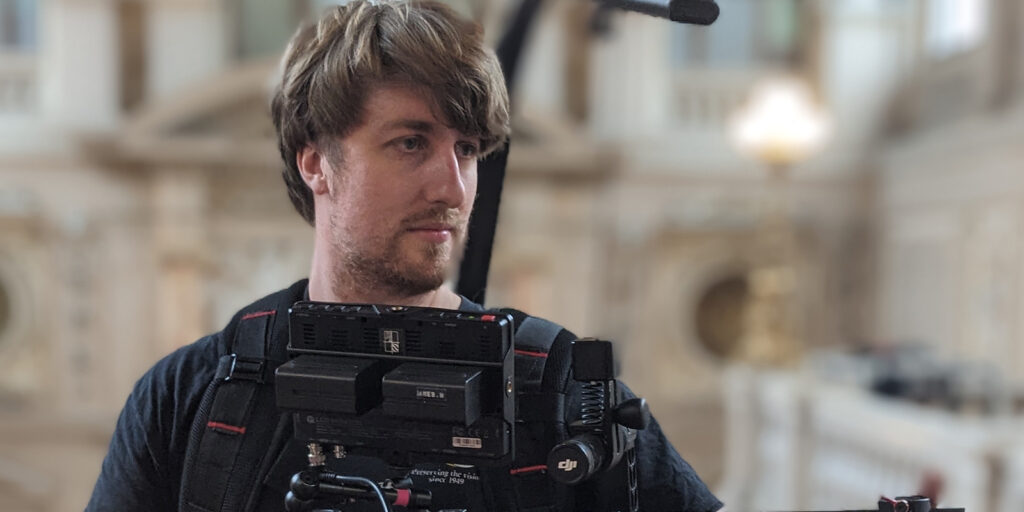
“People often think making your own project after film school is the breakthrough,” he says, “but collaboration is key. Working with others increases your chances because people know people. When others are inspired, they help make it happen.”
Howlett also explains how Window Zebra “had a project some time ago” that was pitched to various groups, including local councils, securing several small grants—each around £5,000—from Derbyshire Council, local charities and others, helping to get the project off the ground.
“We met someone on a board at Film Birmingham who helped us gain access to the BFI,” he continues. “We applied and secured the final funding amount. This all happened because we collaborated with different groups, incorporated their ideas and brought them along on the journey. That’s how we funded Theodor Herzl and other projects.”
Of course, approaching a studio first and getting a yes is the dream. However, with many—if not most—facing rejection, Howlett advises that if big studios say no or ask you to return with a larger indie project, the key is to network with people who know investors. He starts by determining the bare minimum budget and the favours he can call in, then works backwards to excite others and secure funding.
“When asking for money, people expect a return—something young filmmakers often overlook,” he says. “Venture capitalists may care less about quick profits, but most investors want to know how the film will sell and recoup costs.”
Lopategui says that if she had to take a big investment from a finance house but give back almost all the film’s proceeds, while incredibly painful, it’s better than not making the production at all.
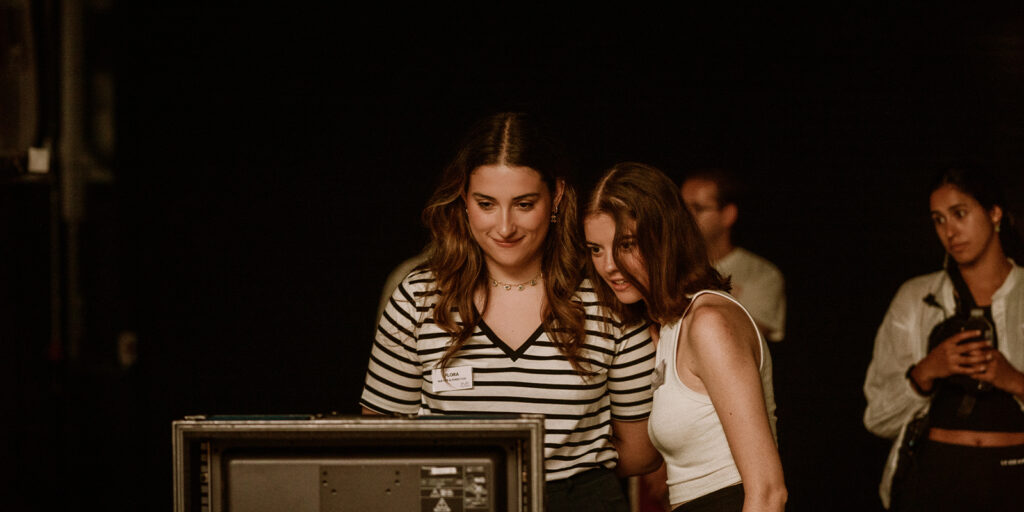
“I wish I could say differently, but personally, I’d focus on getting my name out there,” she adds. So many people are stuck in the same spot—it’s just a bit easier with credits behind you. Plus, the people you meet on those projects might say, ‘I like your style, got another script?’ Then you can say, ‘I’ve done this, my name’s out there, here are my terms.’”
Whatever you do, Howlett says, don’t risk your own money.
“Talk to sales agents early, not after making your film,” he adds. “Show your cast, target audience and research first. Check if anyone wants to buy it and get rough projections. If no profit is likely, don’t take big loans or risk your house. As Mel Brooks says in The Producers:
‘Rule number one: Never put your own money in the show. Rule number two: Never put your own money in the show’.”
Another approach that has worked well, Howlett says, is partnering with production studios and repaying them based on the production’s profits.
“But again, you must have a bit of a track record, or they just have to take a leap of faith in you,” he continues. “That is something that you can convince the studio to do—plus rental houses and post houses too. There are opportunities, if you can create. The best thing you can do is have the best pitch and the best knowledge of what you’re pitching and how much it’s going to make, where you’re going to sell it. If you’ve got all that down, it’s easy to get people on board.”
Despite the chaos, The Last Room in Hanoi is currently in the edit and everyone on the cast and crew has been paid—except the composer, whose work is crucial to the film’s emotional journey. “I’m hoping to correct that soon,” Greenop says. “I treat people the way I want to be treated. I work hard to make sure everyone gets paid. It’s a stark reminder of how fragile independent filmmaking can be in that one person can unravel an entire production.”
Looking ahead, Greenop adds, “I’ve got a couple of screenplays with bigger studios right now, budgets in the $6 to $11 million range, but they take forever to get off the ground.” Nothing new there, then.
Of course, being in the right place at the right moment can make all the difference. Paul Trijbits, partner at Anglo-French indie Magical Society, reflects on the strategic patience behind a pivotal sale:
“When we sold our show The Letter for the King to Netflix — who bought it in the room — I had been held back by our agent at Fifth Season/WME for months. We were sitting on a terrific pilot script by Will Davies (How to Train Your Dragon), but Lorenzo di Maio understood we had to wait for the right conditions. They came in September 2018, when Melissa Cobbs took charge of Netflix’s family division. He was right — she bought it in her first week on the job.”
To those feeling disheartened or struggling to get momentum, Trijbits offers a reminder from experience. “Never ever give up and always work on alternative plans, as you never know if such a situation may occur. They do! Don’t take no for an answer. We have gone back often two or more times after having been turned down.”