
LIGHTING A MODERN FABLE
Clout asks audiences to reflect on how social media is shaping how young people, and adults, see themselves and each other – with collaboration between the crew proving key to its success, as Amelia Hazlerigg explains.
Clout, a coming-of-age short drama I lit last year for director Jordan Doidge, is now making its way through the festival circuit. At its core, it’s a cautionary tale about growing up in a world driven by digital validation. The film stars Archie Yates (Jojo Rabbit) as Oskar, a teenager chasing online fame until the line between reality and illusion begins to blur.
The story dives deep into the darker side of social media and how it shapes identity, acceptance and belonging, especially in the fragile social ecosystem of school. But more than that, Clout is a modern fable. From the start, Jordan and I were aligned on treating it that way.
Fables are among the oldest forms of storytelling. They’re simple on the surface but leave lasting impressions about behaviour, society and consequences. That’s exactly what we wanted Clout to do – not just entertain but leave something behind. We wanted it grounded, real, and with a final punch that lingers.
As a cinematographer, my job is to interpret how the director wants the film to feel, not just how it should look. For Clout, that meant stripping things back to the essentials. We aimed for something minimalist but emotionally loaded, a film full of visual cues, symbols, and subtle tension that simmers beneath the surface.
Silence and simplicity
We took cues from Black Mirror and the visual precision of Denis Villeneuve – both masters of using silence and simplicity to say something big. That was our goal too: to keep the audience slightly on edge, always wondering what’s next.
Jordan and I spent a lot of time in prep – multiple scouts, recces, and deep scene breakdowns. We’d ask: What’s the emotional point of this moment? What’s shifting inside Oskar here? Once we had those answers, the visual language became clearer.
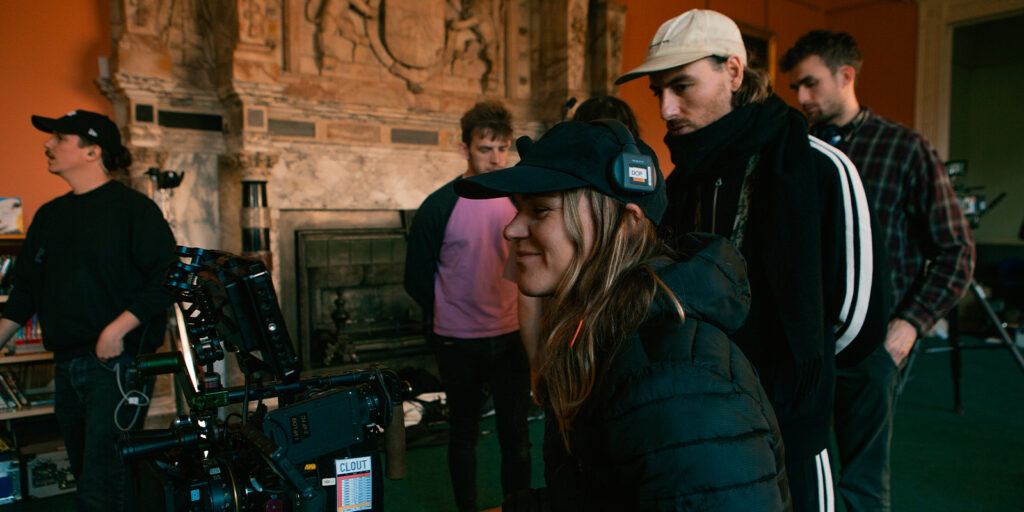
We also watched many narrative dramas to better understand Oskar’s mindset. Films like Close by Lukas Dhont and Playground by Laura Wandel stood out – both explore youth through themes of bullying and mental health. These helped us tap into the complexity and emotional depth of growing up today.
Symbolism played a big role in how we built the world visually. Water became a recurring motif – puddles, reflections, spilt glasses, and even a slow zoom into J.M.W. Turner’s Deluge. These quiet visual hints mirrored Oskar’s unraveling and added a sense of eerie calm before the storm.
Framing and angles were carefully chosen. We used extreme close-ups during Oskar’s anxious moments or when he was lying directly to camera – tight shots that made his slipping grasp on reality more intimate. One bird’s-eye shot of him lying in bed served as a subtle nod to the idea of him looking down at himself – a chilling foreshadowing.
Mood lighting
We built a mood board early on, filled with references for lighting and composition that matched the tone we were chasing. That board became a touchstone on longer production days when we needed to recalibrate.
Lighting-wise, we kept things simple and atmospheric. Natural light was our ally – both by creative choice and necessity. The budget was tight, and we had frequent location moves. Instead of fighting the limitations, we embraced them. We used available daylight, adding large lamps outside windows when needed to shape the scene without cluttering the space. For closeups, we’d occasionally add small panels on the floor – but overall, the look stayed minimal and real.
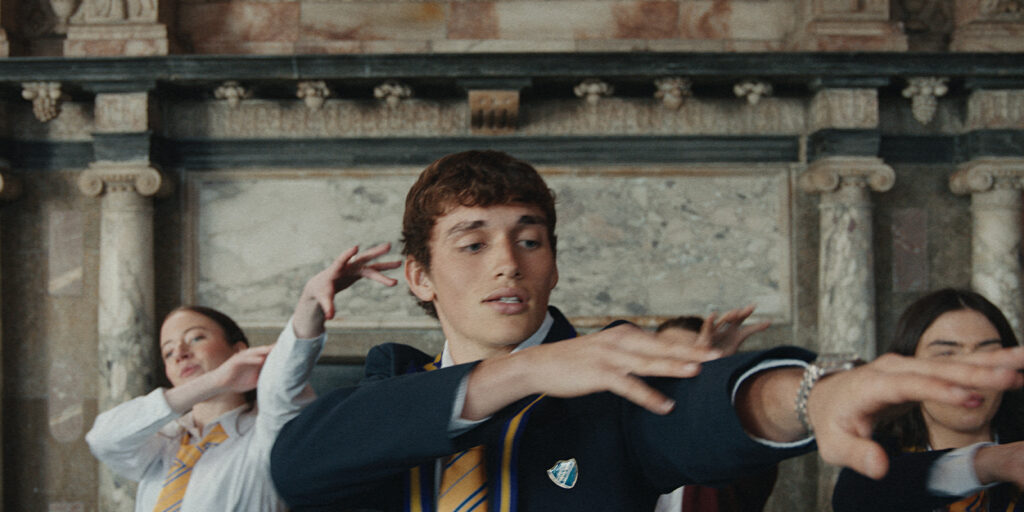
Shooting on the Alexa Mini LF camera helped isolate Oskar visually. The shallow depth of field made him feel vivid but emotionally detached – there, but not fully present. We wanted the image to feel like a memory: sharp in the middle, soft at the edges. K35s were an obvious choice after testing different lens sets. Their painterly yet gritty aesthetic and distinctive onion ring bokeh did a lot of heavy lifting, adding texture and emotional weight to every image.
More than anything, Clout is a reminder. It asks us to reflect on how social media is shaping how young people, and adults, see themselves and each other. It’s not just about screen time. It’s about what’s being lost: real-world connection, presence, and community. The things that ground us.
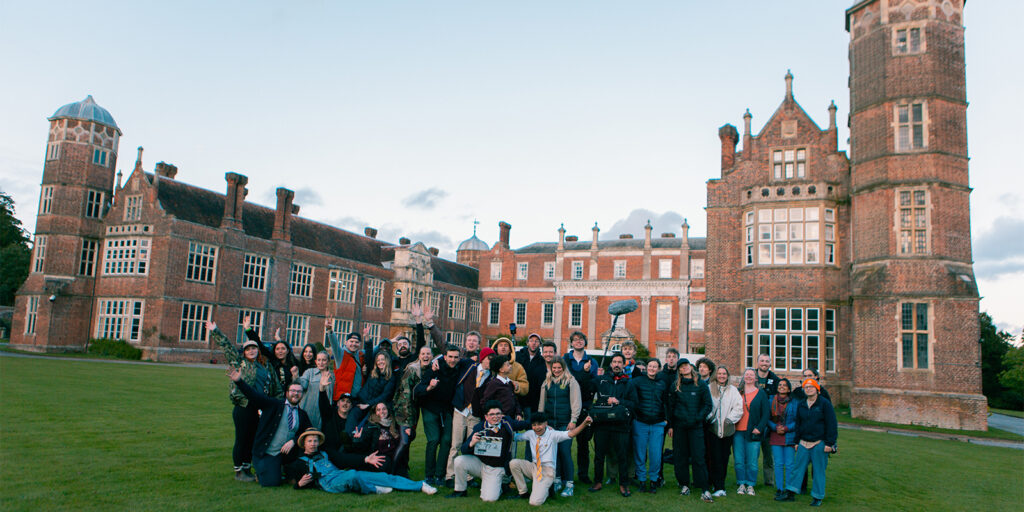
Clout was a deeply collaborative project. Every department brought care and creativity. We’re proud of the film we made. Hopefully, it sparks some real conversation and maybe even shifts a few habits.