
VISUAL GRAMMAR FOR THE UNTHINKABLE
The BAFTA-winning four-part docuseries Death with Kris follows mortician and author Kristoffer Hughes as he travels across Earth to explore how different cultures confront, honour, and even celebrate death. From ritual practices to community-led ceremonies, he discovers the diverse ways societies make meaning from loss, revealing how facing mortality can deepen our understanding of life itself.
Before filming began, I asked myself one question: What does truth look like?
In a series confronting mortality, I felt our cinematography had to be grounded, unobtrusive, and deeply human. I didn’t want to dramatise death into something it isn’t.
I chose to shoot the series handheld, partly out of necessity due to unpredictable environments, but mostly because it allowed the viewer to experience these remote places with the same immediacy we did. Handheld gave the images a quiet responsiveness, a subtle human pulse that suited a series about following a mortician into unfamiliar cultural landscapes. It wasn’t about restlessness or grit; it was about presence. The camera could move with Kris, adapt to the emotion and react to the delicacy of the conversations without breaking the moment. Sometimes dead bodies would appear out of nowhere, from behind us, from underneath us as we had to step over corpses – it was important to capture what we experienced in those moments and handheld was the best way.
Every frame in the series was lit purely by the environments we found ourselves in. Not a single supplementary light was used. That decision wasn’t about purism, it was about honesty. When you’re filming in remote locations, sacred spaces, or intimate homes where someone’s son is in a coffin in the living room, they are sharing their most vulnerable stories. Introducing artificial light can immediately break the spell.
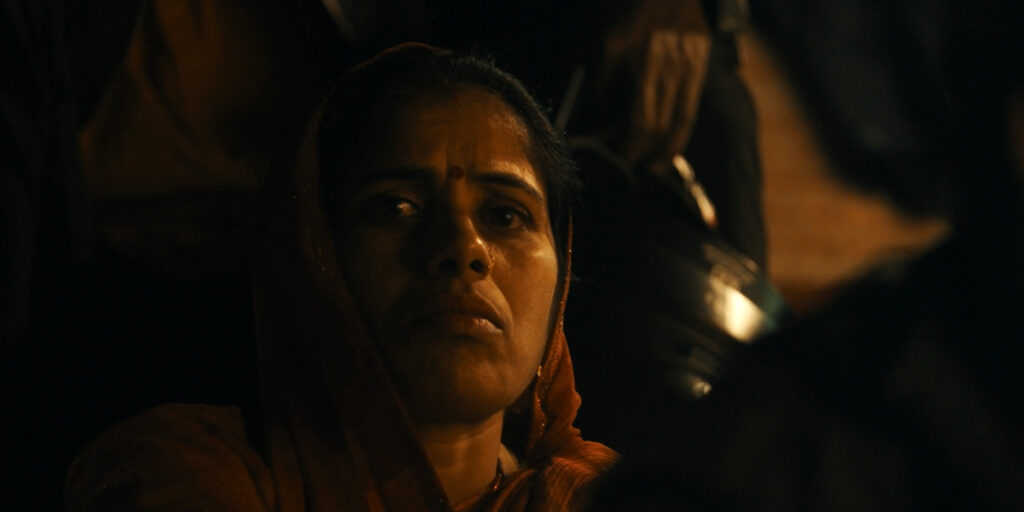
Instead, I leaned completely on natural light: windows, open doors, reflected daylight, and whatever the landscape offered. It meant constantly adapting, chasing pockets of softness, shaping shadows with positioning alone, and embracing the imperfections of real spaces. But that rawness became part of the visual truth of the series. The light that fell on people was the same light they lived in, grieved in, celebrated in. It grounded the images in the authenticity the subject deserved.
This alone led me to the Sony FX6. I was never precious about what camera I was going to use, I just knew it needed to handle every possible lighting scenario. From harsh day light to graveyards lit with nothing but candles in Mexico, I needed to be able to switch from 800 to 12,800, to do 25fps and 120fps in 4K, and the FX6 proved itself, to me, to be the best observational documentary camera for the job.
Staying close when the emotion demanded it
One of the guiding principles of the series was our refusal to retreat when moments became emotionally overwhelming. In many documentaries, the instinct is to fall back to a wide, giving people space, softening the impact, or shielding contributors and also the viewers from the intensity. But Death with Kris set out to show death with an honesty rarely attempted in Western storytelling. That meant staying with people, not stepping away from them.
Contributors understood fully what we were doing and why; breaking the taboo surrounding death, or discussing death, required vulnerability, not distance. Nowhere was that trust more evident than deep in the jungles of Indonesia, where we were invited to join a family as they dressed the body of a loved one, with Kris joining in. Moments like that are never guaranteed; they are earned. The family welcomed us into a ritual usually reserved for relatives and elders, trusting that we would handle their traditions with respect and dignity.
We filmed side by side with them, not as outsiders, but as temporary guests in their grief and celebration.
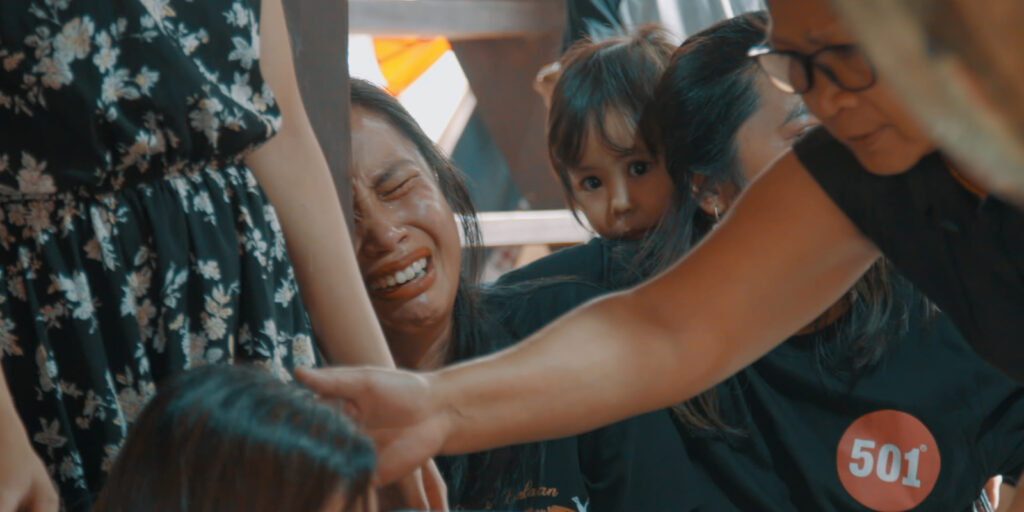
None of this was about provocation. It was about honouring the courage of the people who allowed us into these moments. By refusing to move back or dilute the truth, we let the audience witness death not as something distant or hidden, but as a profoundly human experience shared across cultures.
Earning every frame
Observational documentary is, at its core, a craft of winning your shots. Especially on this shoot, nothing is staged, nothing repeats, and every frame has to be earned in real time. You’re constantly negotiating space, light, movement and emotion, fighting for seconds where everything aligns long enough to tell the truth. But doing that while surrounded by death, grief, and people’s most vulnerable moments demands a different kind of filmmaking.
In these environments, you almost stop thinking like a DP and start thinking purely as a human being. Technical considerations almost take the back seat. Exposure, eyelines, composition, they still matter, of course, but they become pure instinct. What takes over is empathy, sensitivity, and an acute awareness of the emotional temperature of the situation. You’re not just capturing images; you’re navigating pain, ritual, shock, resilience, and love. You’re earning the right to keep the camera up. I think this is why so many people in the West have responded well to the series despite seeing so much death, up close and personal, on the show. Because we let compassion and truth guide us every day we were filming, whether it be through the cinematography, presenting or directing.
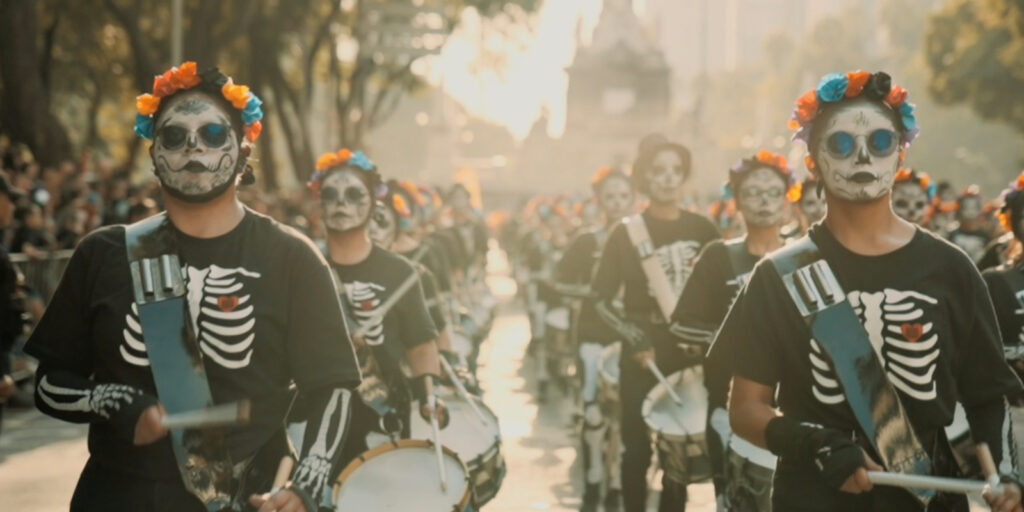
There were days when the craft felt like a balancing act between intuition and respect, constantly adjusting, constantly listening, constantly proving through your behaviour that the camera is there to honour the moment, not intrude on it. Winning shots in these circumstances isn’t about technical brilliance; it’s about humanity. The frame only works if the person inside it trusts you enough to let it exist.