
EMBRACING BLACK-AND-WHITE
The Ceremony follows two migrant workers in a Bradford car wash as they scramble to bury a body in the Yorkshire Dales, often clashing morally and verbally in the process. DP Robbie Bryant explains how a fast-paced January shoot required himself and the team to think on their feet and embrace new processes–and how taking a black-and-white approach helped.
When I was brought onto The Ceremony, Jack King, the director, had already decided on B&W. He felt it would give us more flexibility and be more forgiving of our limitations. The initial shooting budget was £35,000 with 12 days to shoot. Looking at the back end of the script, or even from the middle onwards, it largely required exterior light in a rural setting, which I found to be one of the most daunting things to approach.
So I instantly leapt at it as a bit of a lifeline, really, to shoot in that format. Not having to battle colour temperature in the same way, and leaning into the natural dreamscape of images and textures that is harder to achieve in colour, made B&W very appealing. It gave me a fighting chance to transport the audience into a piece of world-building rather than putting our limitations at the forefront.
It’s all about the story, the script and the director–and how I, as cinematographer, can make the images come to life. I’m not interested in beautiful photography. I’m interested in telling stories about human beings: how they act and why they act that way.
Shooting in B&W has had a bit of a resurgence in recent years. I think it’s similar to how we’re currently watching different aspect ratios make their return; it feels like there’s a level playing field now about what you can do–all options seem to be relatively accepted. As people consume so much content in every shape, size and variation, it’s become easier to pitch these choices to the grown-ups, who question their validity less than they used to.
Finding colour in black-and-white
One benefit of shooting digitally is being able to use a B&W LUT rather than relying on monochromatic viewing filters to judge contrast ratios. Seeing that live on the monitor really helped–with B&W, light is the only thing giving you separation. In the flat, overcast January light of the Dales, it made my life much easier to see where attention was needed, as colour separation by eye can be misleading.
Carl Thompson at Molinare helped me with that by creating our shooting LUT. However, what we had during the shoot was still a fairly true high-contrast digital B&W look, and once we were back in the suite at Molinare–where Carl really went above and beyond–I started to feel the stark coldness of both the environment and the story, and thought, ‘Is this really all we can do?’
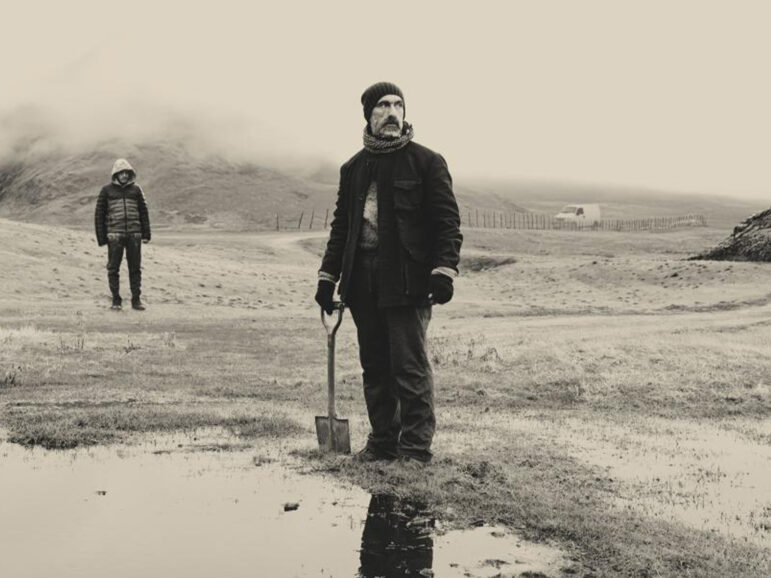
So we began experimenting with toning–trying to steer it away from that very clinical digital look and make it feel more like a print. Molinare is just around the corner from the Photographer’s Gallery, so I popped in to study some real prints, which almost felt like permission to go off piste.
Back in the suite, we began building an additional layer to the look we’d been developing, which we called a “gold” layer–though it was actually more green than anything else. We warmed the white point slightly and added a touch of that green to make the imagery more resonant. Before, we’d been looking at an almost standardised B&W, but this new shade breathed life into the images, making them feel less familiar and more exciting. As we were world-building within such tight limitations, it really helped tie the piece together.
Highlights didn’t need to be bright–more of a pearlescent glow with depth. The blacks were just as important. The story exists in the shadows, so we wanted to let the shadows have life: velvety, rich, and alive.
Primes time
During prep, I brought in a friend of mine, producer Adrian de Selliers, who had been looking for a project like The Ceremony to get involved in. Among other things, he helped increase the budget, giving us a little more flexibility. Conversations at that point shifted from using the director’s DSLR and equipment–which had me very worried due to the lack of control–to something more robust, with greater dynamic range.
With the extra funds, I reached out to Rich Hallworth at Shift 4 (now consolidated into XO Rentals) and had a good chat. He said that if we shot as early as possible in January, and got everything back within our 12-day schedule, we could have an ALEXA Mini and some Master Primes–and that’s what we ended up going with. It was a huge relief compared to potentially shooting on a DSLR, which had made the shoot feel even more daunting.
The Mini is such a robust tool that it can take the rigours of the environment–the humans probably found it harder on the shoot than the equipment! Sam Hotson, the focus puller, didn’t miss a beat despite the incredibly awful conditions. Jack is still amazed that once we got into the edit, focus was never an issue. We kept the package very lightweight and compact–enough to move fast and give the actors space. We gave them as much freedom as possible while still keeping a considered visual approach.
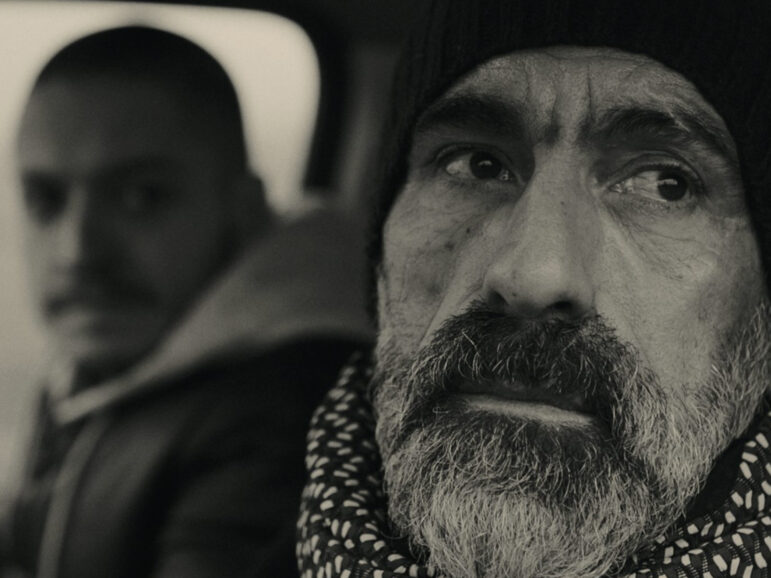
That said, with cameras in general, I’m not overly concerned with them as instruments; I focus on the results they provide and how to turn any limitations into a strength–something working on shorts really teaches you to roll with rather than resist.
The Master Primes are such a pristine set of glass, but there’s nothing in the world, or in the viewpoints of these characters, that is that clean or pristine. There’s a fascinating dichotomy between the lenses and the reality of the story. This meant that adding B&W, texture, diffusion, and some halation in the whites was necessary. Instead of allowing the film to become to feel too clean and sharp we achieved a feeling that was more organic and true to the story.
Locations, locations, locations
We had 12 days to shoot, and I think it was a 96-page script, so there was a huge amount to get through. On top of that, we had a ridiculous number of location changes. We started in Bradford and then moved out into the Yorkshire Dales, so embracing the idea that things could be almost ugly and resisting the impulse to beautify everything was necessary, but also challenging. With such limited time, it was more important to get the film as a whole in the can and find a way to make our limitations a strength.
While prepping the aesthetic, we focused on finding a headspace and carving those visual principles around the requirements of the schedule. As someone generally drawn to creating a textual spirit, that was an exciting thing to do. There are so many visual references in your mind that influence you that creating limitations for yourself can actually help focus your work.
Light can come from the same place the music comes from. I cant remember who said that but particularly on this one it would say that to myself a lot! It’s about emotional rhythm as much as technical placement. We tried to let the natural energy of a scene dictate whether the camera should move, rather than going in with preconceived notions.
Leaving the car wash and capturing the first bits of Todd Hido-esque imagery in the van marked a narrative shift–and a shift in our approach to the shoot too. On some days, the rain was so heavy that when we left a location, the roads we had travelled on no longer existed. Often, I’d meet the first AD, Rossana Masuello, in the mornings after she had scouted the routes. She’d say, “Right, we can get to locations four and six today, but all the others are inaccessible–we need a new plan.” Every day almost became comedic because of the issues we encountered.
Those natural, uncontrollable factors, which some films might try to control, we embraced. We had a few tricks up our sleeves to maintain consistency, but it became about creating on the spot and trusting your own ability and it certainly took a beat for everyone to realise what type of experience we were all in for.
The fact that we were shooting in B&W was immensely useful, as it gave us creative leniency. As long as things were largely consistent, we could create an environment the audience could believe in.
Jack found some great locations while scouting alone, but some were quite flat and wide open, and I wanted to avoid a floating figure. We needed set-ups that contextualised the frame, the environment, and the actor in harmony, allowing me to get light onto them in a believable way.
Shooting this film was a very specific circumstance: extremely limited time and resources, yet still needing to create an environment where the actors could freely deliver their performances. On one hand, you try to adhere to your usual processes and values; on the other, you have to deconstruct them enough within these limitations to achieve results and ensure the script’s visual substance is delivered.
Ultimately, it was a reminder that you’re only as good as the people around you. No matter how strong the script is, the team keeps you engaged and creatively alive. With the actors, Jack, and Rossana, we had a close inner circle that brought raw energy and positivity every day–and that helped me focus on what was truly needed.
I think it’s important to hold your own philosophies with a measure of doubt. Don’t spoil what you have by desiring what you haven’t got–that applies as much to filmmaking as anything else. I’m really chuffed and amazed by what came out of it.