
CREATING AN IMMERSIVE VISUAL UNIVERSE
DP Pierre Gill CSC reveals how he balanced epic scale with emotional intimacy in Dune: Prophecy, using precise lighting, anamorphic lenses and immersive collaboration.
Dune: Prophecy is deeply atmospheric, a textured universe where every visual element contributes to storytelling — from lighting and camera work to wardrobe and production design. The goal was to create an environment both powerful and personal. My approach was twofold: first, the choice of anamorphic lenses allowed the camera to get physically close to the actors without sacrificing the vastness of the sets.
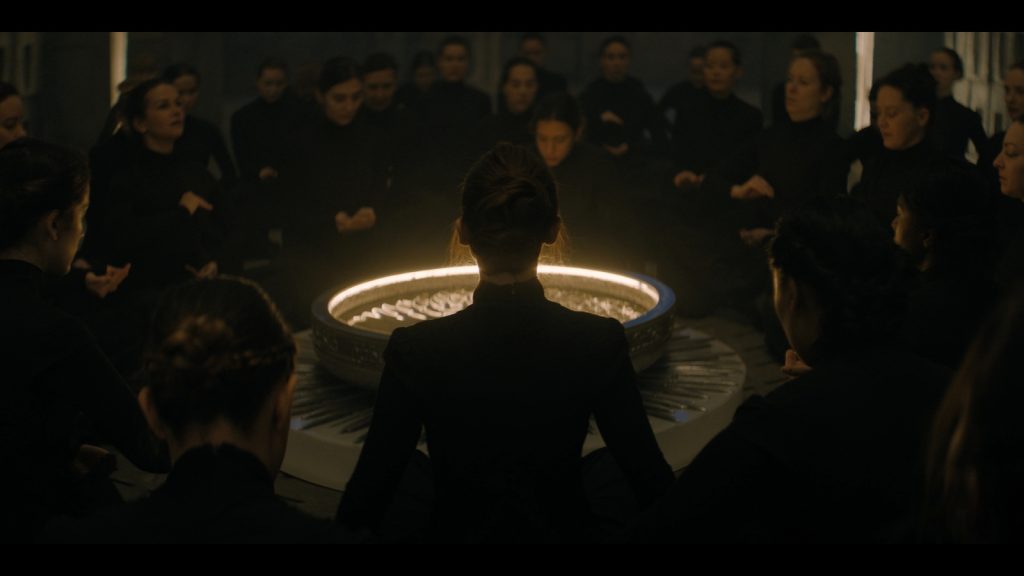
One pivotal scene is the “ritualistic chanting” in the Sisterhood Common Room at the start of episode one. Here, young sisters meditate around a golden bowl on an enormous set — 40 feet tall and 120 feet long — yet the camera’s intimacy is undeniable. Using a Hawk Class-X 65mm anamorphic lens, the camera sits just a few feet from Valya Harkonen, the scene’s focal character. This proximity captures her emotional depth while the lens preserves the spatial relationship with other acolytes behind her, maintaining a layered composition.
Lighting strategy and technical execution
Lighting was key in the Sisterhood scene: an LED strip inside the golden bowl cast a warm, velvety glow on faces, balanced by long lines of LED strips inset into towering columns, complemented by soft “light boxes” suspended high above the set, all dimmed to create a cohesive glow that felt both grand and intimate.
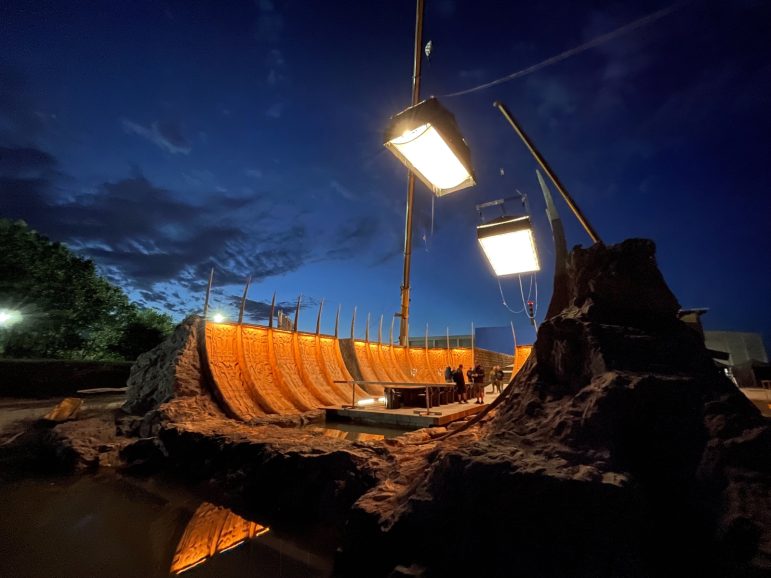
The Sisterhood Courtyard posed significant lighting challenges. Located on a remote site with no crane access, we couldn’t use large rigs to control natural light. The low sun constantly shifted ambient conditions, threatening continuity. My rigging grip devised a remarkable solution: a movable ceiling made from five 20×40-foot white silks to diffuse the sun, paired with black silks to cut light when needed. This massive, adjustable overhead rig required constant monitoring, especially in wind, but proved indispensable for maintaining visual consistency.
Most lighting solutions begin long before cameras roll. Close collaboration with the production designer is crucial. Early discussions determine where practical lights can be placed, which walls or ceilings can be removed for rigging and how natural light can be controlled. This preparation allows us to design flexible lighting setups adaptable to wide shots and intimate close-ups without losing time.
The Throne Room on Salusa exemplifies the scale of lighting challenges. For daytime scenes, six 18K HMI lights were mounted on a 100-foot track outside the windows, sliding side-to-side to mimic shifting sunlight. This avoided bulky tripods inside the set and allowed fast changes for reverse shots. At night, the HMIs were turned off and replaced by warm ARRI S-60 lights on the ground outside, simulating glowing exterior sources seen later in VFX. Inside, giant soft “book lights” created gentle, diffused light with grey silks used to cool tones in the library.
This system let me quickly toggle between day and night lighting while maintaining the set’s massive scale and detail. LEDs were central to controlling intensity and colour with precision. I relied heavily on ARRI S panels for soft fill light, Vortex fixtures for punch and power and LightMatt panels for portability. Giant soft boxes loaded with Vortex or ARRI S-60s were mounted on movable trusses, allowing swift changes in light height to match the shot scale. This mobility was vital for shooting fast in large sets, enabling seamless transitions from wide tableaux to close-ups.
I make it a priority to scout locations early with my rigging crew and heads of departments. We discuss possible rigging points, practical lighting needs and how to maximise existing space. During prep days, I work closely with the crew and board operator to test lighting patterns and make adjustments. The board operator is essential — once shooting starts, they translate my creative vision into nuanced light shifts, controlling colour, intensity and mood in real-time.
Distinct lighting tones help the audience immediately grasp a scene’s location and mood. For Dune:Prophecy, this meant using soft, cool greys for the Sisterhood on Wallack IX — evoking austerity and discipline — contrasting with the harsh whites and warm ambers of House Corrino’s opulent palace on Salusa Secundus. This visual clarity supports storytelling by defining each world’s identity through light.
Lighting must harmonise with costumes and makeup. During pre-production, I organise tests with hair, makeup, wardrobe and SFX teams to choose colour palettes and practical lighting that flatter faces and sets alike. For instance, in the Throne Room, hanging clear glass balls presented a lighting puzzle — I wanted them low enough to be seen but bright enough to illuminate walls. We solved this by rigging LED strips behind them, creating indirect light that enhanced the environment without compromising aesthetics.
Shooting Dune: Prophecy meant constant adjustment. For example, the Sisterhood set was intended to feel stormy and overcast, but a week of bright sun forced us to add fill light in post and use large covers rigged from cranes. New LED technologies and sophisticated lighting boards made these rapid changes possible. The ability to instantly tweak intensity, hue and patterns means lighting evolves with the narrative and production schedule.
Collaboration, adaptability and storytelling
Crafting the visual language of Dune: Prophecy was a demanding but deeply rewarding journey. It required balancing monumental scale with intimate character moments, collaborating across departments and harnessing new lighting technologies to paint a richly immersive world. Above all, the key is adaptability — creating a lighting design that supports the story’s emotional core while meeting the practical demands of an epic sci-fi production.
For cinematographers tackling similar projects, the lesson is clear: immerse yourself in prep, invest in a skilled crew, embrace new tools and never lose sight of the human element beneath the spectacle.