
WHEN NEEDS MUST
Park Chan-wook’s No Other Choice, shot by Woo-Hyung Kim, uses genre and visual precision to reveal morality eroded by relentless economic pressure.
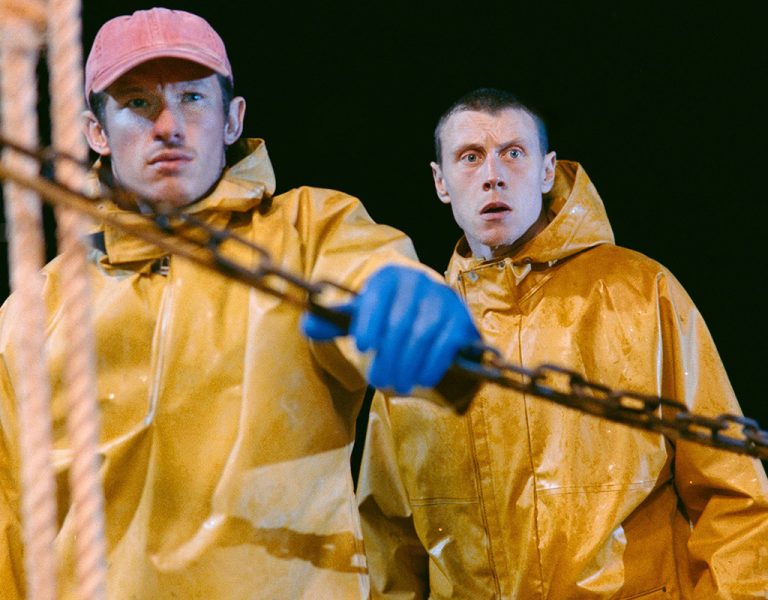
South Korean cinema is often celebrated for blending gripping storytelling with sharp social commentary, using genre to examine class inequality, economic pressure and institutional failure. Rather than stating its critique outright, meaning is embedded in tone, structure and irony. No Other Choice continues this tradition. Starring Lee Byung-hun (Squid Game) as Man-su, the film charts a laid-off paper worker whose ethics erode under systemic pressure, as desperation drives moral compromise in a society offering the illusion of choice and survival feels compulsory itself.
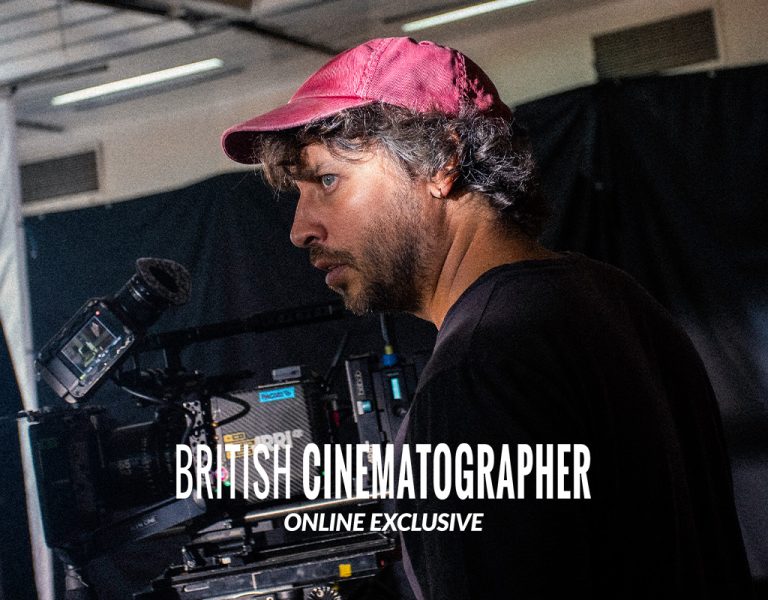
Cinematographer Woo-Hyung Kim (1987, Assassination) says director Park Chan-wook initially wanted to shoot No Other Choice on film. “We actually bought Kodak Vision3 negative stock and did some tests,” he explains. “But since there are no fully functional film labs left in Korea, we realised that post-production would become extremely complicated. So after several test shoots, we eventually decided to go digital and use ARRI’s Alexa. I’ve always liked the Alexa because of its skin tones — they feel very natural and comfortable. Honestly, I don’t think most of the technical differences between cameras are that noticeable, but when it comes to the Korean skin tones I mostly work with, that difference really matters to me.”
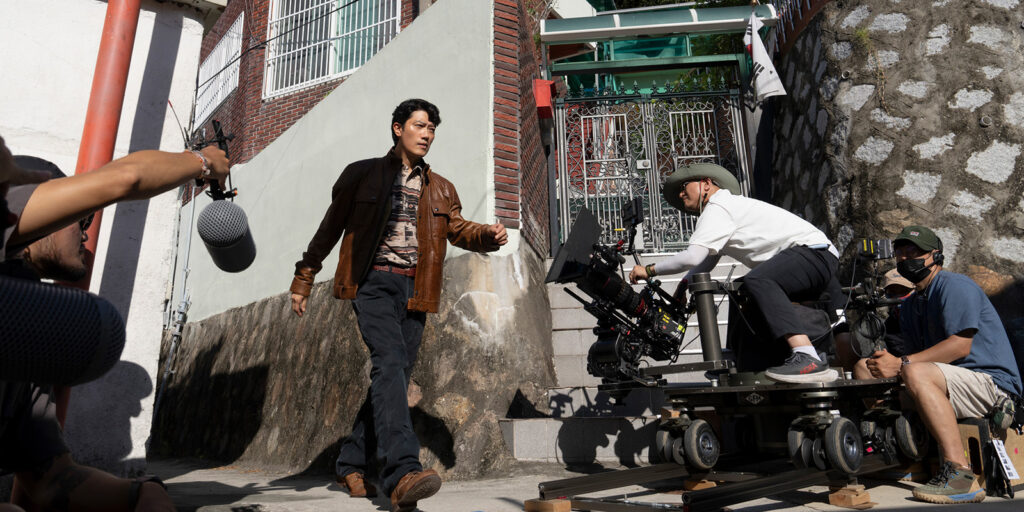
For this project, Kim used the new Alexa 35 and says its “most noticeable improvement” was the expanded dynamic range. “It’s not that I need to use the full range all the time, but having that extra information gives me much more flexibility,” Kim continues. “I was also very impressed by the Alexa 35’s performance in low-light conditions.”
He tested a wide range of anamorphic lenses “with strong personalities”, before choosing the Atlas Mercury and Cooke full-frame anamorphics. “I felt that the character of anamorphic lenses was essential to creating a cinematic image — not a direct reproduction of reality, but something slightly heightened, something interpreted,” he adds. “When needed, I also mixed in our signature zoom lens set.”
Day and light
The lighting setup relied mainly on Aputure’s Infinimat with clear softboxes (8×8 and 20×20) – along with additional use of ARRI HMIs and SkyPanels. However, the main location was the exterior of Man-su’s house, so cast and crew worked mostly outdoors.
“Obviously, it wasn’t practical to cover the entire house with ceiling silk,” says Kim. “Instead, we used frames — 20x20s or 30x30s — with silk or military camo netting to control the direct sunlight. We only brought in 18K HMIs when we actually needed to replace the sun. Whenever we just needed a bit more level, so we relied on LED units.”
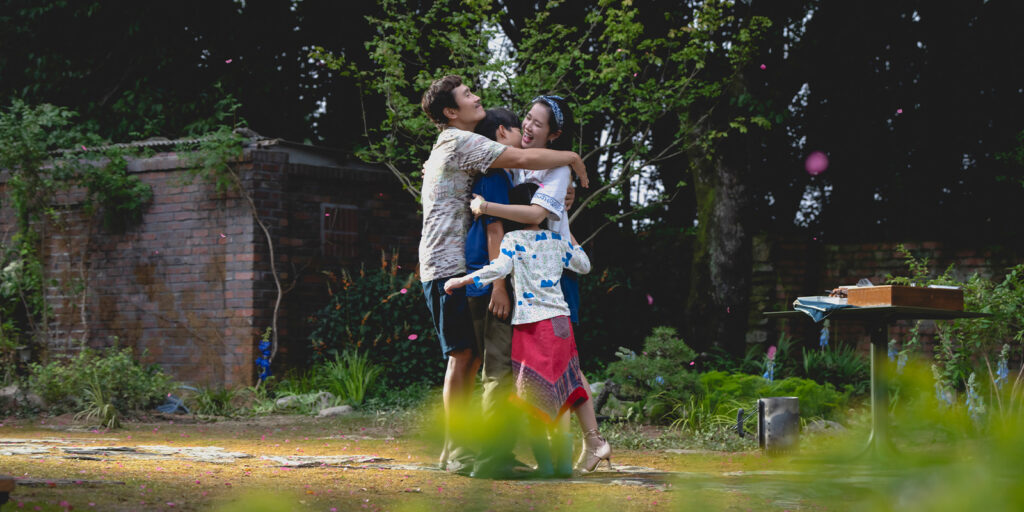
The house interior was built as a set on a soundstage, with “a ceiling section that could be easily opened and closed”, making it much easier to introduce ambient light into the space.
“For the skylight effect coming through the window, we hung a flat square balloon LED right outside the top window frame,” Kim explains. “It was a new type of fixture for us, but it worked very well — we could get the quality of light we wanted while keeping the floor tidy, without cables or stands.”
All the lights were connected to a dimmer board and controlled centrally. ”My gaffer, Kim Min-jae, is actually one of the very few gaffers in our industry who really has the full control through a console,” he adds.
Kim says dealing with changing daylight “is always one of the hardest parts” of shooting. “It’s not something unique to this film — it’s true for almost any project,” he continues. During pre-production, I went to the main location and spent an entire day there. From early morning until sunset, I watched how the light moved around the house, checking it hour by hour and taking photographs.”

Rigging the camera to the tablet and the beer glass also required much more preparation than Kim and his team initially expected. “We first tested using the main camera in both cases, but it was simply too heavy for the actors to perform with,” he explains. “In the end, we switched to a compact camera that could still record in 4K.”
Taking direction
Compared to many other directors, Kim says director Park “is extremely sensitive” to what he sees on the monitor. “Since he’s a photographer himself, he has a deep understanding of lenses and camera placement and he understands better than anyone how even very subtle changes in colour and contrast can affect an image,” Kim explains. “His comments at the monitor often gave me a lot to think about.”
Colourist Park Jin-ho has been using Baselight since the early 2000s and he says one of the most memorable aspects on this movie was delivering the project across multiple colour spaces – P3 DCP, Dolby Cinema (108 nits), IMAX and Netflix HDR.
“The Dolby Cinema grade stands out above all,” he explains. “As our facility couldn’t project at 108 nits, I travelled to Dolby’s studio in Los Angeles to complete the work. We uploaded around 20TB of data beforehand to ensure a quick start.”