
DIRTY BUSINESS: THE UNTOLD TRUTH BEHIND BRITAIN’S SEWAGE SCANDAL
Sunbelt Rentals’ Lizzy Sutherst catches up with John Pardue BSC to discuss his latest project, Channel 4’s hit political docudrama Dirty Business.
Not your usual drama, three-part factual series Dirty Business, written and directed by Joe Bullman, is shot in a hybrid documentary-drama style. Sending shockwaves throughout Britain, it highlights the devastating impact water companies have had on local communities from dumping raw sewage into rivers and seas for over several decades without consequence.
We watch as the story is unearthed by an investigative duo, retired corruption officer Ash Smith (David Thewlis) and his neighbour Peter Hammond (Jason Watkins), an Oxford University professor of Maths, who expose a web of corrupt practices after noticing a rise in dead fish and brown, murky water in the once-clear River Windrush in Oxfordshire.
“Fundamentally, it’s important to know that Dirty Business was made out of Channel 4’s factual department, not the drama department. Joe’s a documentary maker at heart. Everything in the script came directly from interviews, from the horse’s mouth. We were shooting a drama, but with the DNA of a documentary,” says Pardue.
With Bullman’s background hailing from documentary, the script was built from over a year’s worth of painstaking research and interviews. “The drama supports the factual evidence and not the other way around,” Pardue recalls. “Director Joe Bullman described his editing process to me involving five months of painstaking selection, closer to a documentary process than that of drama, cherry-picking the drama and factual archive material equally to support the case study of how badly wrong things have got.” The edit uses jump cuts and temporal leaps, illustrating how the story connects and allowing the viewer to understand the full gravity of the situation.
Hybrid working
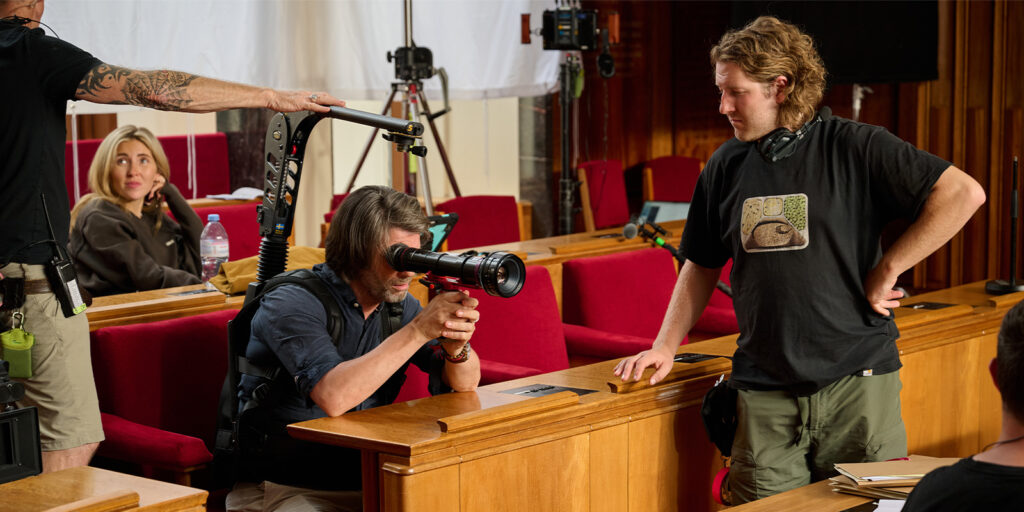
Pardue explains how working with Bullman shaped the cinematography. “He wanted to free it up all the time. He’d deliberately stop me from knowing what was going to happen so I’d have to improvise with the handheld camera, following the action like a documentary cameraman.” Bullman’s ability to disrupt traditional drama conventions led Pardue to adapt to this unorthodox hybrid: “A favourite Joe description was telling me that a shot was too designery. He didn’t want anything that felt preplanned. He wanted it real, even if that meant throwing out the usual drama procedure; eyelines weren’t important for him, but we ended up doing them correctly.
“You go on the director’s journey, not yours. Joe is assertive; he knows exactly what he wants, and visually, he’s very sharp. As a DP, you work for the director, it was a very different and interesting project for me, and at times exploratory in style.”
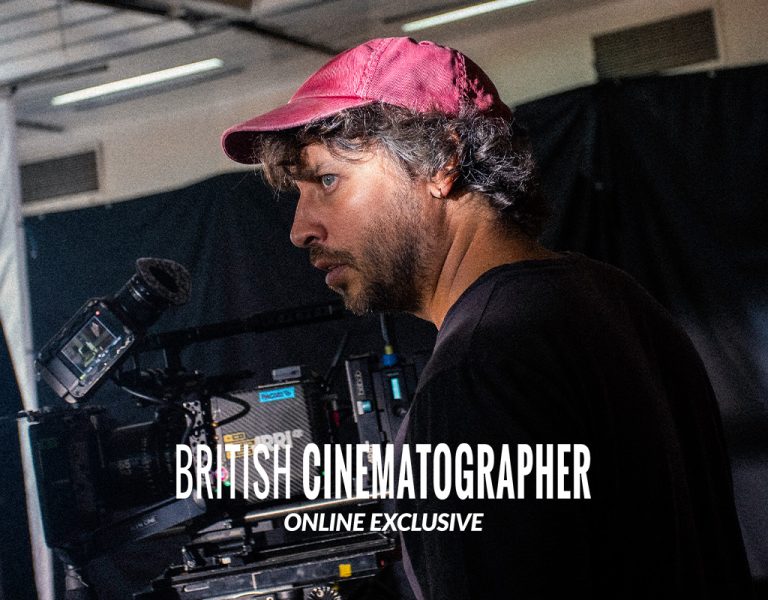
Pardue’s handheld style intimately follows Thewlis and Watkins as they gather evidence of the woeful neglect and financial gain behind the investment by water companies and the hedge funds that buy and sell the shares for profit. Describing his style as ‘instinctive’, his sense of motion is always motivated by the physical movements of the actors and never the other way around. “Handheld camera work is very responsive, and it’s almost musical in that respect, reacting to every movement and nuance. If an actor collapses on the floor, I go down with them. It’s like dancing with the actors, responding to their performance in real time.” The demanding nature of shooting handheld requires physicality and discipline, especially when shooting long, often improvised scenes.
Authentic emotions
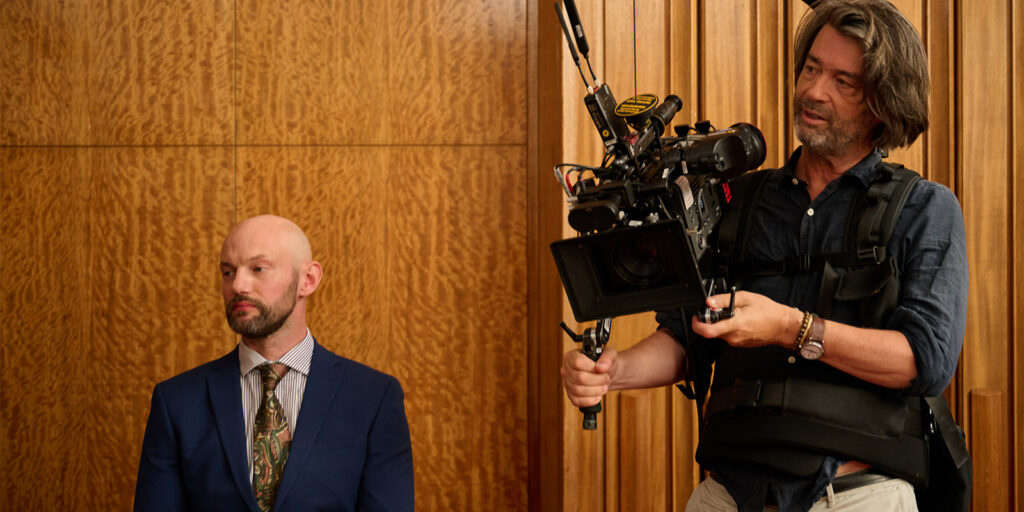
The show was quite unique in the way it blurred the lines between documentary and drama. There was a particularly powerful scene of a local Town Hall meeting between disgruntled locals and representatives of the Environment Agency. “We filmed it in Brixton Town Hall between the real activists and bereaved family members sat face to face with actors playing the Environment Agency officials in an unscripted council meeting,” Pardue recalls. “We filmed it as a live event, and the passions were very high, including the real Julie Maughan, whose daughter had died as a suspected result of sewage contamination in the sea. You didn’t know what was going to happen. It was incredibly emotional and very real; the whole scene was completely improvised, with help on that day from DPs Balazs Bolygo BSC HCA and Nick Read on the 2nd and 3rd cameras. We ran cameras on two unrehearsed takes that were over 45 minutes long; we all had our Weetabix that day.”
Shaping the look, Pardue opted for gear that’s fast, light and invisible to the process from Sunbelt Rentals. Working with the right equipment house and reliable people are important to Pardue – his long-standing relationship with Sunbelt Rentals was born out of Movietech and is rooted in trust. “They’ve always supported me,” he says – particularly Vince Wild from the camera department, who backs ambitious, unconventional shoots. “You get the same high-end care you’d expect on a much bigger show. The Sunbelt Rentals team made it possible because it’s a worthy project that needs to be made.”
Trusting the tech
Trusting in Sunbelt Rentals’ technical director Andy Mossman’s expertise allowed Pardue to take more creative risks. “We shot on the Sony Venice large format 6K with Nikon AIS lenses (rehoused stills lenses by Whitepoint Optics), very fast, very honest lenses.” The 58mm is the ace in the pack: “Beautiful closeups with a fabulous lens bokeh when shot on the faster T stop, perfect for handheld work.” Pardue adds, “They really contributed to the natural photographic quality of the films.”
A custom LUT built by Pardue’s long-time DIT Steve Evans carried the show from start to finish. “We created a LUT with my DIT, Steve Evans, and that LUT became the grade (overseen by colourist Andy Dolniak at Splice). What you shot is pretty much what you got, a bit like shooting on film. No fancy grading.”
Lighting was kept simple, using LEDs and naturalistic lighting choices, maintaining the documentary feel with gaffer Tobias May’s quick and simple solutions to address our shifts from night to day. This philosophy extended to choosing locations with a low technical footprint. Unable to shoot at an actual sewage plant, the team found a decaying industrial research facility in Farnborough, where the aesthetic, of monumental pipes and cavernous halls, mirrored the scale of an unmanned plant in disrepair.
From documentary to drama
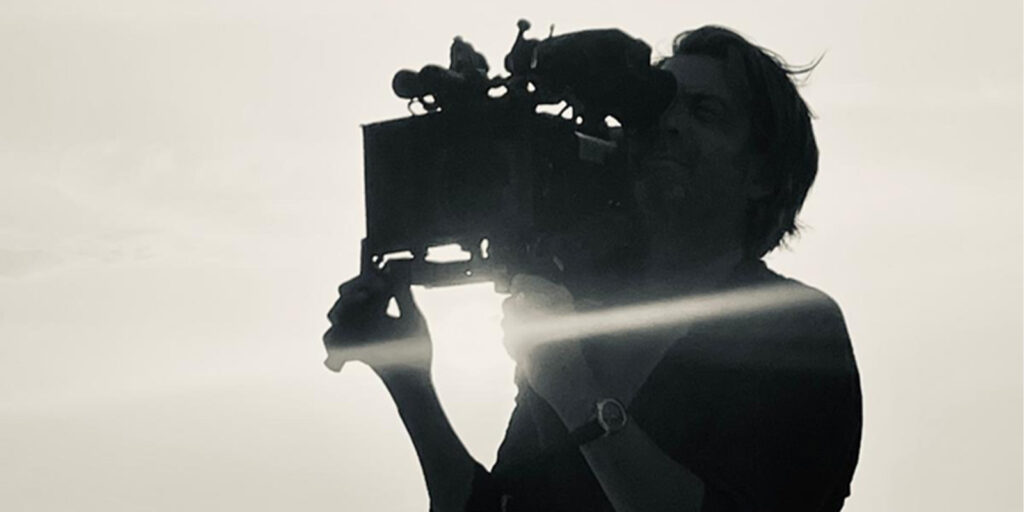
Pardue’s path to Dirty Business takes us back to the start of his career in Granada’s documentary department as a camera assistant in nineties Manchester. “Documentary teaches you to react to story in the moment, to be super alert. That instinct is what I bring into drama.” He has comfortably moved between commercials, music videos, documentaries, TV drama and feature films. “I guess I’ve jumped about in these different areas. Most experienced DPs can turn their craft to different demands and styles. I never think that a DP needs to keep doing the same type of work.”
Bullman hired Pardue after seeing his work on gripping medical drama Breathtaking (director Craig Viveros), in which he captures long, immersive handheld takes, illustrating a style honed over years of commitment to the craft. Bullman felt confident that his background positioned him uniquely to execute a drama with a documentary approach, a style Pardue feels very much at home with.
Dirty Business is not there just for our entertainment; it’s a truthful representation of the facts surrounding the water scandal, a story that needs to be told, confronting the results of Thatcher’s water privatisation.