
FRAMED FOR ADVENTURE
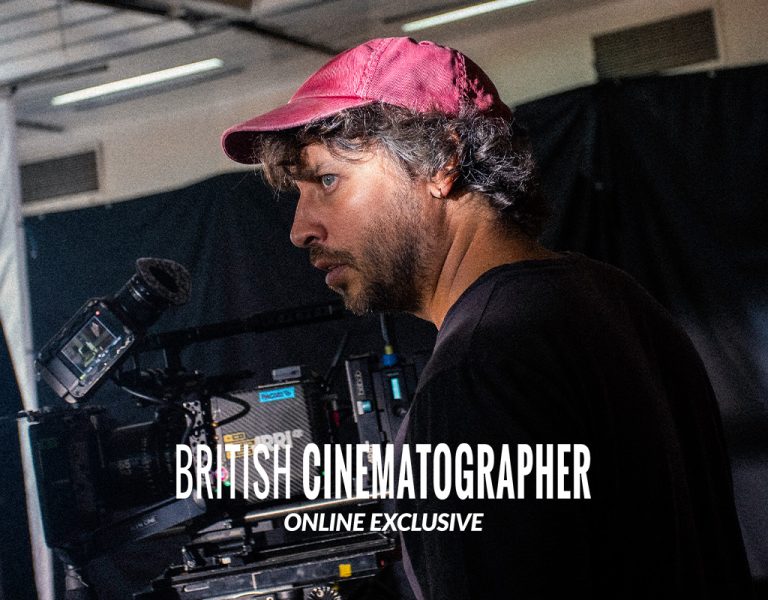
Cinematographer Caroline Bridges reimagines The Famous Five with nostalgic tungsten glow, cinematic depth and modern LED finesse, blending 1940s Hollywood craft with fresh BBC adventure.
Four brave friends — and one loyal dog — set off on adventures that stirred imaginations. Together they solved mysteries, uncovered secrets, and proved that friendship and courage can light the darkest corners.
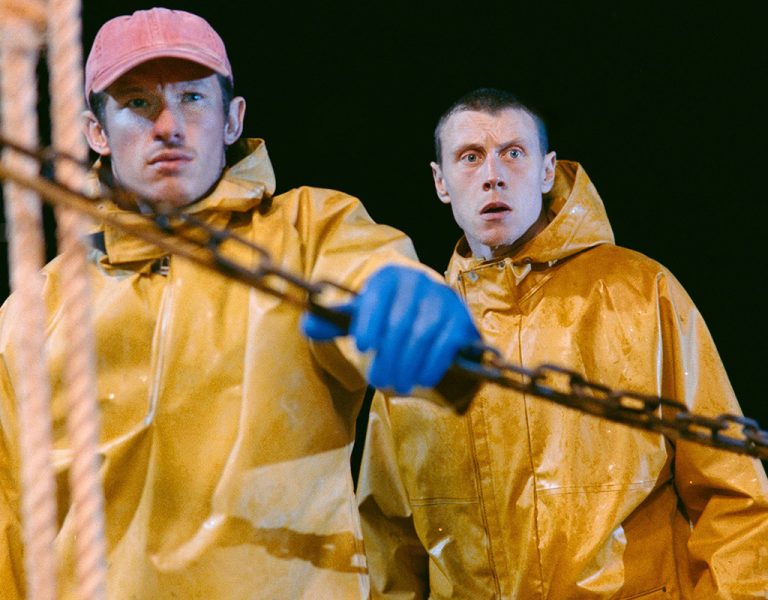
Now, the gang returns to our screens, concluding with the episode Big Trouble on Billycock Hill — lensed by cinematographer Caroline Bridges, directed by Tom Vaughan, produced by Matthew Wilson and executive produced by Nicolas Winding Refn. This 90-minute instalment is the final episode of the second series of the anthology-style show, standing apart as a self-contained story that combines wartime intrigue with meta-cinematic playfulness.
“It’s technically an episode,” Bridges says, “but we treated it like a feature film.”
For that reason, Bridges selected the ARRI Alexa Mini LF, as she is “an admirer of the camera’s cinematic quality and large format sensor. I love the shallow depth of field and the gorgeous roll off in the highlights”.
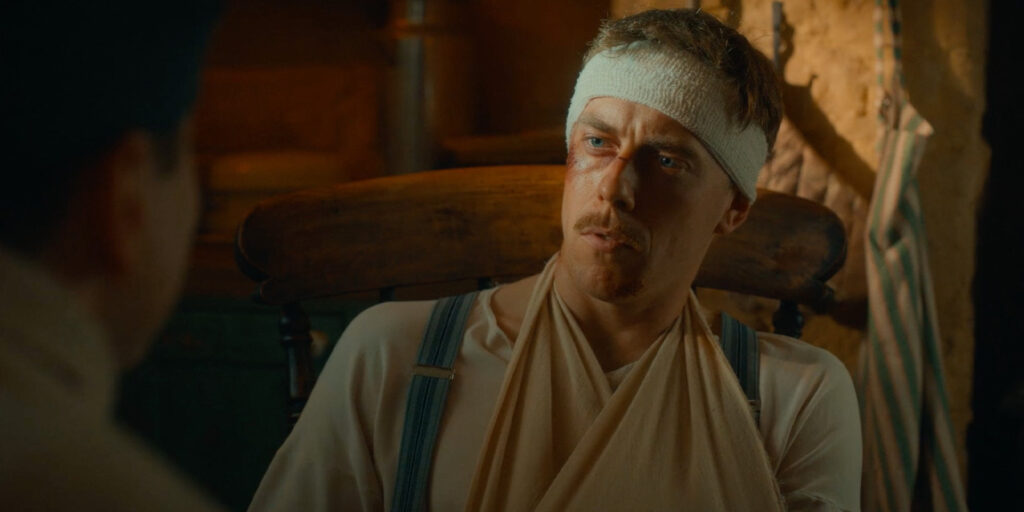
Lens selection was equally considered. “The Famous Five is a group — four young people and a dog — so I needed to use lenses that did not have too much aberration left and right of frame so that I could keep everyone sharp for potential group shots,” Bridges adds. “However, I also wanted a lens that was flattering and not too clean overall. For that reason I chose the Angénieux Optimo Prime series, because they offer stunning glass that is really flattering on skin tones. We used a Tiffen Black Satin 1/8 for diffusion.”
There was also a “rule” that when a character becomes enlightened, the camera tracks in on a 58mm Petzval lens, with their faces becoming more illuminated. “This occurs when Julian meets Emily for the first time (the first flutter of love) and when Dick realises where the enemy may be hiding,” she continues. “The Petzval portrait lens provided beautiful fall off and a lovely warm flare that enhanced this enlightenment.”
The use of colour is distinctive in the series as Wynding Refn loves heightened colour palettes. “This was an interesting challenge for our episode, as our story is very much based in the grim reality of WWII. Julian, Dick and Anne’s parents are working undercover for the UK government and have left the children with George’s family. They are very worried about their parents and this is the underlying tone and tension in the episode. Tom and I wanted to keep the gravitas of the young people’s emotions real and engaging visually. We decided to base our story in strong autumnal tones and complementary blues. We had an autumnal LUT created at Company 3 by Gareth Thomas which we really loved.”
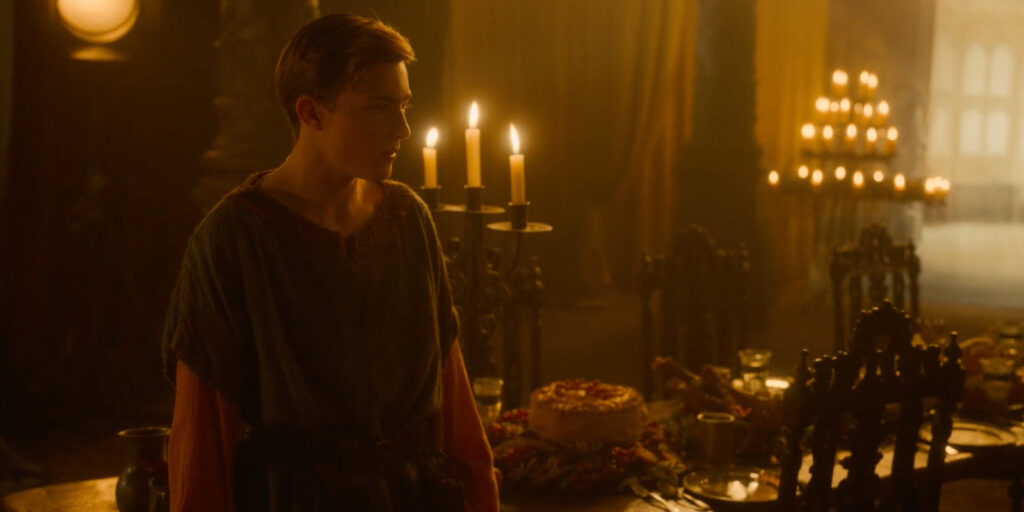
Bridges says the “storyline is visually complicated – within the story, there is a 1940s feature film being shot in a studio that is later projected in a cinema, B-roll footage” that the quintet shoots for the feature film and black-and-white newsreel footage that is projected before the features.
“For the feature film footage that we shot, we created a 3-strip Technicolor LUT to reflect 1940s Technicolor film stock and a black-and-white LUT for the projected newsreel footage. 35mm grain was then added in post,” she adds.
Interiors were shot at The Bottle Yard Studios, Bristol. To capture the spirit of 1940s cinema when recreating the 1940s film set, Bridges and her gaffer, Ben Manwaring, drew inspiration from the book In the Picture: Production Stills from the TCM Archives by Robert Osborne.
“When recreating the 1940s film set, we looked at all these beautiful behind-the-scenes images of film sets and the light fixtures that were used at that time — obviously all tungsten,” she says. “So, when we were shooting the scenes showing the film studio itself, we brought in some old tungsten light sources that were then rewired. At the back we had six MiniBrutes, and old 2K, 5K and 10K tungsten sources on the floor. The feature film that was being shot in our episode had a medieval storyline, so large amounts of candles in giant candelabras were also used.”
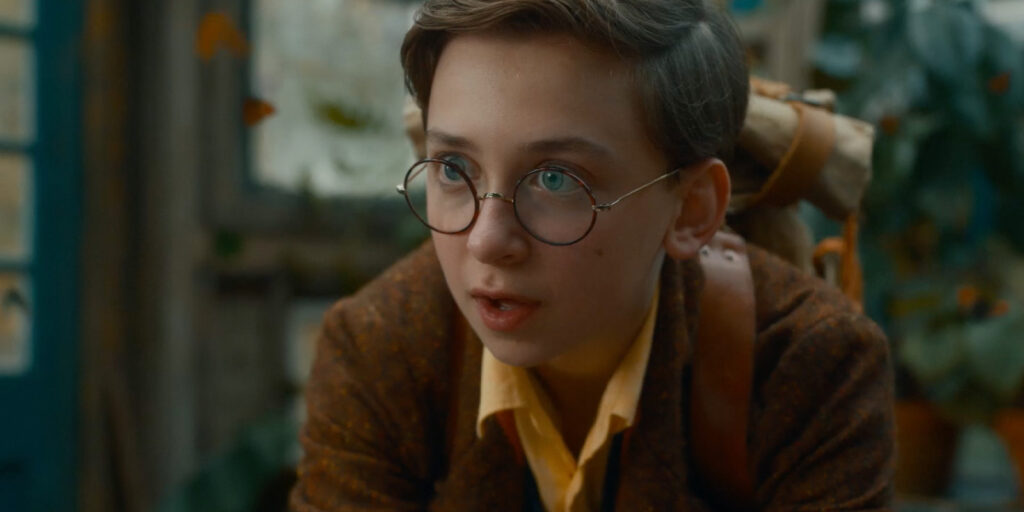
Within the backstage areas seen in the episode, “even the little pops of light illuminating the backstage tents and pillars were lit by period tungsten fixtures — we used Zap lightsof the period, but now you’d use Astera AX9s or similar,” she adds. “For the makeup lights, we used tungsten bulbs around the mirrors on dimmers.”
For the Hollywood films and newsreel footage, Bridges “used the Academy ratio of 1.37:1, not quite 4×3,” and 1.78:1 for The Famous Five world — a visual distinction that echoes the layered storytelling of the episode.
Hue dares wins
Inside the cinema location, AX9s were used to uplight pillars and walls, integrating their own fixtures into the venue’s existing system. “We patched all of our lights into the lighting desk for control to take the lights down and then up after the screening,” Bridges explains.
The cinema’s two Source Four fixtures were also incorporated. “It was an Art Deco independent cinema, and we made custom Art Deco gobos to fit these lights. Although they still had a functioning film projector, we chose to use one of our own lights for the projection beam, because we wanted a bluer beam to match our colour palette.”
What’s more, most effects were done in camera. “The projection film reel that was set on fire was an acetate reel set on fire on location — it was SFX,” Bridges concludes. “Even the binoculars’ view was created in-camera!”